

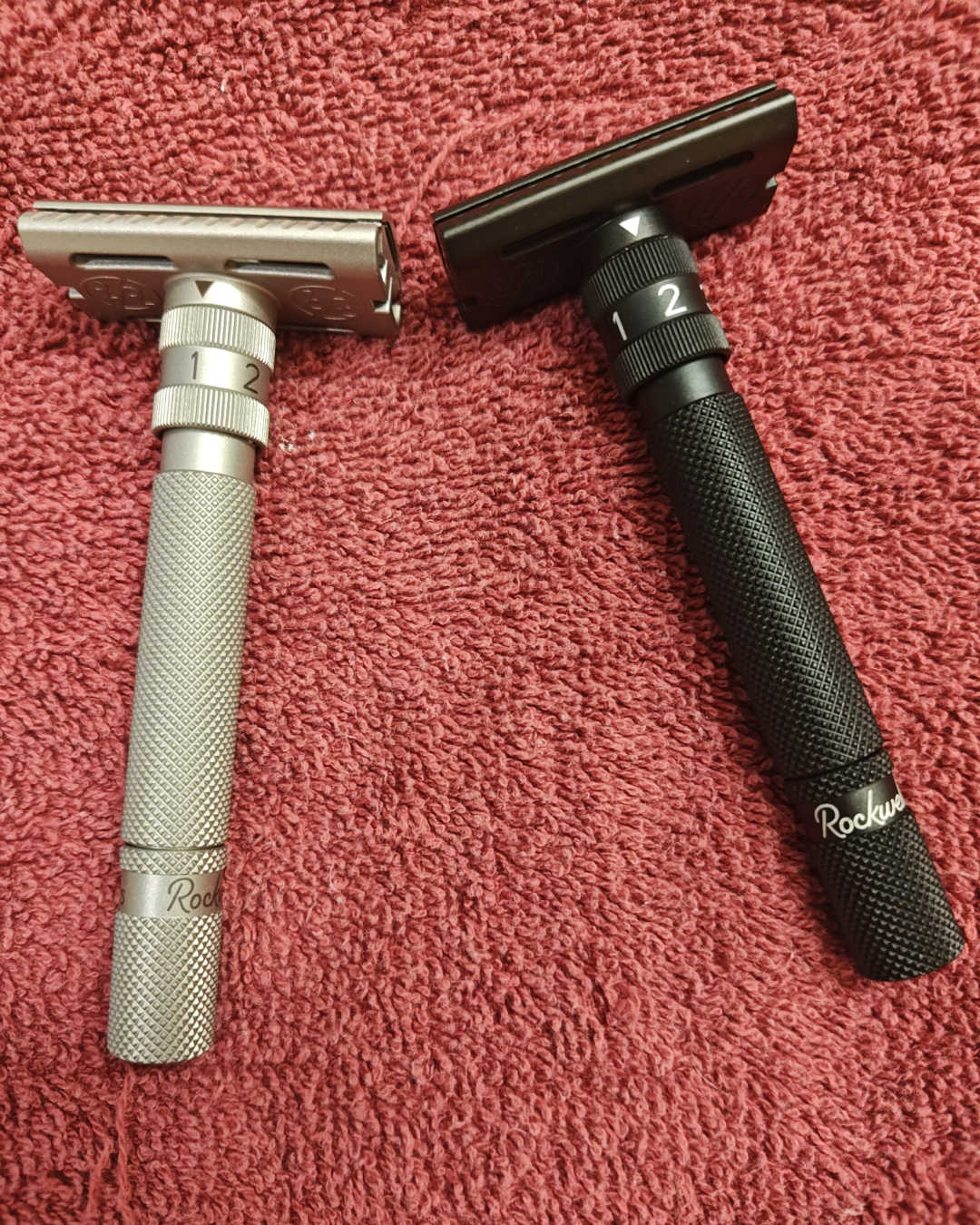
Choosing an adjustable safety razor means considering how it feels on your face, how it handles, and how easily you can change its setting. Rockwell’s new SETPOINT combines a two-piece head with a removable cap and continuous dial adjustment, and comes in aluminum and stainless steel. I tested both pre-launch versions to compare comfort, closeness, and adjustment during a shave, and to assess what SETPOINT offers someone choosing between its two versions or considering a switch from the Rockwell 6S or T2.
[Note:Sharpologist has a long history with Rockwell, including an affiliate relationship. Amazon and Rockwell links are affiliate.]
Both versions of the Rockwell SETPOINT gave me a “darn fine shave” in three passes, but aluminum gave me consistently better overall results. It felt a little more comfortable, showed slightly less blade feel, and made touch-ups easier. Two aluminum shaves came close to “baby’s butt smooth.” The stainless steel version caused irritation on the right side of my lower jaw and neck at every setting I tried.
That surprised me because I normally prefer heavier razors. After using both, I would choose aluminum for my own shaving routine. SETPOINT also feels different enough from the Rockwell 6S and T2 that I would approach it as a new razor to learn, rather than assume it is a familiar Rockwell shave with a different adjustment system.
Rockwell supplied both razors without charge before launch and presented them to me as production versions. I alternated them over about two weeks, with different amounts of stubble, for roughly five shaves per version. I used three passes for every shave, with Parker blades throughout, my usual choice when testing razors. This is an early review of those samples, not a long-term durability assessment.
Explore this review:
What Makes The Rockwell SETPOINT Different?
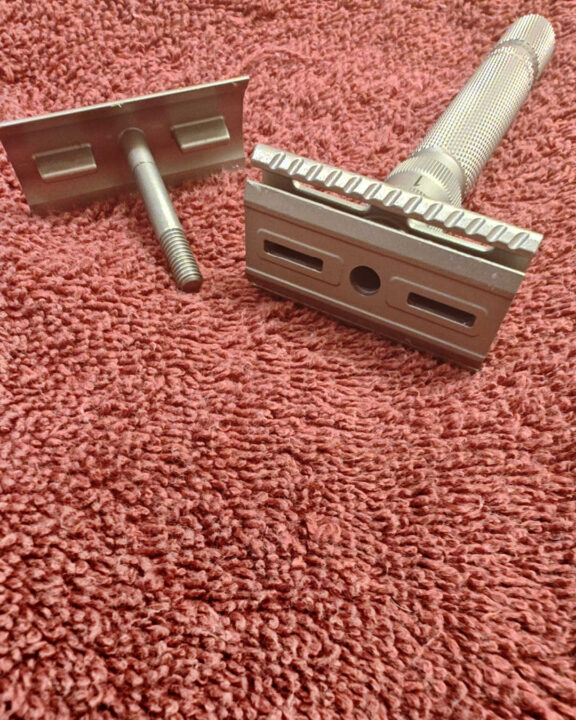
SETPOINT changes how the blade is loaded and how the setting is changed for Rockwell. Those design choices matter both when preparing the razor and when handling it during a shave.
Head Design And Adjustment
Rockwell describes SETPOINT as a precision-machined, two-piece razor with a solid head and a continuous adjustment dial. It uses a removable cap rather than the T2’s butterfly doors.
Some early reviewers describe SETPOINT’s head as a bit smaller than the T2’s, but to my eye the two appear approximately the same overall size. The removable-cap design changes the head’s profile and construction; I would not assume that this alone makes shaving tight areas easier but I will admit the SETPOINT does get into tight spots like under my nose a little easier.
Rockwell’s development story describes four years of work to combine the 6S’s blade stability with the T2’s continuous adjustment. The company says SETPOINT’s solid head holds the blade rigid throughout the adjustment range and provides firmer support than its butterfly-door designs. In my T2 stainless steel review, I found that the extra tightening turns after the doors closed helped secure the blade compared with other TTO razors.
That observation concerned the T2’s blade security relative to those designs. SETPOINT’s clamping is therefore a relevant design distinction, but my shaving results do not establish superior blade rigidity or show that clamping explains the comfort difference between my aluminum and stainless steel samples.
Blade Loading And Grip
Loosening the bottom knob releases the cap. Put the blade on the cap, return it to the razor, press gently, and tighten the knob. The top cap covers a blade’s side tabs. Adjustment uses the separate dial below the head.
The controls and handle remained secure even with wet hands. That helped me hold the razor and use the adjustment dial during a shave.
| Published specification | Aluminum | Stainless steel |
|---|---|---|
| Material | 6061-T6 aluminum | 316L stainless steel |
| Finishes | Black anodized or raw silver | Brushed stainless |
| Weight | 42 g | 115 g |
| Dial range | Continuous 1 to 6 | Continuous 1 to 6 |
| Blade gap | 0.30 to 1.10 mm | 0.30 to 1.10 mm |
| Blade type | Standard DE | Standard DE |
| Listed US price | $149 USD | $199 USD |
Figures are Rockwell’s published specifications, not my measurements. Rockwell notes that gap may vary slightly by finish. Check current pricing before buying.
Shave Performance: Comfort, Closeness, And Consistency
Two weeks of use supports early shaving comparisons; it can’t establish long-term mechanism wear.
I judged shave quality by the closeness achieved, the cleanup required, and how my skin felt afterward. Those criteria made the differences between the two samples clearer than dial numbers alone.
Blade Feel And Beard Reduction
The stainless steel sample felt more aggressive to me at a given setting than the aluminum sample. By “more aggressive” here, I mean the stronger shaving sensation I experienced; I am not reporting a measured difference in blade exposure or gap.
Both versions seemed to have an adjustment range biased a little more aggressive than other adjustable safety razors I have used. Aluminum felt slightly more comfortable, with a little less blade feel.
Greater blade feel doesn’t equal better beard reduction. A setting needs to earn its place through the result it produces, including the cleanup required and how the skin feels afterward.
I used three passes for every shave. Both versions gave me a “darn fine shave” each time, and two shaves with aluminum came close to “baby’s butt smooth.” Both could deliver good closeness, but aluminum gave me the better balance of closeness and comfort.
Neck Comfort And Post-Shave Feel
The right side of my lower jaw and neck made the preference particularly clear. The stainless steel version caused irritation there at every shave setting I tried. The dial did not erase the comfort difference between my two samples.
That does not make stainless steel unsuitable for everyone with a sensitive neck. But I would I would hesitate to recommend it on the assumption that its lowest setting will automatically suit someone who wants a mild-feeling razor. The setting range and the way a particular shaver handles the razor still need to work together.
Maneuverability And Touch-Ups
Touch-ups were easier with aluminum. It felt more nimble, and that helped make the small cleanup work more comfortable for me.
Does SETPOINT’s Adjustment Dial Improve The Shave?
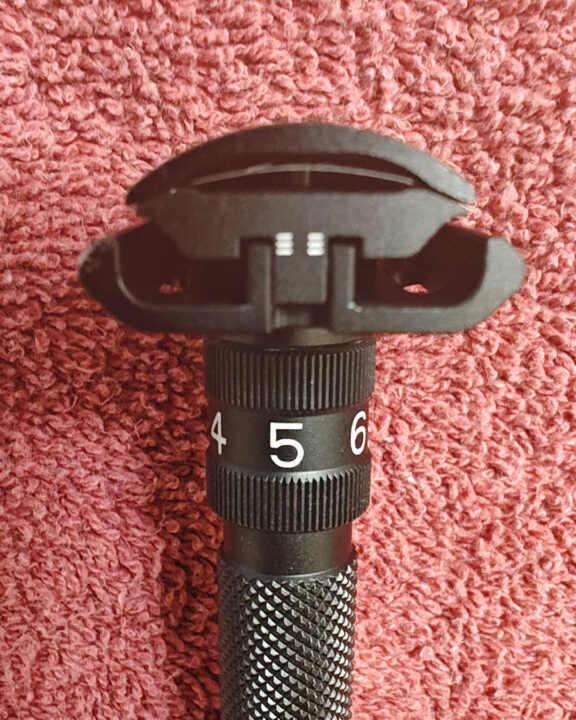
The dial’s value depends on whether a setting change improves the result and is easy to make during a shave. Finding a comfortable starting point comes first.
Finding A Comfortable Baseline
A number on the dial is a reference point within that razor, not a common scale shared by every adjustable. In my samples, an aluminum setting of about 3 felt roughly like a stainless steel setting of 2. That is a subjective comparison of shaving feel, not a conversion formula or calibration measurement. In my own shaves I got the best results with a setting of about 2 on the aluminum version and a 1 on the stainless steel version.
I’m not going to try to determine “equivalent” settings between the SETPOINT, T2, and 6S/C razors. It’s too much of an “apples and oranges” comparison.
Pressure also matters. Adjustability changes the razor, but the hand using it remains part of the result. With aluminum, getting pressure right improved my experience. Turning the dial cannot substitute for that adjustment in technique. Sharpologist’s explanation of what an adjustable razor changes develops that distinction.
When Adjustment Helps
Changing the setting during a shave did help closeness. That gives the dial a practical role in my routine, beyond choosing a setting before starting.
That benefit did not resolve the comfort difference between my samples. The dial helped closeness, but did not make the stainless steel version a comfortable choice for me.
For the broader choices between leaving a setting alone, dialing down, and dialing up, see how to use an adjustable razor most effectively. Those routines are options to evaluate, not evidence that any one routine worked best with my SETPOINT samples.
How Easily The Dial Works During A Shave
A continuous dial permits intermediate settings without changing parts. The practical benefit depends on being able to make a deliberate change and return to the same setting reliably.
The secure grip described above made mid-shave adjustments practical. Adjusting “on the fly” did not require loosening the top cap, unlike the T2 and other TTO adjustable razors.
SETPOINT Aluminum Vs Stainless Steel: Which Should You Choose?
Choosing between the two versions means weighing handling preferences against the shaving feel that suits your skin. My results show why a preference for heavier razors may not settle that decision.
Weight And Handling
The published weight difference is substantial: 42 g for aluminum and 115 g for stainless steel. The choice is more consequential than selecting a finish.
Aluminum feels more like a mass-market plastic cartridge razor in my hand. I mean the light, nimble handling, not the same shaving behavior or permission to use cartridge pressure.
Differences In Shaving Feel
The deciding factor for me was how my skin felt after the shave. The table below summarizes the trade-offs that led me to choose aluminum.
Other early comparisons have favored stainless steel: some found it smoother, with slightly less blade feel. Some preferred stainless; my results favored aluminum. That contrast is a reason to establish a comfortable baseline for each version rather than infer the better choice from weight alone.
| Decision factor | Aluminum in my testing | Stainless steel in my testing |
|---|---|---|
| Comfort and blade feel | A little more comfortable; slightly less blade feel | Stronger feel at comparable dial numbers |
| Neck | The more comfortable choice | Consistently more irritated at settings tried |
| Touch-ups and handling | Easier cleanup; more nimble | Less suited to my cleanup routine |
| My choice | Preferred despite my usual liking for heavier razors | Weight preference did not translate into better results |
Aluminum is my recommendation on these shaves, and it is listed $50 below stainless. A preference for greater heft is a reason to consider stainless, provided its shaving feel suits you.
Rockwell SETPOINT Vs 6S And T2: Should You Switch?
As mentioned earlier, my experience puts SETPOINT in an apples-to-oranges comparison with the 6S and T2. It feels different. I would not describe it as universally better or worse than either, and these early SETPOINT shaves are not a matched three-razor comparison.
Rockwell razor prices and weights
| Razor | Price | Weight |
|---|---|---|
| SETPOINT Aluminum | $149 | 42 g |
| SETPOINT Stainless Steel | $199 | 115 g |
| 6S | From $120 | 113 g |
| 6C | From $60 | 98 g |
| T2 Alloy | $150 | 103 g |
| T2 Stainless Steel | $250 | 106 g |
Measurements are approximate. Prices are USD; starting prices and promotions may vary. Check current pricing before buying.
Rockwell lists SETPOINT in 6061-T6 aluminum or 316L stainless steel. Both versions have a 73.4 mm handle and measure 103.1 mm overall. They use a two-piece head with a removable cap and continuous dial adjustment from 1 to 6; the earlier specifications table covers the other SETPOINT details.
Coming From The 6S Or 6C
The obvious attraction is changing the setting without swapping or flipping a plate. That can be useful if plate changes are a real interruption in your routine. If you normally find one plate and leave it in place, the convenience may matter much less.
Rockwell’s comparison guide distinguishes the 316L stainless steel 6S from the chrome-plated zinc alloy 6C. Both are three-piece razors with three reversible plates providing six settings.
Rockwell’s 2015 engineering article lists the 6S at 95 mm overall; a handle-only length was not confirmed. For the 6C, the dimensions supplied for this review are 85 mm for the handle and 95 mm overall.
The comfort question deserves its own answer. SETPOINT’s family resemblance and adjustment numbers do not guarantee the shaving experience you associate with the 6S. A satisfied 6S owner should have a specific reason to try SETPOINT, rather than assume the dial makes it an automatic upgrade.
Coming From The T2
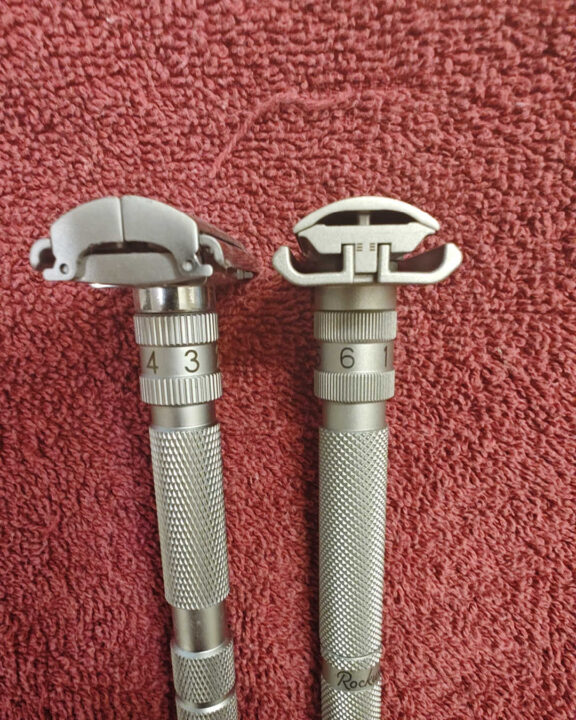
If you already own a T2, the reason to consider SETPOINT is a different loading system, handling, or shaving feel. Both T2 versions already offer continuous adjustment from 1 to 6 and twist-to-open (TTO) butterfly doors; SETPOINT uses a removable cap.
Rockwell’s T2 material breakdown describes the alloy model as chrome-finished zinc, brass, and stainless steel. The stainless version is primarily stainless steel, with some brass internal parts and nitrile O-rings.
Sharpologist’s T2 review and T2 stainless steel review cover those models separately. My point about SETPOINT is that the new design deserves its own learning period. The experience reported here does not establish that it replaces either T2 variant.
Who Is The Rockwell SETPOINT Best Suited To?
SETPOINT makes sense to consider if you want a continuous adjustable with a removable-cap head and are willing to establish a new baseline. Mid-shave adjustment helped my closeness, and both versions gave me a darn fine shave in three passes. Aluminum is the version I would choose because it combined those results with better comfort.
A shaver who usually prefers heavy razors should still give aluminum serious consideration. My own preference changed because handling, touch-ups, and neck comfort mattered more than the weight I expected to enjoy.
If your 6S or T2 already gives you reliable shaves, identify the problem you want SETPOINT to solve before buying. Easier plate-free adjustment, different handling, and a different loading system are concrete reasons to experiment. The expectation of an identical familiar shave is less well supported.
You can compare current options on Rockwell’s SETPOINT page. Choose with the result you want in mind, then evaluate your own comfort and cleanup at a repeatable setting. The version that fits your hand on paper still has to fit your shave.
Still comparing brands? Sharpologist’s adjustable safety razor roundup covers the wider category and links to individual reviews.
