

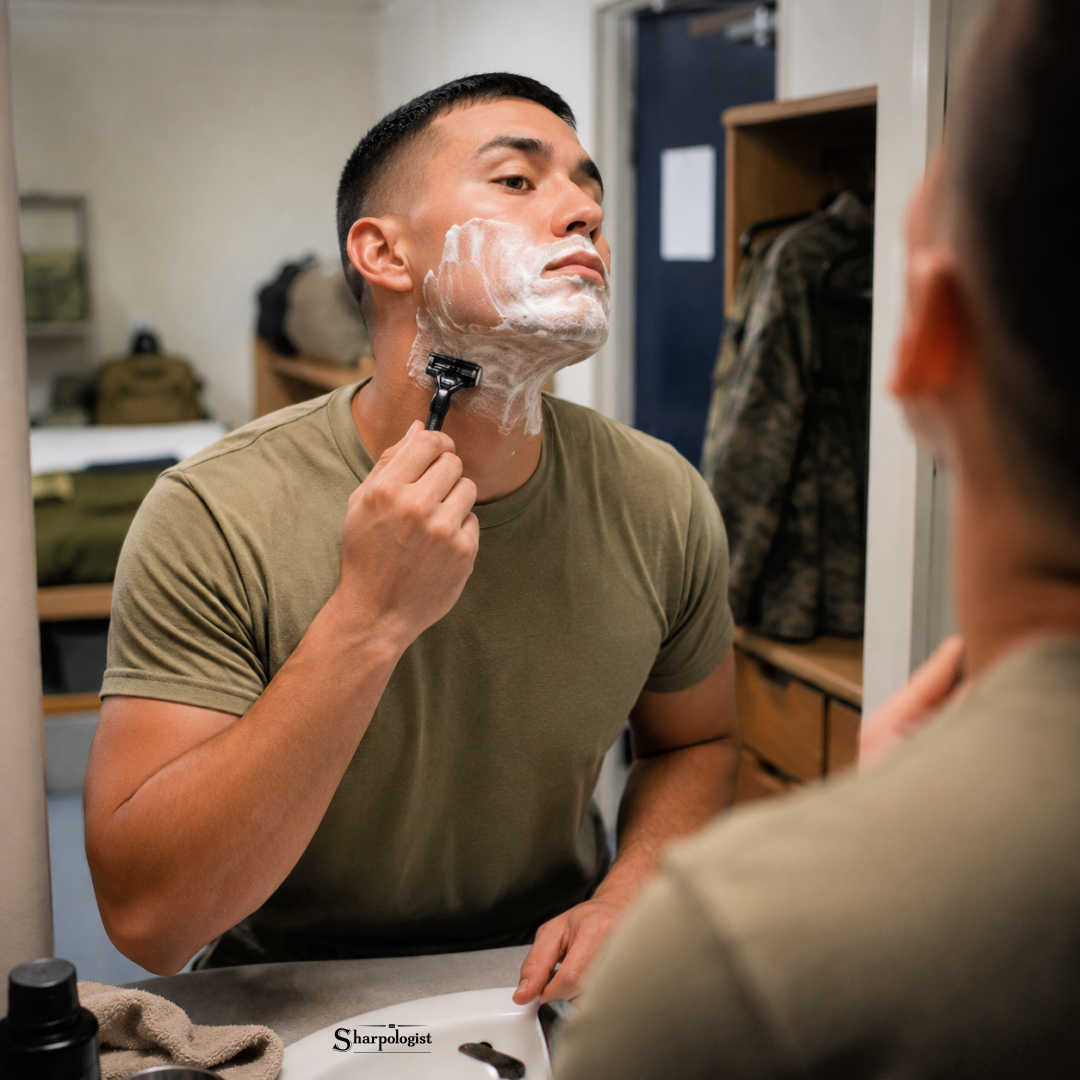
Military shaving presents a different challenge from recreational or occasional shaving.
Most shaving advice assumes you can skip a day when your skin becomes irritated, experiment at your own pace, or accept a slightly rougher result. Service members often have less flexibility. Grooming requirements, inspections, schedules, and operational demands may require another shave before the skin has fully recovered from the previous one.
That changes the problem.
The objective is not to find a magic razor, miracle cream, or perfect technique. It is to build a routine that works repeatedly under the grooming requirements that apply to you while minimizing avoidable irritation.
Recent Defense Department guidance, followed by service-specific implementation such as the Navy’s July 2026 policy, has placed greater emphasis on medical treatment, periodic review, and attempts to resume shaving where medically possible. Better technique may help, but it cannot eliminate every case of pseudofolliculitis barbae, commonly called PFB or razor bumps, or replace appropriate medical evaluation.
Even when shaving frequency is not negotiable, parts of the shaving process can still be adjusted. Pressure, blade angle, pass count, lubrication, equipment, and the desired degree of closeness all affect how the skin responds.
This article explains how to make those decisions in a routine that remains practical for military life.
Quick Answer
Service members can often reduce razor bumps and shave more comfortably by limiting cumulative shaving exposure instead of chasing the closest possible shave every day.
Use light pressure, reduce unnecessary passes, maintain good lubrication, replace blades before they require extra force, and choose equipment that produces an acceptable result without repeated cleanup. Change one variable at a time so you can identify what actually improves the shave.
These adjustments can reduce avoidable irritation, but they cannot prevent every case of PFB. Shaving-related irritation should be reported and medically evaluated according to the procedures that apply to the service member. Persistent pain, inflammation, infection, or scarring should not be treated as another product-selection problem.
The Goal Is Not The Closest Possible Shave
A common assumption drives many military shaving problems:
A successful shave is the closest shave possible.
That assumption seems reasonable. If visible stubble may be questioned, removing as much hair as possible appears to be the safest choice.
The problem is that maximum closeness usually requires more blade contact. Each additional pass, touch-up, and attempt to remove the last trace of stubble increases the shaving exposure the skin receives.
Meeting the grooming requirement that applies to you does not automatically require pursuing the closest shave your skin can physically tolerate.
A more useful question is:
How can I meet the grooming requirement that applies to me while creating the least avoidable irritation?
A milder razor may be a better fit than a more aggressive one. Two controlled passes may be more sustainable than repeated cleanup strokes. Shaving with the grain may be preferable to immediately shaving against it.
These are not compromises based on accepting a poor shave. They are tradeoffs based on the likelihood that you will need to shave again soon.
Decision Point: Once the shave meets the requirement that applies to you, stop. Do not add strokes solely to make the skin feel perfectly smooth.
Why Military Shaving Is Different
The mechanics of shaving do not change in the military. Hair still grows, blades still cut, and skin still responds to pressure, friction, and repeated contact.
The operating conditions change.
Someone who shaves two or three times each week has more opportunity for minor irritation to settle. A service member who shaves every weekday, or every day, may expose the same skin to another blade edge before the previous irritation has resolved.
Cumulative shaving exposure is the combined skin stress created by pressure, blade contact, repeated passes, closeness, and limited recovery across successive shaves.
A single shave may cause only minor irritation. Repeating the same pressure, passes, and closeness every morning can gradually exceed what the skin tolerates.
Time pressure adds another problem. Preparing for formation, reporting for duty, or following a structured schedule naturally encourages speed. That can lead to habits that feel efficient:
- pressing harder
- making rapid cleanup strokes
- shaving the same area repeatedly
- rushing preparation
- continuing after the lather has begun to dry
Appearance expectations can also encourage excessive closeness. Visible stubble may make the shave feel incomplete even when further strokes provide little visual improvement.
Military life may add practical limits such as restricted storage, travel, inconsistent access to preferred products, or little time for a complicated routine. Under those conditions, reliability matters more than novelty.
Operational Takeaway: Judge a routine by whether it remains tolerable and repeatable across several consecutive shaves, not by how impressive one isolated shave feels.
Why Razor Bumps Happen
Not every shaving problem has the same cause.
Razor burn generally describes irritation associated with friction, pressure, inadequate lubrication, or excessive blade contact.
Ingrown hairs occur when a cut hair grows into the surrounding skin instead of emerging normally.
Pseudofolliculitis barbae is an inflammatory condition in which shaved hairs penetrate or re-enter the skin, producing persistent bumps and inflammation. Possible complications include infection, post-inflammatory dark marks, and scarring. PFB can resemble an infectious folliculitis, and the two conditions can coexist.
People with tightly curled facial hair are more susceptible because curved hairs are more likely to grow back toward the skin. PFB therefore disproportionately affects many Black men. This susceptibility reflects the interaction between hair shape and skin, not grooming effort or discipline.
Sharpologist’s guides to razor bumps and preventing ingrown hairs explain those conditions in greater detail. For military shaving, the main point is that frequent shaving, repeated blade edge contact, and very close cutting can increase problems for someone who is already susceptible.
Technique interacts with biology, but technique does not replace medical care.
What You Can And Cannot Control
An effective routine begins by separating adjustable shaving variables from biological and medical factors.
Variables you can usually adjust include:
- pressure
- blade angle
- number of passes
- shaving direction
- lubrication
- blade condition
- razor choice
- closeness target
- cleanup strokes
Other factors may not be fully controllable:
- hair curvature
- individual growth direction
- skin sensitivity
- inflammatory response
- PFB severity
- recovery time between shaves
This distinction prevents two mistakes.
The first is assuming that nothing can improve because shaving frequency is required. Small changes in pressure, pass count, lubrication, and closeness may still improve the result.
The second is assuming that persistent symptoms prove the technique remains wrong. A service member can shave carefully and still have a condition that requires medical treatment or accommodation.
Daily Decision Checklist
Before replacing your razor or buying another product, ask:
- Am I pressing harder than necessary?
- Am I making cleanup strokes without counting them as another pass?
- Am I shaving against the grain before confirming that I need to?
- Is the lather still wet and slick?
- Is the blade beginning to tug?
- Am I pursuing tactile smoothness after the shave already looks acceptable?
- Have I changed several variables at once?
Operational Takeaway: Correct the easiest variables first. Pressure, pass count, lubrication, and closeness cost nothing to change.
Building A Repeatable Military Shaving Routine
The best military shaving routine is not the most elaborate one. It is the routine you can repeat under ordinary duty conditions without steadily increasing irritation.
Prepare The Beard
Facial hair becomes easier to cut after absorbing water. Shaving after a shower is often the simplest option. When that is not practical, wash the beard area with warm water and allow a short period for hydration.
Preparation should make the hair easier to cut so the razor requires less force. It should not depend on a lengthy ritual that fails whenever time is limited.
Spend an extra minute hydrating the beard before spending that minute on another shaving pass.
Use Lubrication That Remains Slick
A cream or gel must do more than create visible foam. It should remain wet and reduce friction while the razor moves across the skin.
If the product begins drying, add water or reapply it. A brushless cream, canned gel, traditional lather, or another product can work if it provides reliable lubrication and fits the available time.
Choose lubrication by how well it performs under your actual morning conditions, not by whether it belongs to a particular shaving tradition.
Use Light, Controlled Pressure
Pressure often increases when the shaver is rushed, the blade feels dull, or visible stubble remains.
That pressure may feel productive, but it also increases contact between the cutting edge and skin.
Let the razor and blade cut the hair. If the razor scrapes, skips, or requires obvious force, check the blade, angle, preparation, and lubrication before pressing harder.
Limit Passes And Cleanup Strokes
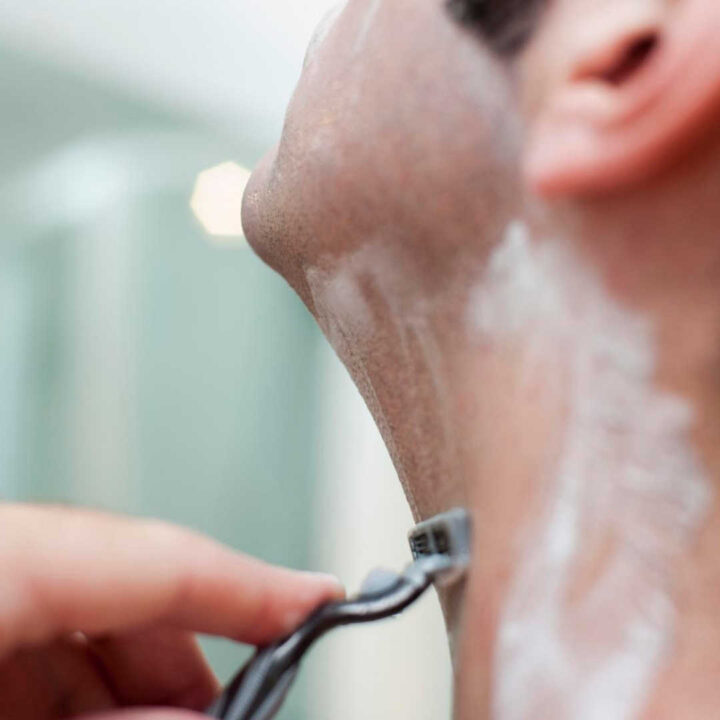
Every pass counts.
For many service members, one with-the-grain pass followed by a controlled across-the-grain pass may provide a workable balance. Some may need less. Others may tolerate more.
The decision is whether the next pass provides enough visible benefit to justify the additional exposure.
Cleanup strokes are easy to underestimate. Several repeated strokes under the jaw or on the neck can add more irritation than the main pass.
When the same area always requires cleanup, map its hair-growth direction rather than shaving it repeatedly from several angles.
Operational Takeaway: Treat cleanup strokes as another pass, not as free corrections.
Stop At Acceptable Closeness
Evaluate the shave visually and according to the requirement that applies to you. Do not judge it only by rubbing the face against the grain.
Tactile smoothness often requires more blade contact than visual neatness.
For someone susceptible to razor bumps, the final pursuit of smoothness may produce little practical benefit and considerable irritation.
Decision Point: If the remaining stubble is felt more easily than it is seen, another pass may not be worth the exposure.
Keep Post-Shave Care Simple
Post-shave products cannot undo excessive pressure or repeated passes.
Rinse away remaining lather and loose hair. Pat the skin dry rather than rubbing it. Use a simple moisturizer or balm if the skin feels dry or tight.
Strong fragrance, heavy alcohol, harsh scrubbing, or aggressive exfoliation may add discomfort to skin that is already irritated.
Change One Variable At A Time
Changing the razor, blade, cream, pass pattern, and aftershave together makes the result difficult to interpret.
Start with one change and observe several shaves when practical. A simple order of operations is:
- Reduce pressure.
- Remove unnecessary cleanup strokes.
- Improve lubrication.
- Confirm beard-growth direction.
- Replace a worn blade.
- Reconsider the razor or product.
This sequence prevents unnecessary product purchases and makes the cause of improvement easier to identify.
Choosing Equipment That Supports Your Skin
Equipment matters through the way it changes the shave.
The question here is not, “Which product is best?” It is, “Which product helps me achieve an acceptable result with less pressure, fewer passes, and greater consistency?”
Razors
Cartridge razors are fast, familiar, and widely available. Multiple blades, however, create several cutting contacts during each stroke.
Safety razors and other single-blade designs use one cutting edge at a time and allow direct control of angle and pressure. They also require more technique. A poorly used safety razor can still cause substantial irritation.
Electric razors may help some users avoid an extremely close blade shave and can be practical when water or time is limited. DermNet includes trying an electric shaver among the general measures that may help manage PFB, although results vary by individual.
Decision Point: Choose the razor that gives you a repeatable acceptable shave, not the one that promises the greatest possible closeness.
For a broader decision framework, see Sharpologist’s comparison of safety razors and cartridge razors and the guide to choosing a single-blade razor.
Blades
A blade should cut without tugging and remain predictable. Replace it when you must add pressure, repeat strokes, or alter your technique to compensate for declining performance.
Sharpness matters, but it is not the only variable. Razor geometry, coating, beard type, and technique also affect comfort.
Shaving Creams And Gels
Choose lubrication by performance. A useful product should spread easily, remain wet, provide glide, and fit the time available.
Low-fragrance or fragrance-free options may be preferable when the skin is already irritated, although tolerance varies. The better product is the one you can use correctly and consistently under your actual conditions.
Aftercare
A post-shave product should support comfort without pretending to cure a medical condition.
Simple moisturizers and balms may help dryness or tightness. Products marketed as razor-bump cures deserve more scrutiny, particularly when they contain strong active ingredients or encourage aggressive exfoliation.
Buying Shaving Supplies On Base Or Online
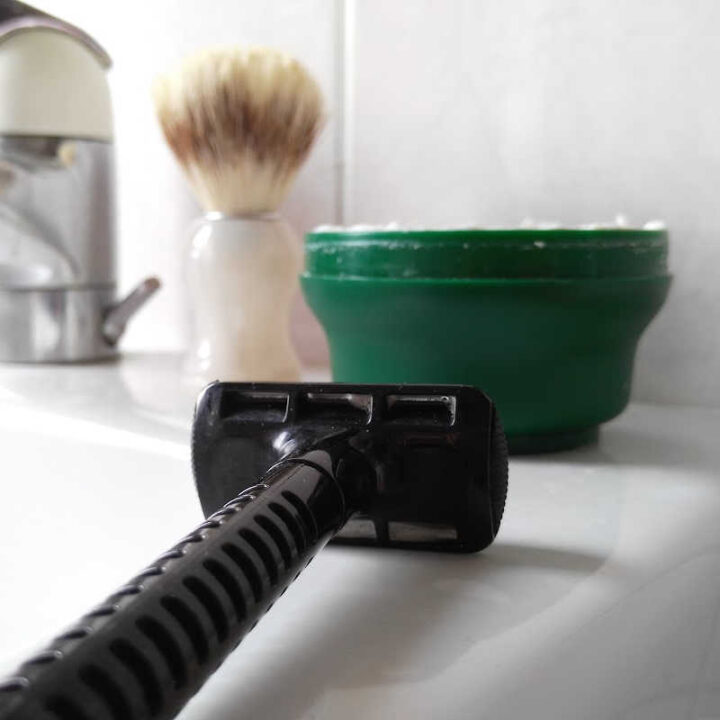
On-base exchanges and commissaries commonly carry mainstream cartridge razors, disposables, replacement cartridges, foams, gels, and some sensitive-skin products. Exact stock varies by installation, branch, country, and store size.
The exchange is a practical source for immediate replacements. It may not carry a specific safety razor, blade, cream, or electric model.
When buying locally:
- choose a razor you can use with light pressure
- prioritize reliable lubrication
- keep a backup your skin already tolerates
- avoid testing several unfamiliar products at once
- do not assume that more blades or features mean less irritation
Online ordering may make sense for a particular mild razor, blade, fragrance-free cream, or electric razor not reliably stocked on base.
Shipping restrictions can apply to aerosols, flammable liquids, and other regulated products, and eligibility may vary by carrier and destination. Verify that a seller can ship the exact product to your APO or FPO address before relying on it. USPS maintains separate rules for hazardous and restricted materials.
Operational Takeaway: Do not build a routine around a product you cannot reliably replace. Keep enough supply for delays and maintain a workable local backup.
When Shaving Advice Is Not Enough
Technique and equipment can reduce avoidable irritation. They cannot resolve every case of PFB, infection, scarring, or chronic inflammation.
Service members should follow their branch and command procedures for reporting shaving-related skin problems. Under current Navy guidance, sailors experiencing shaving-related irritation or skin conditions are directed to report the issue to their supervisor and seek military medical evaluation.
Prompt evaluation is especially important when shaving produces:
- persistent pain
- worsening bumps
- pustules or signs of infection
- scarring
- accumulating dark marks
- significant symptoms that continue despite reasonable adjustments
Medical care does not mean the service member failed to shave correctly. Some conditions remain clinically significant even when the routine is careful.
A military medical provider can evaluate the condition, distinguish PFB from other skin problems, recommend treatment, and determine whether an accommodation or profile is medically appropriate under current policy.
Decision Point: When symptoms remain significant, seek evaluation instead of escalating products, closeness, or exfoliation.
Frequently Asked Questions
Can A Safety Razor Reduce Military Razor Bumps?
A safety razor may help some service members by using one cutting edge at a time and allowing direct control over pressure and angle. It is not automatically gentler. Poor angle control, an unsuitable blade, or repeated cleanup strokes can still cause irritation.
Should You Shave Against The Grain?
Against-the-grain shaving usually increases closeness. It may also increase irritation or ingrown-hair risk for susceptible shavers. First determine whether a with-the-grain or across-the-grain shave gives an acceptable result. Dermatology guidance for PFB commonly recommends shaving in the direction of hair growth and avoiding repeated passes over the same area.
Is An Electric Razor Better For Military Shaving?
An electric razor may help someone who reacts poorly to very close blade shaving. It can also be practical with limited time or water. The tradeoff is that some models may not shave closely enough for every situation.
Does Shaving Cream Really Matter?
Cream or gel affects hydration, friction, and razor movement. Good lubrication can reduce the pressure and repeated strokes needed to cut the beard. It cannot compensate fully for a worn blade, poor angle, or excessive pass count.
What Can You Usually Buy On Base?
Exchanges and commissaries commonly carry cartridge razors, disposables, cartridges, foams, gels, and some sensitive-skin products. Specialty safety razors, individual double-edge blades, fragrance-free creams, and specific electric models may need to be ordered.
Conclusion
Better military shaving is not a contest for maximum closeness.
It is a process of meeting the grooming requirement that applies while controlling cumulative shaving exposure from pressure, blade contact, repeated passes, closeness, and limited recovery.
Remember three principles:
Every pass counts.
Reduce exposure before changing equipment.
An acceptable repeatable shave is more useful than one exceptionally close shave followed by several irritated ones.
These decisions can reduce avoidable irritation and make frequent shaving more sustainable. They cannot eliminate every case of PFB or replace medical care when symptoms remain persistent, painful, or damaging.
The standard for success is a routine that produces an acceptable result without asking the skin to absorb more shaving exposure than necessary.

Back in the day, we were crowded around sinks, rushing to shave and cutting ourselves mercilessly. Then, once in formation, the DI would start looking, marking spots on our faces with a marker, fall us out to bet our razors, and fall back in. Now we were to dry shave the marked spots on the man next to you; that was 1967. I spent 30 years shaving nearly every day in the military; some shaves were good, some bad, but every day, no matter what. My father sat me down and taught me how to shave properly with a Gillette Super Speed before I left for basic; that was a game changer. Most of these young people today have never been taught the proper way to shave. I have seen so many cases of poor shaving technique, and most were done with a multi-blade razor. Most people are more concerned with passing their physical requirements, which is important, and training before entry to get ready is an excellent idea, but they should do the same with their shaving. I was lucky to have a WWII veteran father who understood what was ahead. The military can be a very rewarding career, but you must prepare and learn basic skills before entry, because it’s a real struggle learning them on top of everything else you have to learn.