
Introduction: Why Pass Strategy Is Misunderstood
Most experienced wet shavers describe their routine in passes.
With the grain. Across the grain. Against the grain. Maybe a few touch-ups at the end.
It feels structured and repeatable. When a shave goes wrong, the focus usually shifts to something inside that routine. The blade. The angle. The lather.
But the routine itself is rarely questioned. Pass strategy is often treated as fixed, not something to be adjusted.
That’s where the problems can begin.
Quick Answer
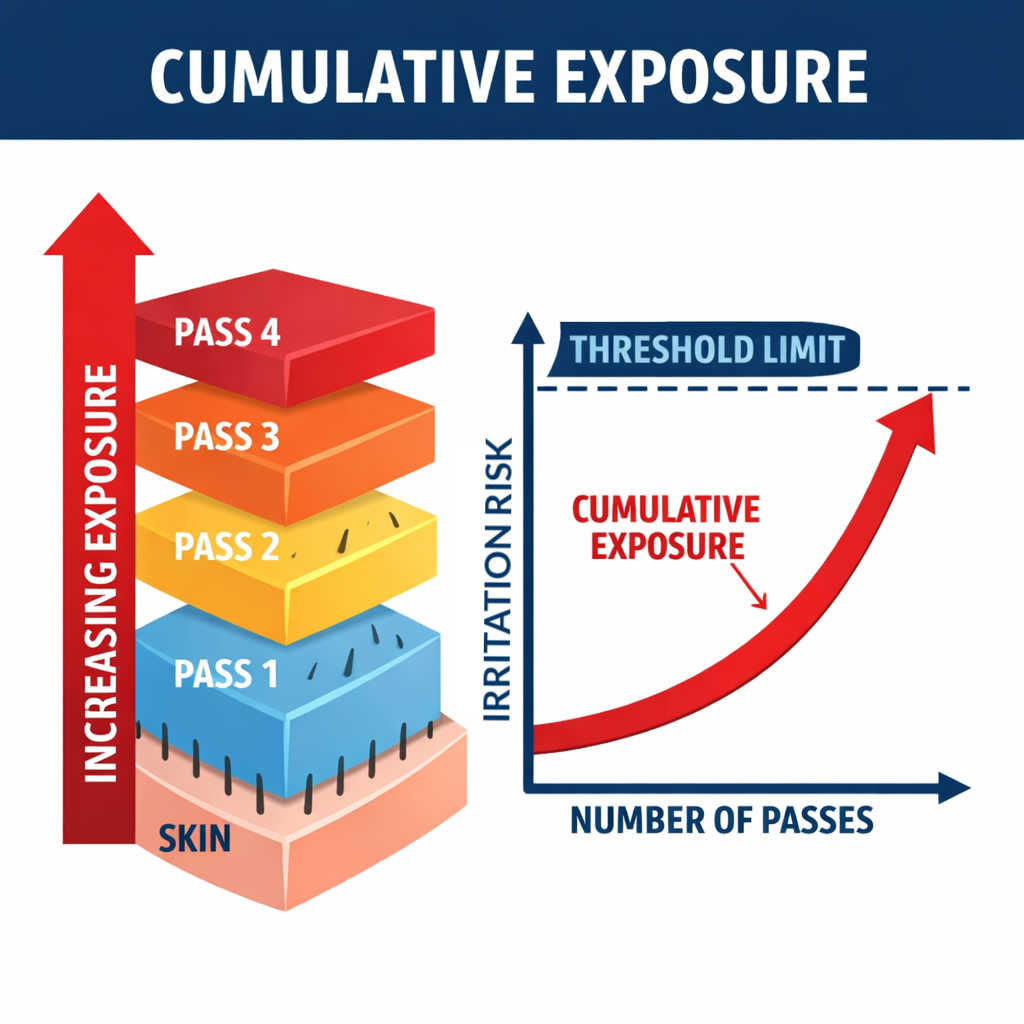
Pass strategy controls how much hair is removed with each pass and how much total skin exposure builds across the shave. More passes or more aggressive directions do not always improve closeness. They do increase cumulative exposure, which raises the risk of irritation once a threshold is crossed.
Core Principle: Pass Strategy Controls Cumulative Exposure
Pass strategy controls how much hair is removed with each pass and how much total skin exposure builds across the shave.
Each pass does two things at the same time. It cuts hair shorter and it increases how much the blade touches your skin.
You can think of this as cumulative exposure. Each pass adds to the total amount of contact between blade and skin.
Closeness improves as hair gets shorter. Comfort depends on how much total exposure your skin can handle.
The result comes from how those two effects combine across the shave.
What A “Pass” Actually Does
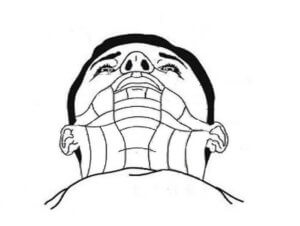
A pass doesn’t remove your beard. It reduces it.
The first pass takes off most of the visible length. The second pass works on what is left. Later passes work on hair that is already short.
At the same time, each pass increases direct contact with skin. Early passes are cushioned by hair. Later passes are not.
So the role of each pass changes. Early passes reduce. Later passes continue reduction, but with more direct exposure to skin.
That shift explains why later passes are more likely to cause problems.
The Interaction Model: Direction × Repetition × Pressure
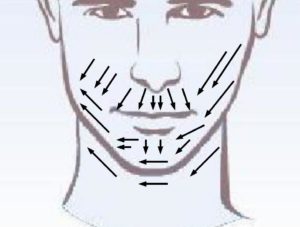
Each pass changes the conditions for the next one.
Direction affects how much hair is removed. With the grain reduces length gradually. Across the grain removes more. Against the grain removes the most, but increases stress on the skin.
Repetition increases how many times the blade moves over the same area. Even light passes can become too much when repeated.
Pressure can often increase without notice. As hair gets shorter, feedback changes. Many shavers press slightly more on later passes.
These factors don’t act alone–they build on each other.
Later passes happen on shorter hair, expose more skin, and often involve slightly more pressure. There is less room for error.
This interaction is why pass strategy cannot be reduced to direction alone. Each pass depends on what came before it.
Interaction builds over the shave. At some point, that buildup reaches a limit.
Threshold Model: When Closeness Becomes Irritation
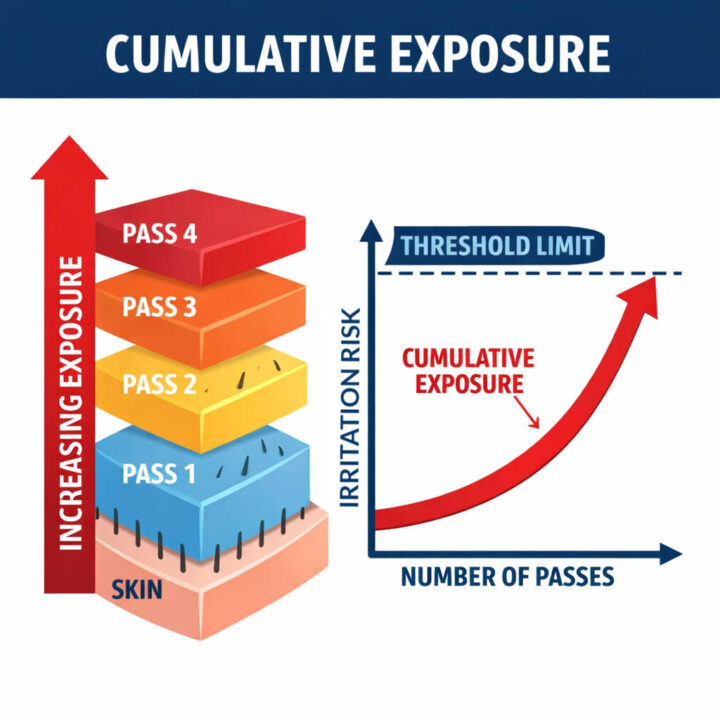
There is a point where more passes stop helping.
Before that point, each pass improves the shave in a noticeable way. After that point, improvements become small while irritation increases more quickly.
That’s the threshold.
The final pass is often where this limit is crossed. Hair is already very short, and the blade is now working mostly on skin.
At that stage, you remove very little additional hair but still increase exposure.
This is why a shave can feel close at first, then become irritated later.
Why More Passes Do Not Always Mean A Closer Shave
It’s easy to think that more passes will keep improving the result.
In practice, that often does not happen.
If early passes do not remove enough hair, later passes have to do more work. But those later passes happen on shorter hair and more exposed skin.
This leads to going over the same areas again. Closeness may improve slightly, but comfort declines.
Closeness is not created at the final pass. It is built early, through effective reduction.
Common Misinterpretations Of Pass Strategy
Conventional wisdom in the wet shaving world holds that a three-pass shave is standard.
In reality, the number of passes depends on how much hair each pass removes. Efficient passes reduce the need for additional ones.
Another common belief is that against-the-grain passes are required for closeness.
They can increase cutting efficiency, but they also increase exposure. They are a tool, not a requirement.
Touch-ups are often seen as minor refinements. In practice, they add concentrated exposure to areas that may already be near their threshold.
These patterns come from treating passes as steps instead of understanding their effect.
Observed Behavior: How Experienced Shavers Actually Adjust Pass Strategy
Over time, many experienced shavers reduce the number of passes they use.
They focus more on the first pass. Better reduction early means less work later.
Against-the-grain passes are used more selectively. In some areas they are used lightly and with intent, or avoided altogether.
Touch-ups become less common. When they are used, they are targeted rather than routine.
The pattern is not about doing less. It is about controlling how much exposure builds across the shave.
Experience Progression: How Pass Strategy Changes Over Time
Early on, pass strategy is often fixed, contributing to the conventional wisdom advice.
Many shavers follow the same sequence each time. The goal is to complete the routine.
With experience, that changes. Passes are adjusted based on how the shave is progressing. Over time, this becomes more flexible. Different areas may use different passes and directions based on how the skin responds.
This shift reflects a better understanding of how the shave works and how exposure builds.
Symptom Mapping: What Your Pass Strategy Is Causing
When irritation appears often, especially after the final pass or touch-ups, it usually means cumulative exposure has gone past your skin’s threshold. The blade has moved over the same areas too many times.
When closeness is inconsistent, early passes are often leaving too much hair behind. Later passes try to fix this under worse conditions.
When results vary from one shave to the next, pressure and repetition are often changing slightly across passes.
These outcomes are not random. They follow predictable patterns based on how pass strategy is applied.
Practical Correction: How To Adjust Pass Strategy Without Overthinking
Start by improving the first pass.
If it removes more hair, later passes don’t need to work as hard, reducing total exposure.
Remove passes that don’t add meaningful reduction. If a pass is not improving the result, it’s likely adding exposure without benefit.
Use direction selectively. Across the grain often balances reduction and comfort. Against the grain should be used where it adds value, not by default.
The goal is not fewer steps but better control over cumulative exposure.
Where This Fits In The Bigger Picture
Pass strategy works together with other parts of the shave.
In Why Technique Beats Razor Choice Every Time, technique controls how effective each pass is at removing hair. Pass strategy determines how those passes build on each other.
In Why Some Shaves Fail Even When Nothing Changed, small changes in pressure and repetition explain inconsistent results.
In When A Tool Change Helps And When It Does Not, changing tools does not solve problems if the exposure pattern stays the same.
These relationships depend on a consistent understanding of how passes work.
Conclusion: Pass Strategy Is A Control Lever, Not A Routine
Pass strategy is often treated as a routine to follow. In practice, it’s a control lever.
Each pass removes hair and increases skin exposure. The balance between those two effects determines the outcome.
Closeness doesn’t come from adding more passes. Comfort doesn’t come from avoiding a single direction.
Both come from how passes build on each other across the shave.
When you understand pass strategy this way, the routine becomes flexible. Results become more consistent. And many problems become easier to fix at their source.
