
Quick Summary: Some shaves fail even when nothing obvious changes because traditional wet shaving functions as a feedback system, not a fixed process. As experience increases, results become more sensitive to subtle shifts in pressure, angle, pace, attention, and background conditions that often go unnoticed. These quiet changes narrow tolerance rather than causing dramatic errors, which is why inconsistency feels confusing at this stage. A failed shave here is usually a signal of system drift, not a mistake or regression.
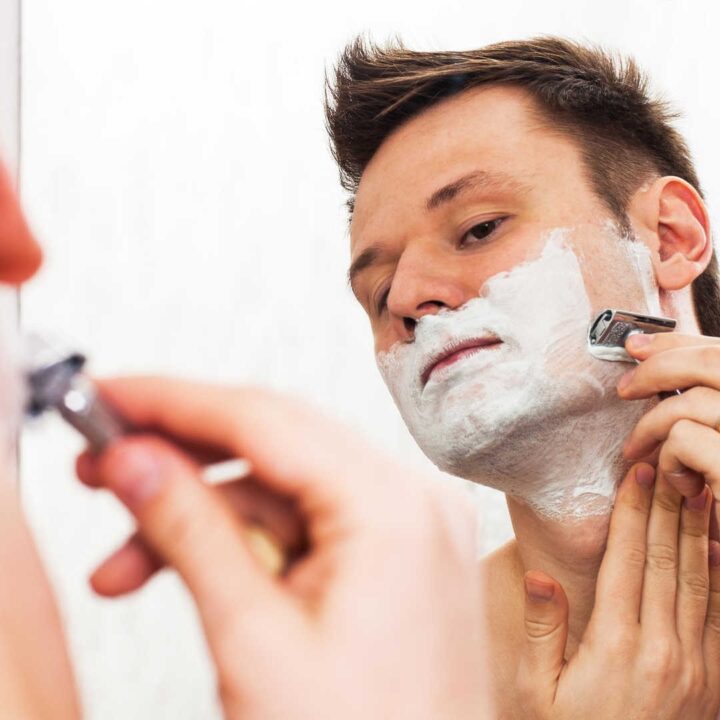
This article explains why shaves can suddenly feel worse due to small shifts in skin condition rather than obvious mistakes.
When Nothing Changed, But Results Did
One of the most frustrating moments in traditional wet shaving happens after you believe the process is settled.
Same razor.
Same blade brand.
Same soap.
Same brush.
Same routine.
And yet the shave is rougher. Less comfortable. Perhaps irritation appears where it usually doesn’t. Nothing obvious went wrong, but something clearly did.
This kind of failure feels confusing because it violates an assumption that experience quietly builds. Once technique stabilizes, results are expected to stabilize too. When they do not, the mind looks for a mistake that simply is not visible.
The problem is not that wet shaving is unpredictable. The problem is that what counts as “nothing changed” becomes harder to recognize as skill increases.
The Underlying Principle: Shaving Is A Feedback System, Not A Fixed Process
Traditional wet shaving does not operate like a checklist. It behaves like a feedback system.
Each pass can involve dozens of small inputs that adjust continuously, usually unconsciously. Pressure, angle, stroke length, skin tension, pace, and how the blade responds to resistance all interact in real time.
Early in the learning curve, large errors dominate results. Later, smaller variations matter more.
When a shave fails despite unchanged tools and products, it usually means the system shifted somewhere subtle. The inputs didn’t disappear. They moved below the level where they are easy to notice.
This is why experienced shavers often describe great shaves as feeling quiet or effortless. The system is balanced. When that balance drifts, even slightly, results change without clearly announcing why.
Why This Feels Confusing After The Beginner Stage
Beginners expect inconsistency. They are still learning cause and effect. Variability feels normal.
Confusion appears later, when technique feels ingrained.
At this stage, muscle memory feels reliable and movements become automatic. The shave feels routine rather than instructional. Because nothing new is being learned deliberately, the expectation is repeatability.
But this is also the phase where results become more sensitive to small shifts.
As technique improves, the margin for error narrows. Early mistakes were obvious and self correcting. Later deviations are harder to detect, but more impactful. The shave does not fall apart. It simply feels off.
That subtlety is what makes the failure feel unjustified.
Common Explanations That Miss The Cause
When results change without an obvious trigger, the mind looks for concrete explanations.
Some common interpretations miss the real cause:
“The blade must be dull.”
A sudden uncomfortable shave rarely comes from edge wear alone, especially when previous shaves were comfortable.
“The soap was off today.”
Once lather habits are established, soap performance varies far less than many assume. Lather problems usually show visible warning signs.
“My skin is acting up.”
Skin condition matters, but it often shifts tolerance rather than causing immediate failure on its own.
These explanations are understandable because they focus on visible variables. The problem is that, at this stage, the most important changes are often invisible.
Invisible Drift And Background Conditions
One reason shaves can fail without apparent cause is that not all variables announce themselves during the shave.
Some conditions change slowly, outside the ritual itself, and only reveal their effects once tolerance margins tighten.
Hydration is a useful example.
A shaver can maintain identical technique, lather, and equipment while skin flexibility and resilience quietly change over days rather than minutes. The shave setup looks unchanged. The system feels unchanged. But the feedback loop has shifted.
This does not show up as a dramatic failure. Instead, comfort narrows. Forgiveness decreases.
The key point is not dehydration itself, but what it illustrates. Background variables can move independently of shaving behavior, and their effects only become visible once experience reduces the buffer for error.
What Actually Changes As Experience Increases
As skill develops, many shaving inputs move from conscious control to automatic behavior. This is progress, but it comes with tradeoffs.
Pressure becomes indirect.
Obvious pressure disappears, but micro pressure remains. Grip tension, wrist stiffness, and confidence all influence how force reaches the blade.
Angle becomes fluid.
Experienced shavers stop explicitly thinking about blade angle. That fluidity is efficient, but it also allows small, unnoticed drift across different contours.
Pace increases.
Confidence shortens and speeds shaving strokes. Faster passes shorten dwell time and reduce opportunities for feedback to register.
Attention narrows.
Routine invites autopilot. Sensation is noted less carefully because the outcome is expected.
None of these shifts are errors. They are natural consequences of familiarity. But they explain why consistency can feel harder to maintain later than it did earlier.
Why Stability Sometimes Requires Restraint
There is an assumption that progress in wet shaving is linear. More experience should mean fewer problems.
In practice, mastery often cycles between refinement and recalibration.
As technique becomes more efficient, it becomes easier to outrun the feedback system. Small changes compound because the shave is operating closer to its limits. What once felt forgiving now feels precise.
This is why many experienced shavers report that their best shaves return when they slow slightly, not when they change gear or chase fixes.
They didn’t forget how to shave. They allowed the system to speak again.
A Calmer Way To Interpret Inconsistent Shaves
A shave that fails without an obvious cause isn’t a regression. It’s information.
It suggests that technique has advanced enough for finer variables to matter. The system is asking for attention, not correction.
Understanding this reframes inconsistency as part of long term mastery, not evidence that something is wrong.
Nothing is broken. Nothing needs to be replaced. The shave is reminding you that even familiar systems require listening.
That awareness, more than any adjustment, is what restores consistency over time.
Editor’s note: This article is part of an ongoing series exploring why shaving problems occur, not just how to fix them.

Your articles are always an interesting read. Thank you for sharing your perspectives and advice.
P.S. We never stop looking for the perfect shave, do we??
No, we do not.