

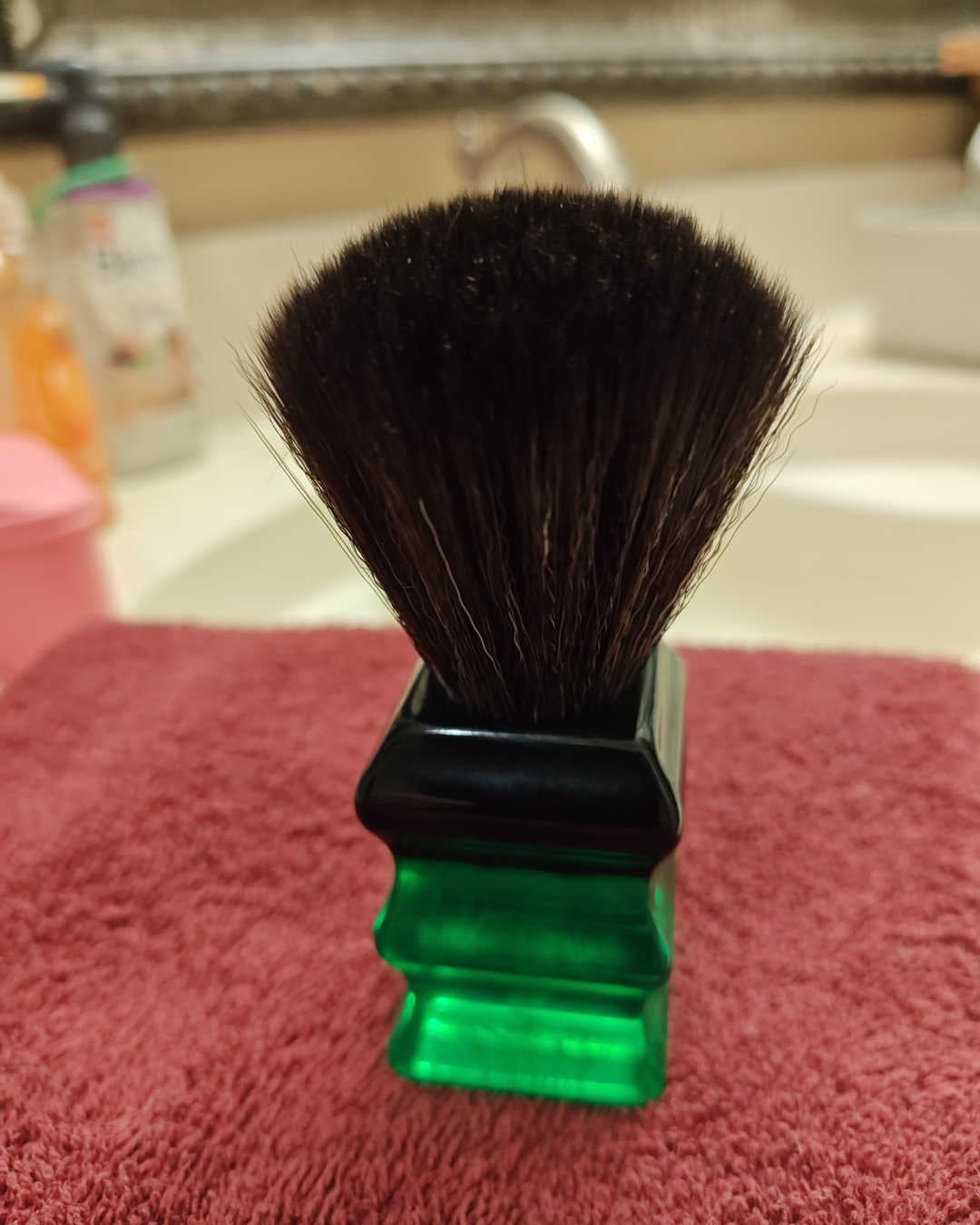
I spent years being a badger-hair snob about shaving brushes. For the past several years, though, I’ve used synthetics almost exclusively. The better examples now give me the performance I once looked for in expensive badger brushes. My choice increasingly comes down to how a particular brush builds lather, feels on my face, and fits my hand.
The Phoenix Artisan Accoutrements WÜRM, also listed as Wurm, suits those preferences well. Its 22 mm synthetic knot builds lather readily, releases it without fuss, and combines soft tips with enough support for controlled application. After almost two months of regular use, its comfortable size and easy handling have made it a good fit for my three-pass routine.
[Disclosure: PAA supplied this brush as a sample. PAA links are affiliate.]
What Is Distinctive About the WÜRM?
PAA gives the WÜRM a translucent green acrylic handle with a rectangular footprint and pronounced accordion-like segments. According to PAA, the design takes inspiration from a vintage Klenzo B1086 brush. The resulting shape is unusual, but its practical appeal for me is the range of ways I can hold it comfortably.
The knot is PAA’s 22 mm Micro Super Future Hybrid Synth, a designation familiar from the Astraeus. That connection makes Astraeus an obvious comparison, although the two brushes have behaved differently in my use.
PAA lists these approximate specifications on its sales page:
- Knot: 22 mm Micro Super Future Hybrid Synth.
- Loft: 55 mm.
- Overall height: 4.25 inches, about 108 mm.
- Weight: 3.4 ounces, about 96 g.
- Handle width: 38 mm at its widest and 31 mm at its narrowest.
- Handle material: acrylic.
These are the manufacturer’s figures; I haven’t measured my sample.
Lather Building and Release With Soaps and Creams
I’ve had the WÜRM for almost two months and used it for almost all my shaves during that time. That included hard soaps, soft soaps, and creams, with both face and bowl lathering in my hard tap water.
My loading and hydration routine has been familiar. With soaps and creams in tubs, I swirl the brush in the tub for less than ten seconds, enough to pick up product on the fibers. With tube creams, I squeeze an almond-sized amount directly onto the top of the brush. I start with a moist brush, then dip the tips in water and work the lather until it reaches the consistency I want.
The WÜRM works well with that process. Lather comes together quickly and supplies enough for the entire shave. When I describe it as luxurious, I mean creamier and slightly denser, with less building effort than I associate with my Astraeus. I haven’t timed the difference, but it’s noticeable during ordinary use.
Just as useful is how readily that lather reaches my face. I don’t have to coax it out of the knot. Once I’ve built the lather, I can get through my passes without reloading, squeezing the brush, deliberately forcing it open, or adding more water.
That ease of delivery is a major part of why I enjoy using it. A brush can contain plenty of lather while still making the next application feel like work. The WÜRM keeps the supply readily available.
Backbone, Splay, and Tip Softness on the Face
The WÜRM is a useful example of why backbone, splay, and softness deserve separate descriptions.
Backbone is the knot’s resistance to bending. Here, there’s enough support for the brush to stay firm during application. At the same time, the knot opens evenly under my normal pressure. I can feel that support without having to fight the brush to spread the lather.
The tips themselves are quite soft and badger-like to me. Their softness doesn’t leave the whole knot feeling unsupported. That combination gives me comfortable contact and a controlled application.
If those distinctions are unfamiliar, Sharpologist’s explanation of what brush backbone affects provides more detail. In this case, the useful question is whether the brush supports the motions you prefer and opens comfortably when you need it to.
Handle Design, Build, and Everyday Comfort
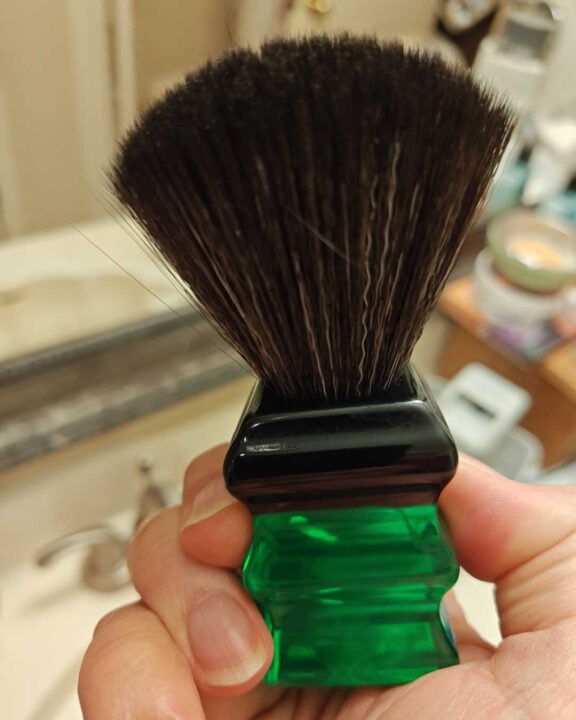
The segmented handle offers several comfortable ways to hold the brush while maintaining grip and control. I don’t have a strong opinion about the color, but the shape has a practical benefit for my hand.
Weight and balance feel good during use. I haven’t experienced pressure points or fatigue, and the handle stays comfortable throughout my normal routine. Readers interested in that side of brush selection can also see Sharpologist’s discussion of synthetic-brush handle design.
Build quality on my example is very good. A few fibers shed during the initial uses, but I haven’t had further problems. My use period supports a favorable impression of the construction; long-term durability will take longer to judge.
How It Performs Through the Shave
Circular and painting strokes both give me soft, consistent, controlled coverage. The WÜRM remains comfortable when I return to apply lather for another pass.
There’s no special maneuver I need to make it work. The knot provides support, spreads evenly, and delivers the lather I’ve already built. For a three-pass shaver, that consistency is more useful than an impressive amount of lather that requires repeated intervention to retrieve.
WÜRM Compared With Astraeus and Other PAA Brushes

In my Astraeus review, I described a brush that held lather inside the knot and released it as I splayed it open. I liked the resulting lather and the brush’s overall performance, but that retention was a distinctive part of the experience.
My WÜRM builds lather more quickly, produces a creamier and slightly denser result, and releases it more readily. Those differences are substantial enough that I think an Astraeus owner could reasonably consider it.
PAA identifies the returning knot by the same name, but I can’t explain the difference from that designation alone. I don’t have confirmation of a fiber or manufacturing change. What I can report is that these two brushes have given me different experiences.
Size also distinguishes WÜRM from other PAA brushes in my collection. Those brushes work well, but I find them just a bit too large for my preference. The WÜRM fits my hand better for control. Someone who enjoys a larger brush may value the opposite characteristic, so I’d make that part of the decision rather than assume smaller is automatically better.
Who Would Appreciate the WÜRM?
I’d put the WÜRM on the shortlist for someone who wants a manageable synthetic brush with soft tips, supportive backbone, and lather that builds and releases easily. It has handled both soap and cream in my hard water without requiring a change to my usual lathering process.
The main preference question is size. If larger PAA brushes feel unwieldy to you, WÜRM deserves a look. If you like the presence of a bigger knot or a larger handle, that same compactness may be less appealing.
PAA’s listed price is US $24.95 at the time of writing. At that price, I think the combination of comfortable handling and easy lather delivery makes it worth considering. I haven’t found a significant drawback in my use so far.
For my routine, the strongest reason to choose it is how little attention it demands once the lather is built. I can apply it comfortably through three passes and get on with the shave. If that sounds like the experience you want, check the current WÜRM listing and compare its dimensions with a brush you already find comfortable.
