
Quick Answer: Synthetic shaving brush handles matter more because synthetic fibers do not absorb water. Unlike badger or boar brushes, the knot’s balance, grip, and surface finish remain primarily handle dependent during the shave. This makes handle ergonomics more noticeable and more important with synthetic brushes.
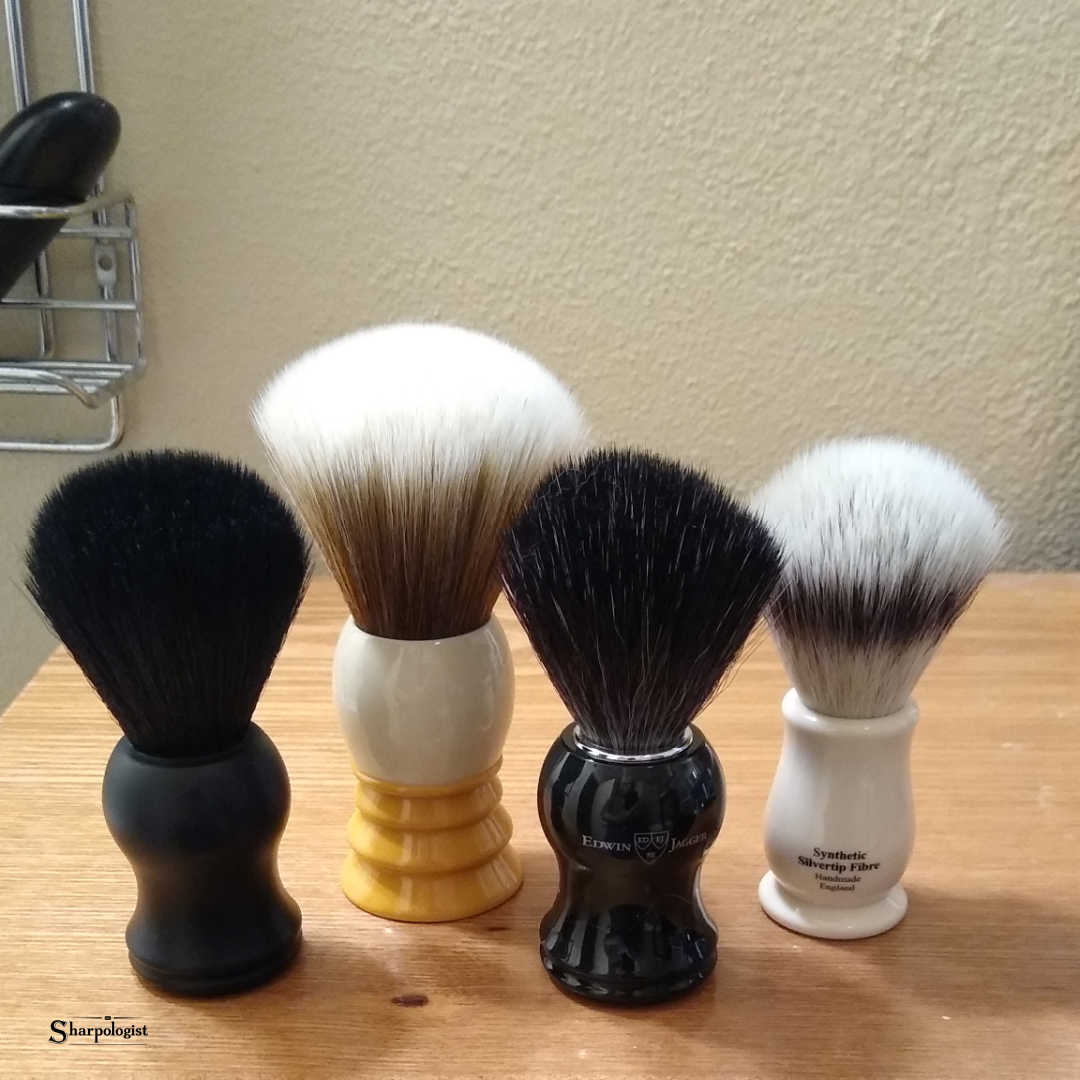
Synthetic Shaving Brush Handle Matters Because of Water Absorption
Most shavers judge a brush by its knot. That works well with badger and boar hair. It works less well with synthetic fibers.
The reason is mechanical, not subjective.
Badger and boar hair absorb water. Synthetic fibers do not.
That one difference changes how the brush behaves once it’s wet, and it shifts more responsibility onto the handle than many shavers expect. This matters most for shavers who already have solid technique and are fine-tuning control rather than just chasing comfort.
Why Synthetic Shaving Brushes Do Not Absorb Water Like Badger or Boar
Animal hair is made of keratin, which readily absorbs water into the fiber shaft. When a badger or boar brush is soaked, the knot gains mass and retains moisture internally.
Synthetic fibers are different. They are hydrophobic. Water sits on the surface of the fibers or in the spaces between them, but it does not enter the fiber itself.
This means two things in practice:
- An animal hair brush changes weight and balance once wet
- A synthetic brush stays almost the same
That difference sets everything else in motion.
How Synthetic Brush Hydration Affects Balance and Control
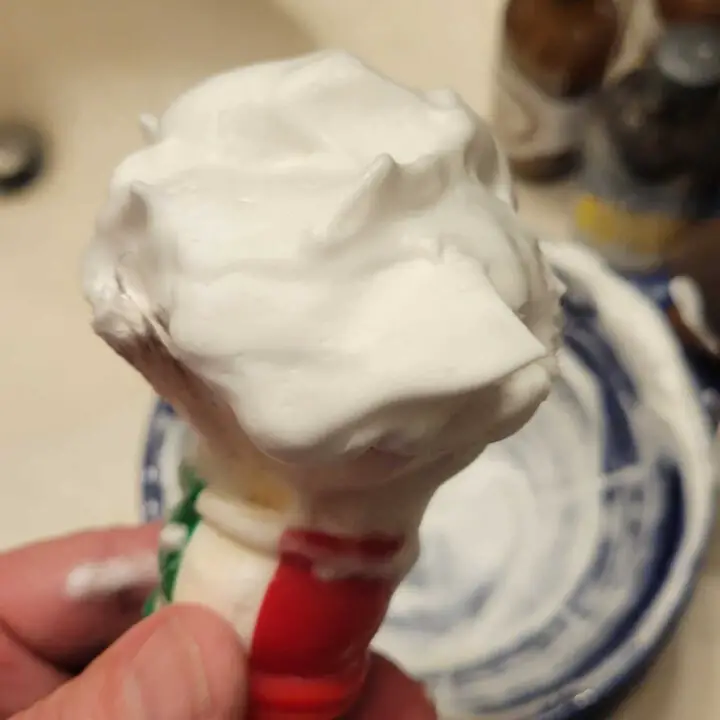
When an animal hair brush absorbs water, the added mass is concentrated in the knot. The center of gravity shifts upward. That gives the brush a stabilizing effect during use.
With synthetic brushes, that shift never happens.
Because synthetic fibers do not absorb water:
- The balance point stays closer to the handle
- The knot contributes less to stabilizing the brush in motion
As a result, the handle becomes the primary stabilizing element during use. Small differences in shape, taper, and finish show up more clearly during the shave.
This is not about comfort in the abstract. It is about where control comes from once the brush is wet.
Synthetic vs Badger: Why the Handle Becomes the Control Point
Animal hair holds water inside the fiber and releases it gradually. That internal reservoir softens changes in pressure and motion.
Synthetic fibers have no internal water storage. All moisture exists on the surface of the fibers or in the lather itself.
Even if the lather on a synthetic and a badger brush weigh the same, the brushes behave differently because the water is stored in different places. Badger hair absorbs water into the fiber and releases it slowly during use. Synthetic fibers hold water only on the surface and between fibers. That means hydration responds faster to pressure and movement with a synthetic brush, giving it a more precise feel, but also making small changes more noticeable.
That faster response pushes more control responsibility onto the handle.
Real World Comparison: Synthetic vs Badger Brush Control
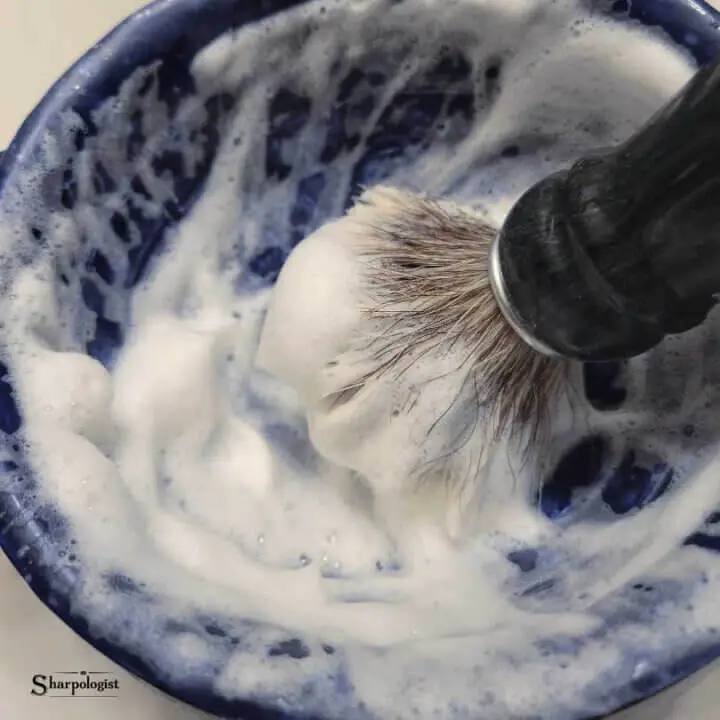
Picture two brushes with similar sized knots.
The first is a synthetic brush with a slick, high gloss handle. Dry, it feels balanced. Wet and loaded, the knot remains light and the handle stays slick. As you build lather, small grip changes suddenly matter. Control depends almost entirely on how securely you hold the handle.
Now picture a badger brush with a similar handle shape. After soaking, the knot absorbs water and gains weight. The brush feels more anchored during motion. Even if the handle is not ideal, the mass of the wet knot contributes to stability and reduces how much you notice the handle at all.
That contrast is the point.
With badger, the knot helps compensate for the handle.
With synthetic, the handle has to compensate for the knot.
That is why handle design affects balance and control more noticeably with synthetic brushes. Not because the handles are different, but because the knot is no longer doing as much stabilizing work for you.
For many shavers, myself included, this difference may be subtle. It may not be very noticeable in every shave or with every brush. But once you do notice how stability shifts when the knot stops absorbing water, it becomes easier to understand why handle design tends to matter more with synthetics over time.
Synthetic Shaving Brush Performance: Precision vs Forgiveness
This is why some experienced shavers describe synthetic brushes as:
- More direct
- More responsive
- More precise
That is the result of a knot that does not buffer movement internally.
The upside is control.
The tradeoff is forgiveness.
A well designed handle amplifies the strengths of a synthetic brush. A poorly matched handle exposes its weaknesses.
What to Look for in a Synthetic Shaving Brush Handle and Balance
When evaluating a synthetic brush, pay attention less to abstract comfort and more to how control is managed:
- Does the balance feel stable once the brush is fully loaded
- Does grip remain secure when your hand is wet
- Can you modulate pressure easily during face lathering
- Does fatigue show up faster than expected
These questions matter more with synthetics than with animal hair brushes because the knot is not doing as much stabilizing work for you.
[Editor’s Note: For a broader overview of handle ergonomics across all brush types, see Sharpologist’s guide to ergonomic shaving brush handles. This section focuses on why those factors become more noticeable with synthetic brushes.]
How to Evaluate Synthetic Shaving Brush Reviews More Accurately
If you judge a synthetic brush only by tip softness or backbone, you miss a critical part of how it performs in real use.
Understanding how water behavior, balance, and handle control interact makes brush reviews easier to interpret and buying decisions more accurate.
This becomes especially important with modern synthetic brushes that are designed for consistency and precision, not for mimicking animal hair.
Keeping this distinction in mind helps you evaluate synthetic brushes on their own terms rather than through expectations built around badger or boar.
