
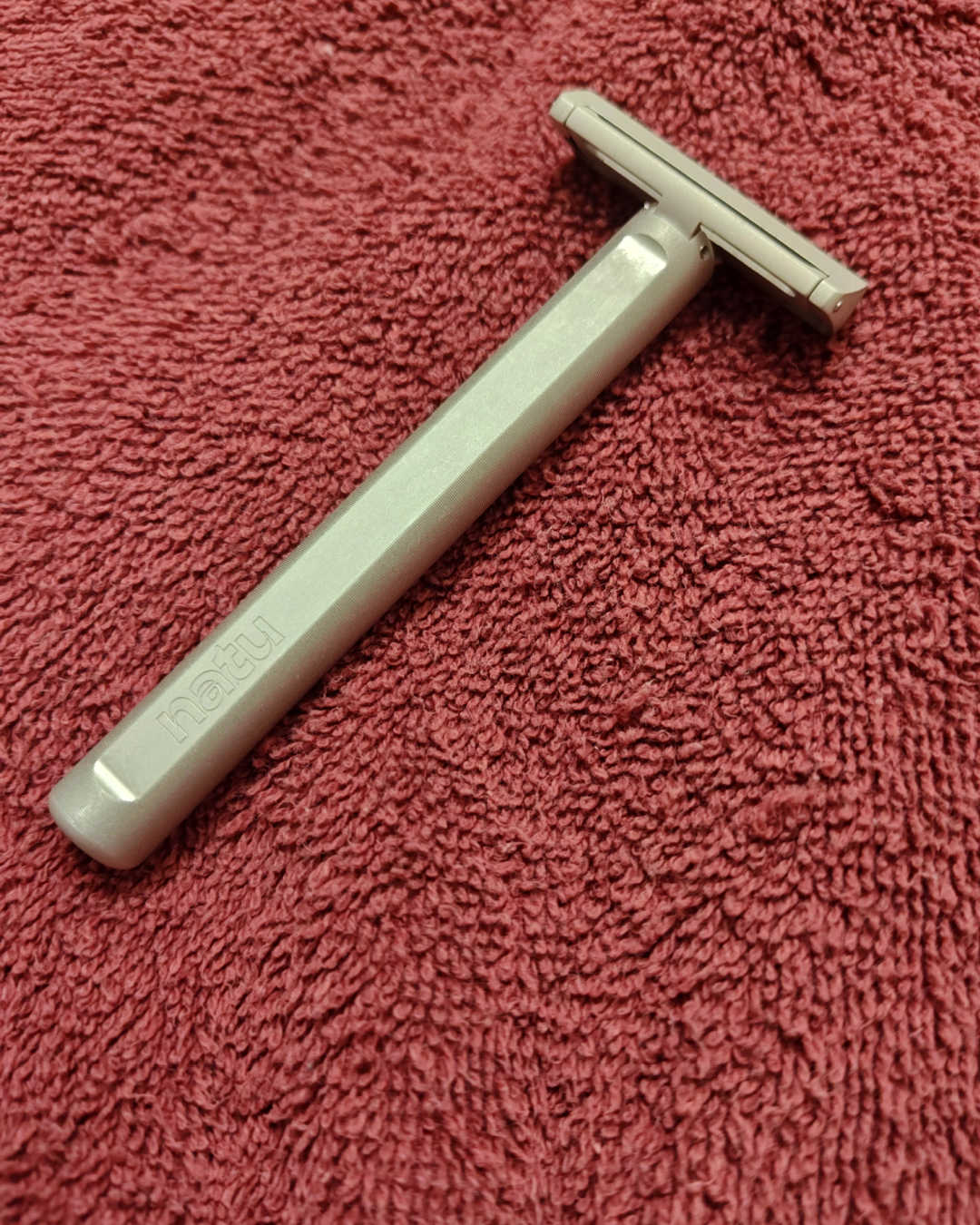
I like what a pivoting head can add to a single-blade shave. OneBlade, Proof, and Supply Max have each given me a different take on the single-edge, pivoting safety razor, and NATU now joins that group. But the real attraction of these razors for me is consistency. I can get a very close shave with less worry about minor angle variations causing rough patches on the skin.
NATU And Convenience
The NATU combines two useful conveniences and an interesting design choice: a pivoting head (the pivoting head uses magnets instead of a spring for pivot tension) and easy loading with ordinary half double-edge blades. After several months in my razor rotation, I’ve found it capable of consistently close, comfortable shaves. The key is a relatively light touch that lets the head follow facial contours without forcing the pivot.
Like trying many other razors, that takes some getting-acquainted time. The NATU looks like it might invite cartridge-style handling, but my best technique was much closer to using a traditional safety razor. Once I found the right contact pressure, three-pass shaves routinely delivered the smooth finish I wanted.
[Disclosure: NATU and Super Safety Razors supplied production samples for this review. Samples were provided without conditions. Geni.us links may be affiliate.]
My Time With The NATU
I’ve used the NATU intermittently since April 2026, with approximately 20 shaves between April and August and additional use afterward. It became a more deliberate focus of my rotation after August. My application is facial shaving.
My beard is salt and pepper, with noticeably stiffer stubble around the goatee area. I used the razor on growth ranging from next-day stubble to about five days. My lower right jaw is a familiar trouble spot, so I paid particular attention to both the finish and skin comfort there.
My go-to double edge blade is a Parker and mostly what I used in the NATU. I also tried Feather Hi-Stainless, which produced excellent results but required more attention to technique.
Light In The Hand, Secure At The Head
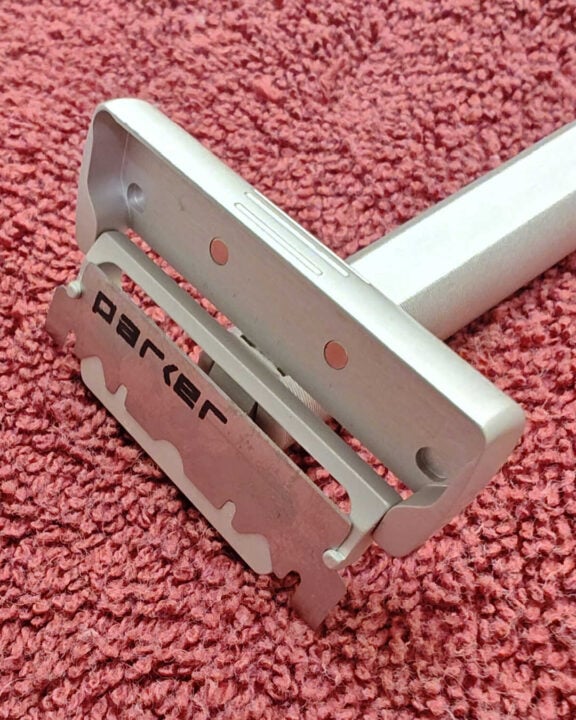
The NATU is made in Portugal from CNC-machined aluminum and uses half of a standard double-edge blade. That gives it access to a wide choice of blades without tying the owner to proprietary cartridges. Sharpologist’s guide to razors that use half DE blades explains the format and other designs that use it.
At about 42 grams and approximately 4.5 inches long, my NATU is lighter than I generally prefer. The balance works well, though, and I had good control over the razor.
The handle also grips better than its fairly smooth appearance suggests. Its matte finish gave me secure handling with dry, wet, and soapy hands, including when I experimented with different finger placements. I needed some time to find the right shaving pressure, but the low weight didn’t make me feel compelled to press harder.
The head was more reassuring than I initially expected. The hinged cap closed securely, the hinge pin was properly seated, and I found no lateral movement. The finish on my grey sample was consistent, without visible milling marks.
Blade loading is a particular strength. Open the hinged cap, position the half blade using the magnet and alignment pins, and close it again. Both pre-cut half blades and full DE blades snapped in half loaded securely. The convenience held up through repeated blade changes.
During shaving, I experienced no vibration, skipping, or chatter. Audible feedback was relatively modest. For a lightweight razor with both a hinged cap and a moving head, it felt secure in use.
Give The Pivot A Light Touch
The NATU’s pivot meaningfully simplified my shave, particularly as the head followed curves. Its movement works subtly in the background.
I got the best results with about the same light touch I use with a classic safety razor, sometimes adding a tiny amount of pressure to maintain blade contact. That approach worked with, across, and against the grain.
There’s no need to press until the head’s movement becomes obvious. Concentrate on keeping the blade in effective contact with the skin and allow the pivot to accommodate the changing contour.
For an experienced DE or SE user, that should be a fairly familiar adjustment. My basic shaving technique stayed much the same. Someone coming from cartridges should give pressure more attention: the moving head may look familiar, but I found the NATU needed a lighter touch than a cartridge razor.
The practical benefit was some help around contours while retaining a familiar single-blade routine. I still had to learn the razor’s individual characteristics, particularly the amount of contact that kept it cutting comfortably.
Close Results, With A Meaningful Blade Choice
After that adjustment, my three-pass shaves consistently reached what wet shavers call “baby-butt smooth,” or BBS: smooth to the touch.
My right jaw occasionally lagged behind the rest of my face, though it still looked acceptably shaved. That same area sometimes developed irritation. Elsewhere, and overall, shaves were comfortable.
Parker gave me the balance I preferred. It delivered the close finish I was looking for without demanding the degree of attention I needed with Feather.
Feather also produced excellent results. However, I had to be more focused and careful to avoid over-shaving. That’s consistent–but less dramatic–compared to my experience using Feather in traditional DE razors. The NATU’s pivot didn’t negate that familiar tradeoff.
If you already enjoy Feather blades, they’re a worthwhile combination to consider. I’d still start with a blade you know well and judge the result by how easily you can repeat a comfortable shave. For me, Parker remains the better everyday match.
Kai is another blade often discussed alongside Feather, but I haven’t tested it in the NATU.
The Awkward Spot: Directly Under The Nose
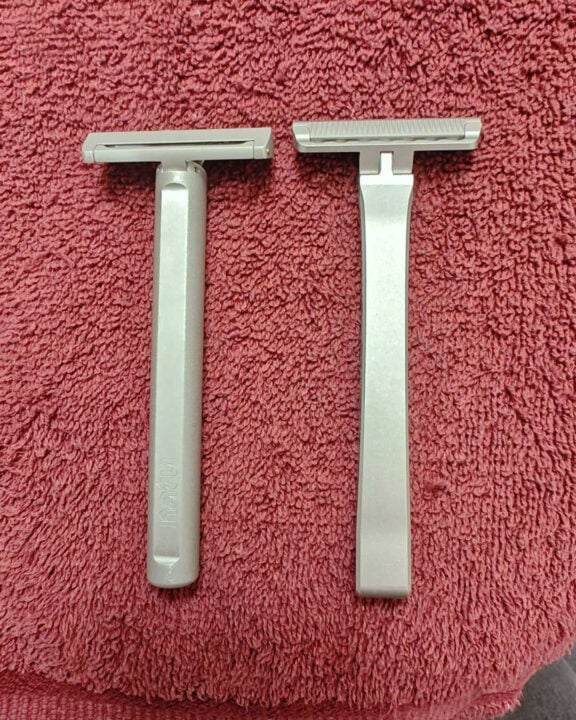
The most noticeable access limitation was immediately below my nostrils. With a downward, north-to-south stroke, the head could leave a little stubble behind.
Later passes moving sideways, east to west, generally caught it. The workaround was straightforward, although I’d prefer a head that reached the area more easily in the first place.
That matters if under-nose access is one of your main frustrations with a razor. The NATU gave me a good finished result there, but stroke direction was part of getting it.
Glide and rinsing were uncomplicated. I experienced no drag, suction-like resistance, or skipping, and the head rinsed easily and completely.
One care detail is worth knowing before buying: NATU’s instructions call for removing the blade after every shave, rinsing and drying the razor, and storing it somewhere dry. The easy-opening head makes blade removal accessible, but it is still part of the recommended routine. For myself, I keep a blade in if I know that it’s going to be in my regular rotation. If I am testing other razors and will keep the NATU out of the rotation then, yes, I remove the blade.
Who Should Consider The NATU?
I’d recommend considering the NATU if you want a pivoting single-blade razor, value straightforward blade changes, and like having a broad selection of inexpensive blades.
Its light weight will appeal more to some shavers than others. I generally prefer more heft, yet the balance and grip worked well enough that weight wasn’t an obstacle to getting a good shave.
A traditional safety razor user gets contour assistance with a largely familiar technique. A cartridge user gets a moving head and freedom from proprietary refills, with some adjustment to pressure and blade choice.
If you’re exploring other pivoting half-DE designs, the Proof Select 2.0 review offers another approach to consider. I find the razors quite similar in many respects, though the Proof razor’s head cap is fully removable instead of hinged like the NATU.
My overall impression is very favorable. The NATU pivoting head safety razor delivers a very close shave, and its loading system makes a routine blade change pleasantly simple. I’d welcome easier access under the nose and a little more weight, but neither prevented good results. The most useful adjustment was learning how little pressure it needed.
