
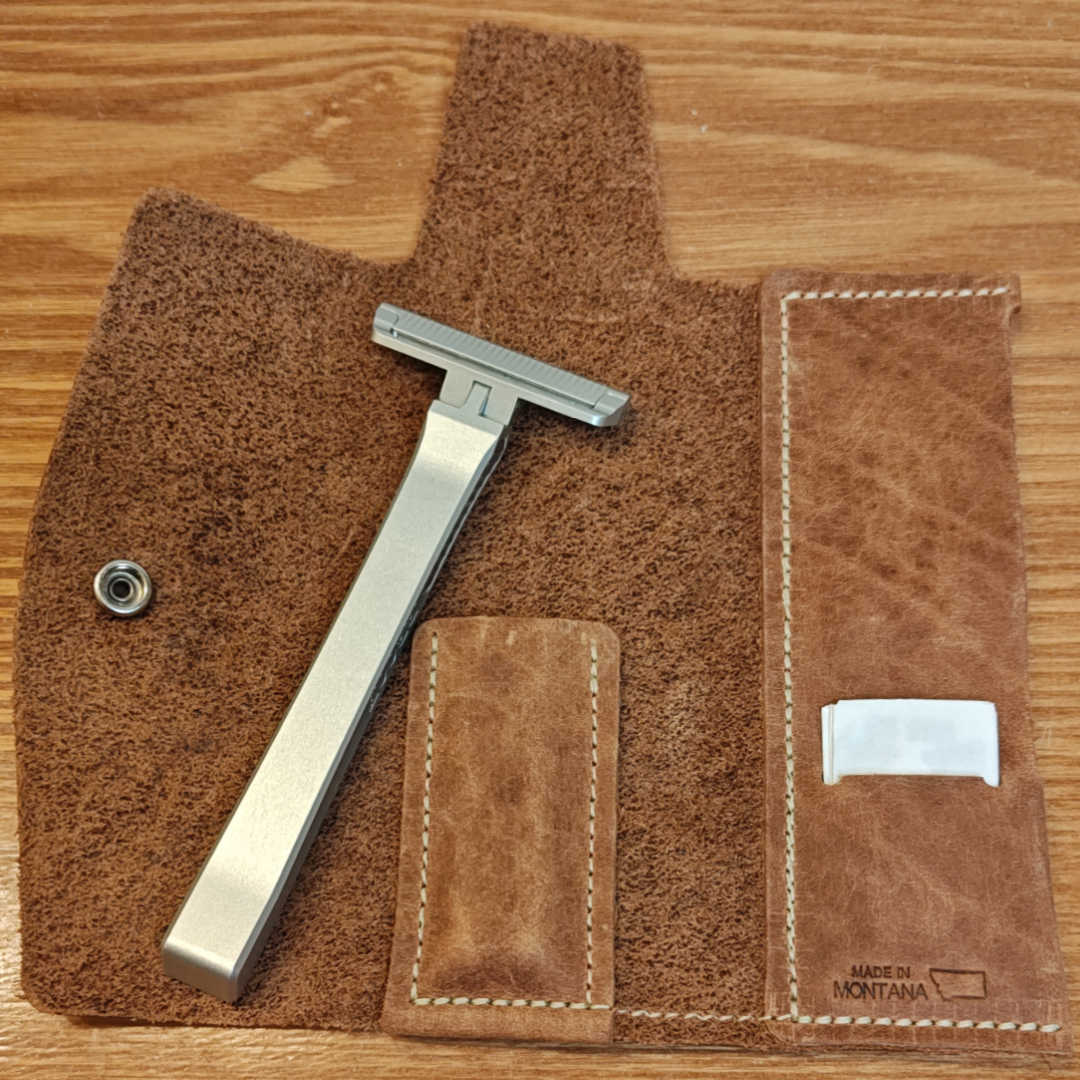
Pivoting single-blade razors are still a small category, but they have grown enough that different designs are starting to show different behaviors. The original Proof razor was one of the earlier attempts to combine a pivoting head with a standard double-edge blade, and the original version immediately divided opinion. Some users liked the ease of use, while others felt the pivot reduced the precision they expected from a safety razor.
The updated Proof Select 2.0 keeps the same basic concept but changes the pivot mechanism, head design, and balance. Those changes do not turn it into a completely different razor, but they do affect how it behaves on the face. Understanding the mechanical differences explains why the 2.0 feels smoother and easier to use, but still does not shave like a traditional fixed-head razor.
Quick Summary
The Proof Select 2.0 keeps the same half-DE blade system as the original but changes the pivot and head design. The new version uses a lighter spring-based pivot, a revised cap with better glide, and a slightly different balance. These changes make the razor feel smoother and easier to use, but also slightly milder and more cartridge-like. The overall shave is forgiving and comfortable, but the loose pivot and flexible blade clamping mean it does not have the same precision or efficiency as a rigid fixed-head safety razor.
What Changed From The Original Proof Razor
[Note: I purchased a Proof 2.0 razor for my own use. The opinions expressed here are my own and have not been reviewed or approved by Proof. Proof links are not affiliate.]
The Proof 2.0 does not change the basic idea of the razor. It still uses half of a double-edge blade held in a pivoting head. The main differences are in how the pivot works and how the head contacts the skin.
The original Proof razor used opposing magnets to create pivot tension. Later versions and this new version use a spring-based mechanism with magnetic assist. In practice, this makes the pivot feel lighter and easier to move. The head follows the face more freely, which reduces the chance of digging in but also reduces the amount of feedback.
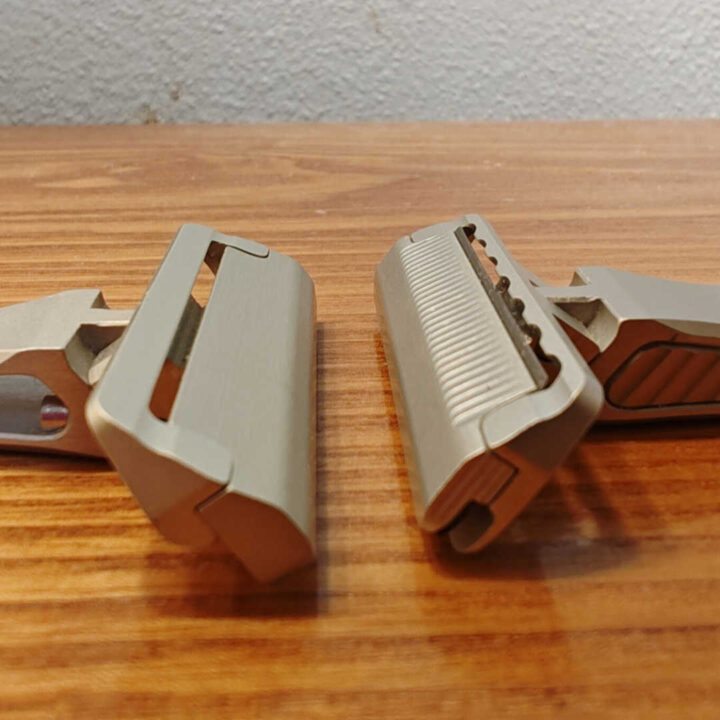
The top cap has also been revised. The newer cap has grooves that are intended to reduce drag and improve the flow of lather and water through the head, similar to “self lubricating” razors. This does not change the blade exposure much, but it does make the razor feel smoother during the stroke.
There are also small but noticeable changes to weight and balance. The newer razor is slightly heavier (1.8 oz., vs. about 1.2 oz. for previous models) and the balance point is shifted forward, with the addition of a stainless steel insert. This makes the razor feel a little more stable, even though the pivot itself is lighter.
None of these changes alter the fundamental geometry, but they do make the razor behave more like a loose-pivot design and less like a fixed-angle design.
How The Pivot Design Affects The Shave
The pivot is the most important part of the Proof design. Unlike a traditional safety razor, the angle is not controlled entirely by the user. The head moves enough that the blade tends to stay in contact with the skin even if the handle angle changes.
With a tight pivot, the head mostly keeps the same geometry and only moves to follow the shape of the face. With a loose pivot, the head moves more freely and the razor relies less on precise angle control.
The Proof 2.0 is on the loose side of that range. The razor’s head follows the face easily, which makes it forgiving, but it also means there is a little less direct control over the exact blade angle. That’s why the razor tends to feel easy to use but not especially aggressive to many, including myself. Although it still feels a bit light for my preference, the change in weight and balance from the previous models are noticeable (and an appreciated improvement) to me.
Users coming from cartridge razors often find this familiar, while users who are used to “riding the cap” with a safety razor may feel that the head moves more than they expect.
Personally I have found “riding the guard” does give the razor a bit more efficiency in my shaves.
Blade Geometry And Clamping
The Proof razor uses half of a standard double-edge blade. This offers far blade choice than other blade types, but it also affects how the razor behaves.
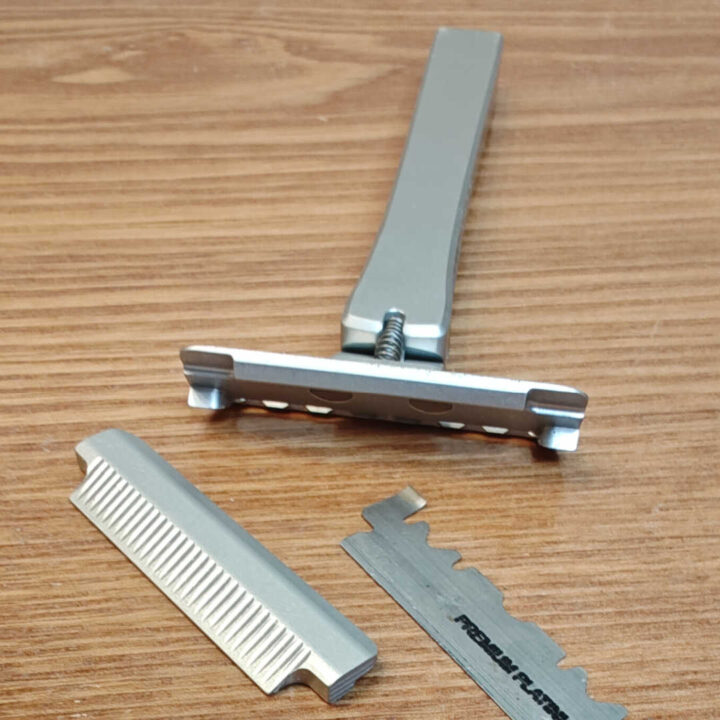
A half-DE blade is thinner than a manufactured-by-design single edge blade like an Injector-style blade, and not clamped as rigidly as some single-edge designs. That allows a small amount of flex. Flex can make the shave feel smoother, but it can also reduce the sense of precision.
Compared to thicker blade systems like those from OneBlade or Supply, the Proof feels softer and less rigid. Compared to fixed-head DE razors, the pivot adds another layer of movement. The combination of a flexible blade and a loose pivot is one reason the razor feels forgiving, but it is also why it may take more than one pass to get a very close result.
This isn’t necessarily a disadvantage. It is a design choice that favors comfort and ease of use over maximum efficiency.
How The Proof 2.0 Actually Shaves
In use, the Proof 2.0 tends to feel smooth and controlled to me, and not especially aggressive (I would call it a 4+ on a 1-10 scale). The head stays in contact with the skin easily, and it is difficult to apply too much angle by accident.
I think most users will agree with me that the razor works well for daily shaving or for situations where irritation is more of a concern than getting the closest possible shave in one pass. The lighter pivot in the 2.0 makes the stroke feel a little smoother than the original version, and the revised cap reduces the sense of drag.
At the same time, the razor does not have the same direct feedback as a fixed-head design. The blade is doing the work, but the pivot absorbs some of the feedback that would normally tell you exactly how the edge is contacting the beard.
For some users, that may make the razor feel comfortable. For others, it may feel less precise.
Observed Behavior From User Reports
User reactions to the Proof 2.0 tend to follow a consistent pattern.
Shavers coming from cartridge razors often describe the razor as easy to use and comfortable. The pivot makes it hard to cut yourself, and the blade is inexpensive compared to cartridge refills.
Users who prefer traditional safety razors are more divided. Some appreciate the smoothness, but others feel that the pivot reduces the level of control they are used to. A common comment is that the razor works well, but does not feel like a conventional DE shave.
There are also mixed opinions about the new pivot compared to the original. Some prefer the lighter feel of the 2.0, while others liked the stronger pivot of the earlier version because it felt more controlled.
The general pattern is that the razor works as intended, but whether it feels right depends on what the user expects from the design.
Who Is The Proof 2.0 Is Designed For?
The design of the Proof 2.0 makes the most sense for users who want a single-blade razor that does not require careful angle control.
It works well for shavers who are used to cartridges, for people with sensitive skin, and for those who prefer a forgiving razor for daily use. It might also be a good choice for head shaving, where the pivot helps the razor follow the shape of the scalp.
It’s less likely to appeal to users who prefer aggressive razors, who like to control the blade angle manually, or who want the rigid feel of a traditional safety razor.
Those differences are not about quality. They come from the design priorities.
What The Redesign Actually Changed
The changes in the 2.0 version did not turn the Proof into a different kind of razor, but they did shift the balance, literally and figuratively.
The lighter pivot makes the head follow the face more freely. The revised cap makes the stroke feel smoother. The small changes in weight and balance make the razor feel a little more stable.
The overall result is a shave that is comfortable and predictable, but still built around the same idea as the original. The Proof Select 2.0 razor isn’t trying to behave like a fixed-head safety razor, and it’s not trying to copy a cartridge exactly, either. It sits somewhere in between, using a pivot and a flexible blade to make shaving easier without giving up the simplicity of a single edge.
Seen that way, the way it shaves makes sense.

went to purchase one and surprise, they don’t ship to Europe, unlucky.
I have been a Proof razor customer since the original Kickstarter campaign. I own the original Highproof razor with the magnetic pivot as well as the Proof Select v 1.0 with the spring pivot, and the new Proof Select v 2.0. I think that this is an excellent razor and it is my “daily driver.” Of course, in the wet shaving world, your mileage may vary (YMMV). One issue that I had with the Proof v 1.0 (the first razor with the spring pivot) is that I was experiencing some skin irritation that I determined was caused by applying too much down pressure while shaving. This is the pressure required to engage the pivot. When using a DE razor, applying too much pressure is a common fault and leads to cuts and irritation.
Compared to Gillette, Schick, and other cartridge multiblade razors, their pivoting mechanism requires little to no down pressure to engage the pivot. My theory, and ultimately my solution, was to shorten the length of the spring by cutting away two turns of the spring. I had to be careful because shortening the spring too much would have caused it to fall out of the razor head/handle. The good news is that it worked for me and I was able to apply less down pressure to engage the pivot and I did not experience any skin irritation. Other than the spring having too much resistance in v 1.0, that was my only issue. Once I implemented my “solution” I have been receiving great shaves. I shared this with the Proof team and apparently they “softened” the resistance of the spring for the Select v 2.0.
The article states that the pivot is “loose” and implies that it lacks precision compared to a fixed DE razor. The blade may not be as tightly clamped as a traditional DE razor, but I disagree with the terminology that the Proof razor lacks precision. Instead of using the term “loose,” I think a more accurate description is that the Select v 2.0 spring has less resistance than v 1.0 which allows it to stay in contact with the skin more easily. The Select v 2.0’s spring has much more resistance compared to a cartridge razor’s pivot resistance.
I purchased the Select v 2.0 when it was released and I have been enjoying GREAT shaves. Overall, I agree with the review of Select v 2.0 razor in that it is intuitive, easy to use, and perfect for someone that shaves daily. For reference I shave daily and do 3 passes. For someone switching from a cartridge razor to a single edge with a pivot, I can recommend the Proof razor. I agree with user Tom’s post that, “… I’d buy another if I lost it or broke it. I have several DE razors. I’ve tried a great number of cartridge razors. The Select is my choice hands down. Your experience, desires, et al, are going to be different, but I frequently recommend it over many others regardless of price. I vastly prefer this to my Supply razor. It’s not even close. And the Select 2 appears to improve on a good formula.”
From what I can tell, the author is comparing the Select 2 with the Proof razor before the Select 1 came out. I think some clarifications might be in order.
1. Original had magnets instead of a coil spring in the pivot and a smooth top cap.
2. Select 1 has had the grooved cap and a coil spring for resistance. I’ve had mine for over 1.5 years and it has been my daily driver.
3. The Select 2 has a slightly smaller head, stainless handle insert, and different balance point. I can’t comment about it since I haven’t tried it. My guess is that the smaller head makes it easier to get under the nose, which would be welcome.
4. Change how aggressive it is by using different blades. Feather blades are a joy because the razor prevents too aggressive usage. Persona Comfort Coated are a safe blade. My preference are my stash of Russian PermaSharps (hope the new ones are as good or better). BBS shaves are 2 – 3 passes.
5. These are excellent razors for those of us who get ingrown hairs and razor rash easily. I rarely experience either anymore despite shaving regularly.
Here’s my take: I’d buy another if I lost it or broke it. I have several DE razors. I’ve tried a great number of cartridge razors. The Select is my choice hands down.
Your experience, desires, et al, are going to be different, but I frequently recommend it over many others regardless of price. I vastly prefer this to my Supply razor. It’s not even close. And the Select 2 appears to improve on a good formula.
Good observations, thanks.
I bought this razor for days when I needed a quick shave without irritation. I ended up giving it to my son who found this razor was the solution to his neck irritation and ingrown hairs. It does the job and is pretty effective if you approach it like a DE razor and employ several passes for a beard reduction process.