
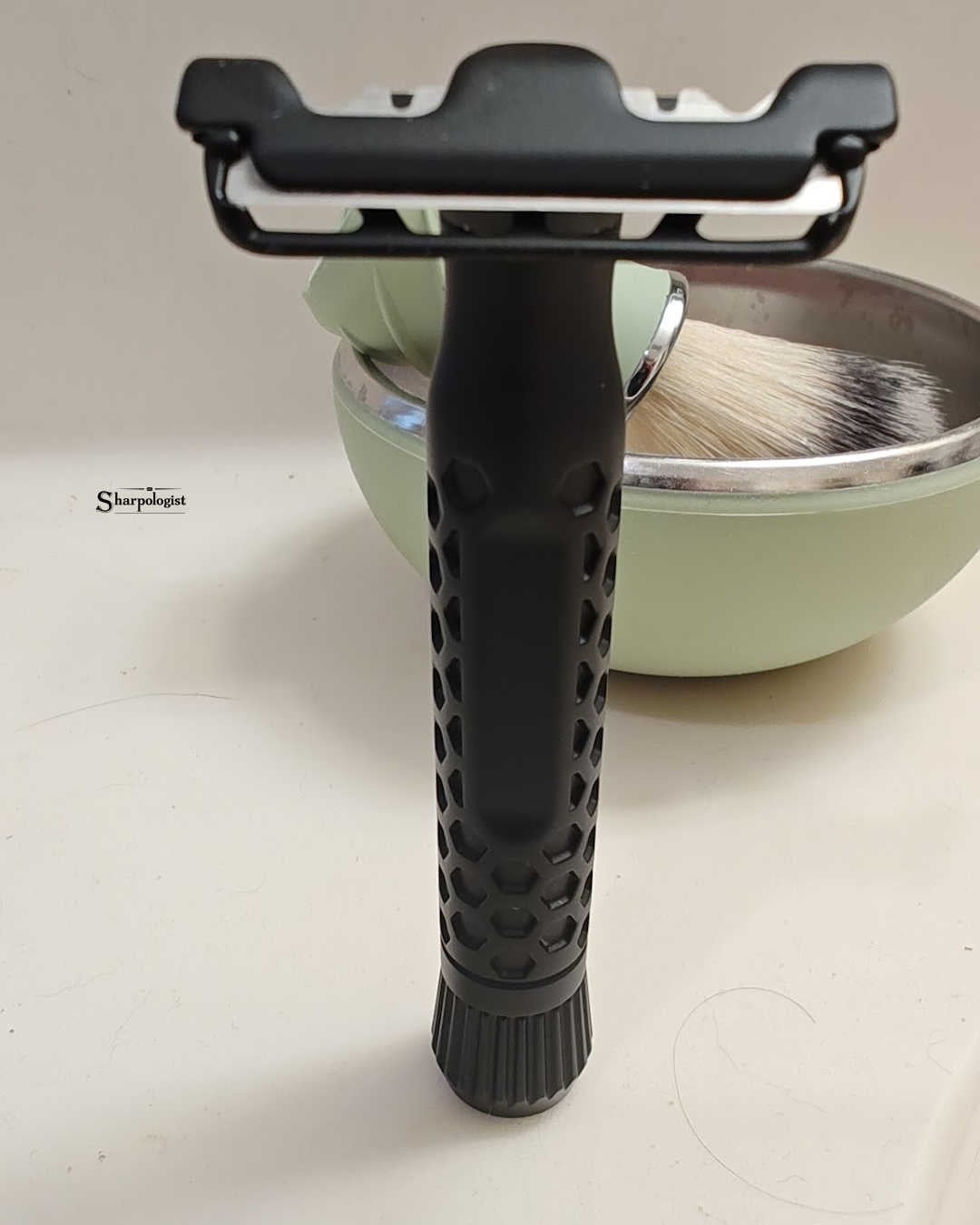
Leaf Shave is consolidating its fixed-head single-edge line. The new Branch single-edge razor will replace both the mild Twig and the more assertive Thorn as existing inventory sells through.
That creates a harder test than simply asking whether the Branch gives a good shave. The Twig emphasized comfort and forgiveness. The Thorn offered more blade exposure and greater closeness. I think a single replacement has to consider both personalities without becoming an unsatisfying compromise.
After my test facial shaves, I think Leaf has largely succeeded. The Branch feels like a genuine upgrade, not merely a compromise between two outgoing razors. It retains the Twig’s comfort and forgiving angle range while approaching most of the Thorn’s useful efficiency. It doesn’t quite reproduce the Thorn at its most aggressive, but it gave me excellent closeness with less irritation risk.
Quick Answer
The Leaf Branch is a compact, fixed-head single-edge razor that uses half of a conventional double-edge blade. In my testing, it delivered enough blade feel to make the cutting edge easy to find, a generous working angle, very good efficiency, and unusually comfortable results.
It was especially effective on my hard gray chin stubble and in difficult facial areas such as under the nose, around the mouth, along the jaw, and on the neck. I experienced no skipping, chatter, nicks, weepers, or irritation during my shave testing.
I think the Branch is best suited to face shavers, detail work, Twig owners who want greater efficiency, and Thorn owners who want most of the Thorn’s cutting ability with a larger comfort margin. It’s less attractive for body shaving–I think the Leaf Two is more suited to that. I see the Branch more naturally as a second safety razor than as the mildest possible first razor.
[Disclosure: Leaf Shave supplied the Branch razor for evaluation timed for its launch. The opinions here are mine and were not reviewed or approved by Leaf. Leaf (tidd.ly) and Geni.us links may be affiliate.]
What The Leaf Branch Is
The Branch continues Leaf’s interpretation of a fixed-head single-edge safety razor. Like the Twig and Thorn, it uses half of a standard DE blade. A magnet assists blade placement, and turning the control at the bottom of the handle opens and closes the head.
Leaf says the Branch has a 1.1 mm blade gap, which places it 0.1 mm above the Twig and 0.1 mm below the Thorn. The company also describes adjusted shaving angles, tighter blade clamping, revised internal loading mechanics, a uniformly thick handle, and a full-length hexagonal grip pattern. Leaf says each retail razor will include a silicone head cover for travel.
That helps explain Leaf’s intent, but blade gap alone isn’t the only specification for how a razor will shave. Exposure, guard geometry, cap geometry, clamping, blade choice, angle, and user pressure all affect the result. Does the complete design actually produce the promised balance of comfort and performance?
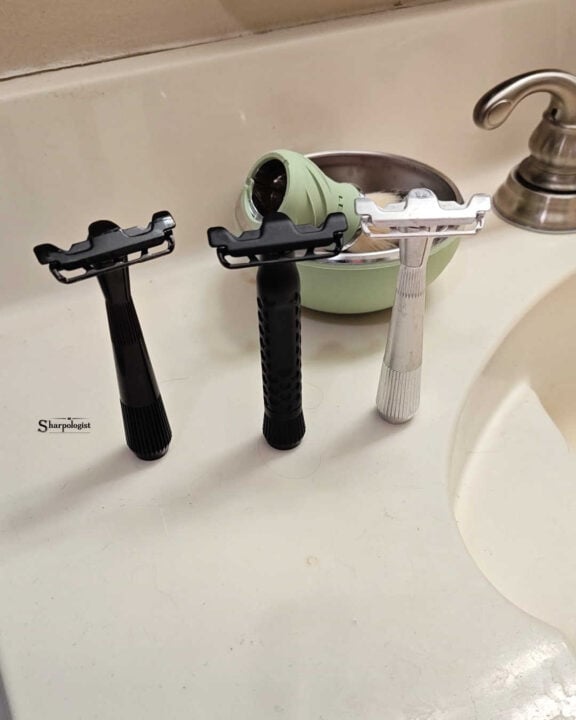
I was told that my pre-launch sample is final-production hardware. I measured four inches overall and 3.3 ounces in weight. That is noticeably heavier in the hand than the Twig or Thorn.
Its center of gravity still feels biased away from the head like the Twig/Thorn. I generally prefer razors that carry more of their balance nearer the head but I found the Branch comfortable and “beefy” to hold in the hand and easy to control.
How I Tested The Branch
I used the Branch for face shaves under several conditions rather than repeating one identical setup.
| Test variable | Conditions |
|---|---|
| Beard growth | One-day, two-day, and four-day stubble |
| Blade | Parker DE blade snapped in half used for all shaves |
| Lather | Soap and a brush (including Leaf’s brush/bowl/soap set and brushless shave cream (Cremo) |
| Pass strategy | Two passes on four-day growth; three passes on the other shaves |
| Primary evaluation | Comfort, efficiency, angle range, blade feel, stability, detail access, irritation, and final closeness |
My Twig and Thorn comparisons are based on my established experience with those razors and my earlier published review. I did not conduct a new split-face or simultaneous comparison during this test.
Build, Grip, And Blade Loading
The Branch’s build quality and black finish were very good. The more important changes, however, are functional rather than just cosmetic.
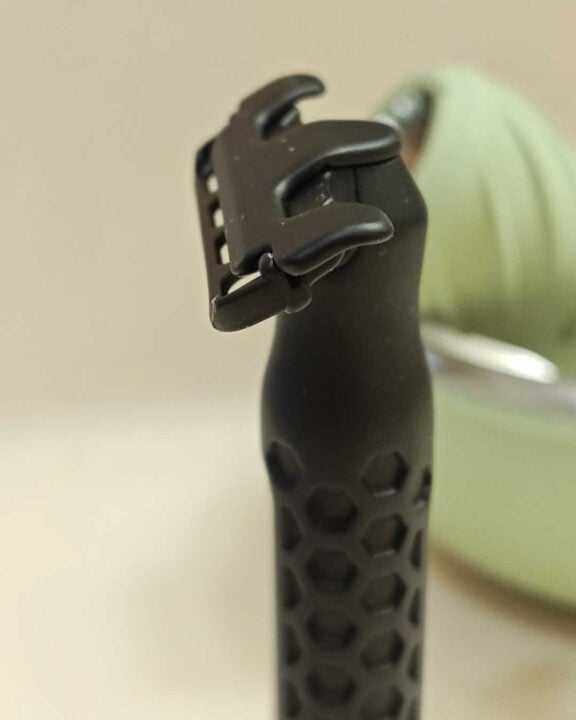
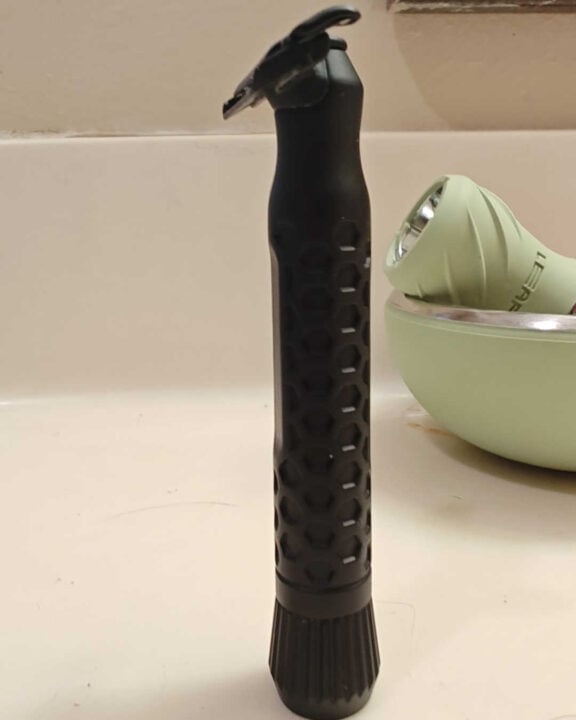
The full-length hexagonal texture provided excellent grip with both dry and wet hands. Compared with the Twig and Thorn, the improvement was quite noticeable. I never felt the need to adjust my hold because the handle was becoming slippery.
The loading mechanism also felt smooth and reliable. It required a few more turns than the earlier razors, no doubt related to the improved blade clamping design (see below). Blade loading, alignment, and removal were easy and drama-free. The magnet brings the half blade close to position, after which only a small adjustment is needed before closing the head.
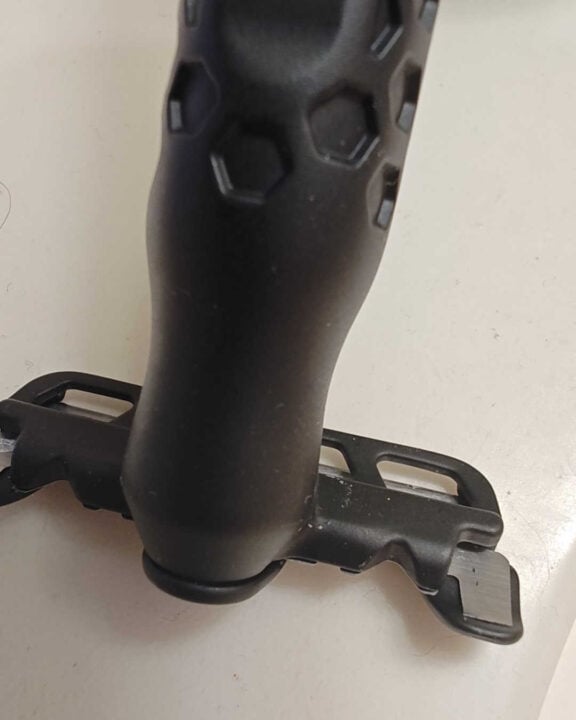
Leaf describes the Branch as having tighter blade clamping. I could not see an obvious clamping difference visually but the blade felt very stable in use. I didn’t experience any skipping, chatter, catching, or other behavior suggesting that the blade was moving or flexing unpredictably.
How The Branch Shaves
The Branch offered just enough blade feel to make the cutting edge easy to locate. I never had to hunt for a narrow sweet spot, and the usable angle range felt generous. That combination can make a difference: too little feedback can make a razor feel vague, while too much blade sensation can make small pressure mistakes costly. The Branch stayed between those extremes for me.
Audible and tactile feedback were moderate: the razor told me it was cutting without becoming noisy or harsh. It showed some pressure sensitivity, like any exposed-edge razor should, but it wasn’t excessively sensitive.
Efficiency was one of the strongest results for me. On two-day growth, the Branch had already produced what I would call a Darn Fine Shave after the first pass. Completing the normal with-grain, across-grain, and against-grain sequence produced a Baby’s Butt Smooth result. On four-day growth, two passes, with the grain and across the grain, produced a Darn Fine Shave.
I didn’t need excessive cleanup strokes. Most surprising for me, I completed all shaves without irritation, nicks, or weepers. A highly efficient razor can sometimes create a temptation to chase an even closer result, but the Branch gave me little reason to keep working an area after routine passes.
Stability On Hard Gray Stubble
My chin is a useful stress test because its hard gray stubble can expose a razor that lacks stability or requires too many repeat strokes. The Branch performed exceptionally well there. It cut cleanly without skipping, catching, or chattering.
Tighter clamping is solely responsible for that. The blade, shaving angle, guard and cap geometry, exposure, and my technique all contribute. Still, the observed stability was real, and it was one of the clearest practical strengths of the razor.
The same control carried into detail areas. The Branch worked very well under the nose, around the mouth, along the jaw, and on the neck. Its small head made it easy to see where the cutting edge was going and to use short strokes without the benefit of a large pivoting head.
Rinsing And Everyday Handling
The Branch rinsed easily in all of my test conditions. Leaf shave soap cleared without trouble, and I saw no clogging. The brushless cream accumulated slightly on the underside of the head (Cremo has the reputation of being a little “sticky”), but the buildup did not affect the shave and rinsed away without much effort.
The compact head is a benefit for facial shaving but a tradeoff elsewhere. It works best where visibility, tight access, and precise placement matter. On large body areas, however, that design means slower coverage. The Branch can shave the body, but it would not be my first choice for someone whose main priority is covering broad surfaces efficiently.
Branch vs Twig And Thorn
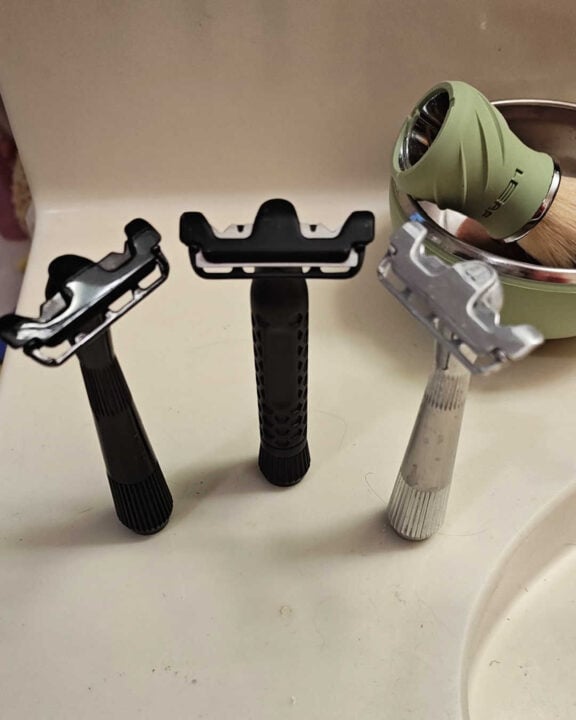
Leaf says the Branch is intended to provide the comfort of the Twig and the closeness of the Thorn. My results generally support that claim, with an important qualification.
| Characteristic | Twig | Branch | Thorn |
|---|---|---|---|
| Comfort and forgiveness | High | High | Smaller working margin |
| Practical efficiency | Mildest | Near the Thorn for most use | Highest |
| Blade feel | Mildest | Similar to the Thorn in my experience | Assertive |
| Irritation risk | Low | Low in my testing | Higher for me |
| Maximum closeness | Good | Very good | Closest |
| Best fit | Mild, forgiving face shaving | Balanced face and detail shaving | Maximum aggression and closeness |
Compared with the Twig, the Branch felt about as comfortable and forgiving but materially more efficient. This is the easiest upgrade decision. A Twig owner who likes the basic format but wants to remove more stubble with fewer strokes should gain something meaningful.
Compared with the Thorn, the answer is more nuanced. The Branch gave me about the same degree of blade feel, but it did not shave quite as close at the aggressive end. In return, it showed me less irritation risk. I think it preserves nearly all of the Thorn’s practically useful efficiency, but a Thorn owner who specifically wants the strongest possible result may still prefer the older razor.
That distinction is why I would not describe the Branch as a perfect merger. It largely combines Twig comfort with Thorn closeness, but it is calibrated toward the part of the Thorn experience that most shavers can use consistently rather than toward maximum aggression.
Branch vs Leaf Two
The Leaf Two and Branch solve different problems even though both use snapped DE blades.
The Leaf Two uses a larger pivoting head with two blade positions. Its pivot reduces some active angle-management demands across broad surfaces, which makes it more naturally suited to body shaving and some cartridge-transition users. The tradeoff is reduced facial precision. In my Leaf Two testing, the large head made under-nose and detail work more difficult, and the relatively loose pivot could skip over my hard gray chin stubble.
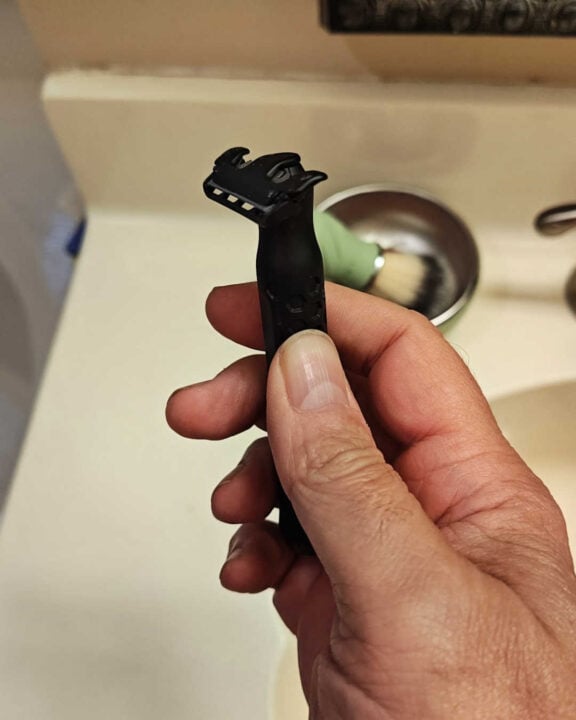
The Branch takes the opposite approach. Its fixed, ultra-small head asks the user to manage angle directly, but it rewards that input with better visibility, more precise placement, and stronger performance in tight facial areas. For my face and detail work, the Branch was clearly more appropriate.
Is the Branch A Beginner Razor?
Leaf describes the Branch as suitable for new wet shavers who want a low learning curve. The working angle is generous, loading is easy, the grip is secure, and the razor was forgiving in my hands.
But I would still hesitate to make it my recommendation for someone’s very first safety razor. The Branch has noticeable blade feel and enough efficiency that pressure errors can matter. A complete beginner who is still unlearning cartridge pressure may benefit from an especially mild razor with a larger error margin.
That doesn’t make the Branch an expert-only tool. I can easily see recommending it as a second safety razor or to a cartridge user who understands that a fixed-head single-edge razor still requires deliberate pressure and angle control. The difference is preparation, not experience.
Who the Branch Is Best For
The Branch makes the most sense for:
- Face shavers who value a compact head and clean detail work
- Twig owners who want a meaningful increase in efficiency
- Thorn owners who want most of its cutting performance with less irritation risk
- Leaf Two owners who want a dedicated precision razor
- Shavers who need strong performance on dense or resistant chin stubble
- Experienced cartridge users ready to manage the angle of a fixed head
You may want to skip it if:
- Your main use is body shaving and fast coverage matters more than precision
- You require an extremely mild razor experience
- You specifically want the Thorn’s maximum aggression and closeness
- You strongly prefer a head-heavy balance
- You are a complete beginner who is still prone to using cartridge-level pressure
What the Branch Does Not Change
A better razor design can widen the user’s working margin, but it does not remove the fundamentals of shaving.
The Branch does not make pressure irrelevant. It does not eliminate the need to find a cutting angle. It will not compensate for poor lather, rushed passes, or repeated cleanup strokes over skin that has already had enough. Its efficiency is most valuable when it reduces unnecessary strokes, not when it encourages the user to chase closeness beyond what the skin will tolerate.
That is an important part of the Branch’s appeal. It does not feel as though it is hiding the shave from the user. It provides enough feedback to support good judgment while remaining comfortable enough to avoid making every small mistake expensive.
Final Verdict
The Leaf Branch single edge razor succeeds because it does not feel like an arbitrary midpoint between the Twig and Thorn. It feels like Leaf identified the most useful qualities of both razors and recalibrated them around a broader comfort-to-efficiency balance.
In my shaves, the Branch gave me Twig-like comfort and forgiveness, Thorn’s useful efficiency, better grip, stable blade behavior, and excellent control in difficult facial areas. I really like this razor.
Twig owners have the clearest reason to upgrade. Thorn owners are less likely to lose anything important unless they specifically value the most aggressive end of the Thorn experience. Leaf Two owners should view the Branch not as a replacement for broad-area pivoting performance, but as a complementary precision tool for the face, necklines, sideburns, and other tight areas.
For face shaving and detail work, the Branch is the strongest all-around version of Leaf’s fixed-head single-edge idea that I have used. It largely fulfills Leaf’s promise to combine comfort and performance, and it does so without feeling like a compromise.
