
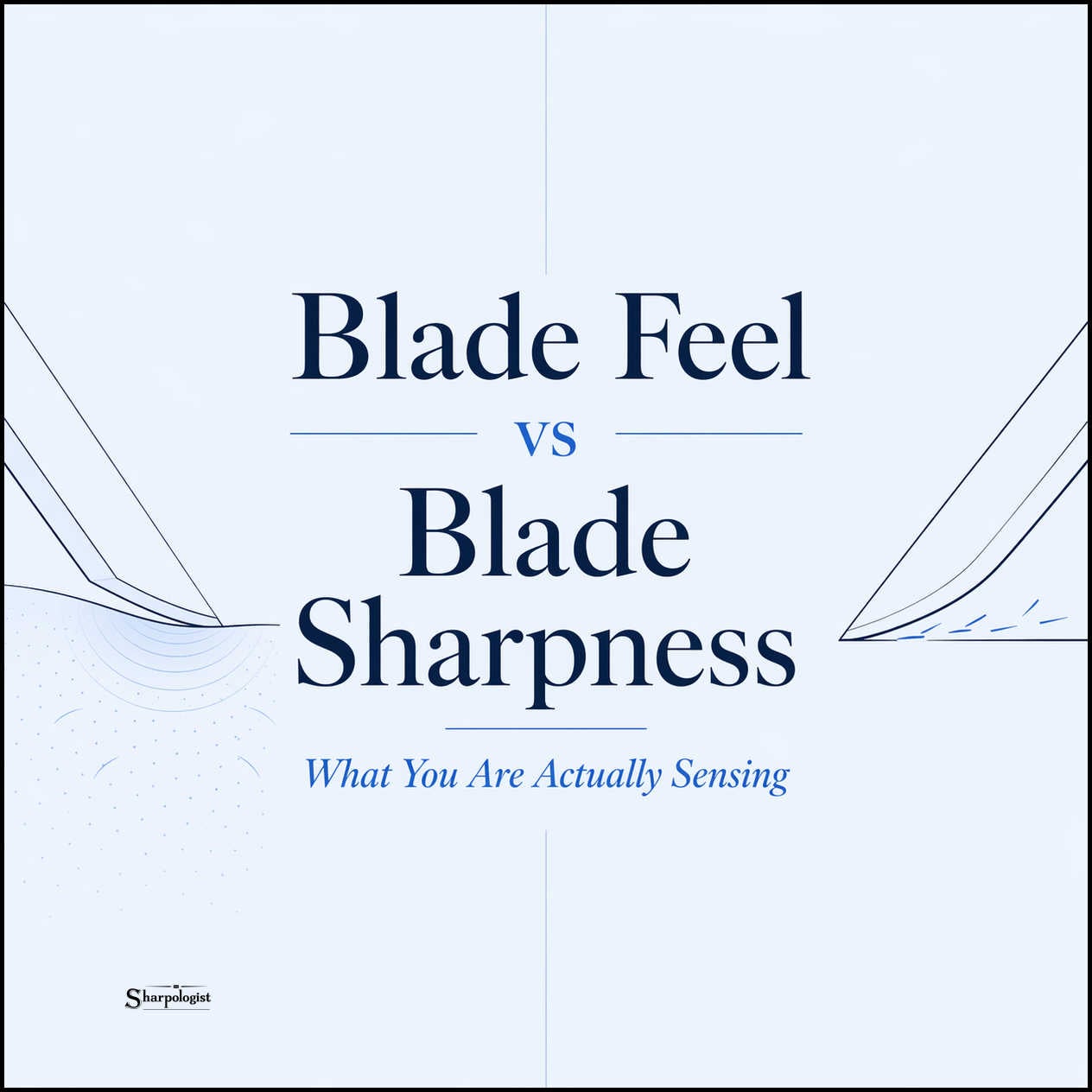
If you use the same blade in two different razors, the shave can feel completely different. One setup may feel sharp and immediate. Another may feel smoother, softer, or strangely muted. The natural assumption is that the blade itself must be the reason.
Sometimes it is. But often it’s not.
A lot of what shavers describe as blade sharpness is actually blade feel. The distinction matters because it changes how you interpret the shave and what you decide to change next.
Quick Answer
Blade feel and blade sharpness are related, but they are not the same thing. Blade feel is the sensation of how much the blade is interacting with your skin during the shave. Sharpness is a property of the blade edge and how easily it cuts hair. Razor design can change blade feel dramatically even when the blade itself stays the same.
The Core Diagnostic Principle
What you feel during the shave is not a pure reading of blade sharpness. It is filtered through razor design, angle, pressure, and the way the shave is being executed.
Changing blades does not always solve the problem the shaver thinks they are solving.
What Blade Feel Actually Refers To
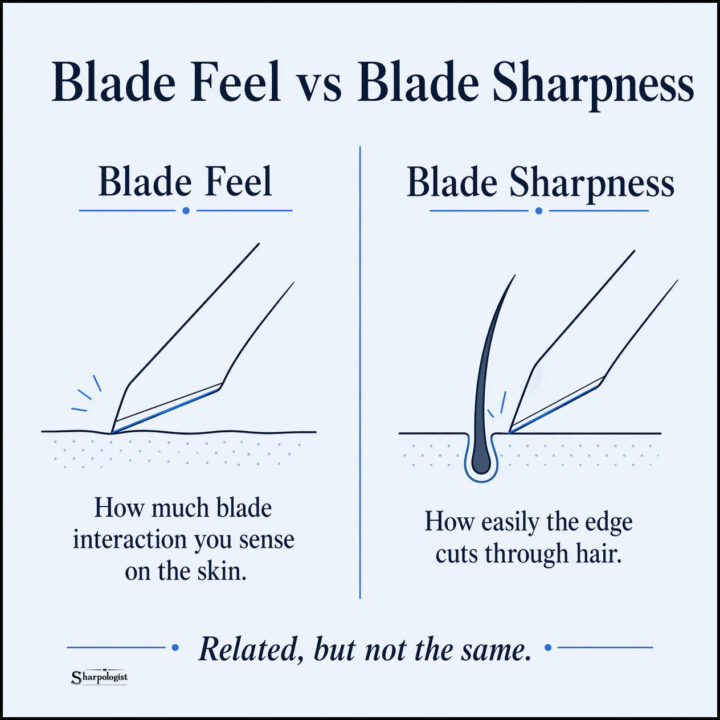
Blade feel is the result of how directly the blade is allowed to interact with your skin during the shave. It is the sensed interaction between blade and skin, not a judgment about whether the blade is good or bad.
That definition matters because blade feel is often mistaken for sharpness, smoothness, harshness, or even irritation. Those are related experiences, but they are not the same thing. For the full explanation, see How Razor Design Affects Blade Feel And Shaving Behavior.
What Sharpness Actually Refers To
Sharpness refers to the cutting character of the blade edge. In practical terms, it affects how easily the blade cuts through beard hair.
A sharper blade may cut more cleanly with less resistance. A less sharp blade may feel less decisive and may produce more tugging. But sharpness does not fully determine what you feel on the skin during the stroke.
That is where many shaving discussions drift off course. A blade can cut very efficiently without producing strong blade feel, and a blade can produce noticeable blade feel without being unusually sharp. The shave may feel more present on the skin even when the blade itself is not the main reason.
Why The Same Blade Can Feel Different In Different Razors
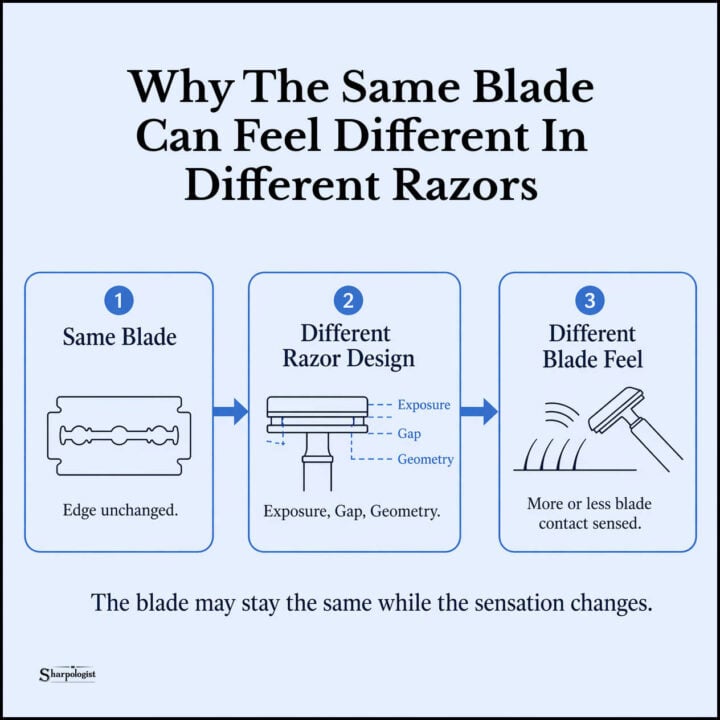
Razor design changes how the blade is presented to the skin. That changes blade feel even when the blade itself hasn’t changed at all.
Blade exposure affects how immediately the edge meets the skin. Blade gap affects how much skin and hair can reach the blade. Head geometry affects angle, stability, and how consistently the razor guides contact through the stroke. Those variables shape what you feel before the blade’s edge character is ever interpreted clearly.
The blade did not change. The conditions under which you felt it changed. That is why the same blade can seem excellent in one razor and disappointing in another. A deeper breakdown of those design variables is in The Art And Science Of Safety Razor Head Design.
The Most Common Ways Shavers Misread Blade Sensation
One common mistake is assuming strong blade feel means the blade is especially sharp or harsh. In many cases, what the shaver is really noticing is more direct blade contact created by the razor.
Another mistake is assuming low blade feel means the blade is smoother or safer. Sometimes it does feel calmer in the moment. But low blade feel can also reduce usable feedback, making it easier to add pressure or repeat strokes without realizing it.
A third pattern is blaming the blade for a sensation problem that is actually coming from angle or razor fit. This happens often when a familiar blade is moved into a different razor and suddenly feels worse. The blade becomes the obvious suspect even though the larger change came from the razor’s design.
What Blade Sharpness Changes And What It Does Not
Sharpness affects how easily the blade cuts hair, especially when beard growth is dense or wiry. It can influence whether the shave feels clean and decisive or slightly resistant and tuggy.
What it does not fully explain is how much blade you feel on the skin. That sensation is shaped by the razor as much as by the blade, and often more.
This is one reason some blade discussions become confusing. Shavers are often describing cutting ease, skin sensation, post-shave comfort, and razor behavior as if they all come from the same source. They do not.
Why Changing Blades Does Not Always Fix The Problem
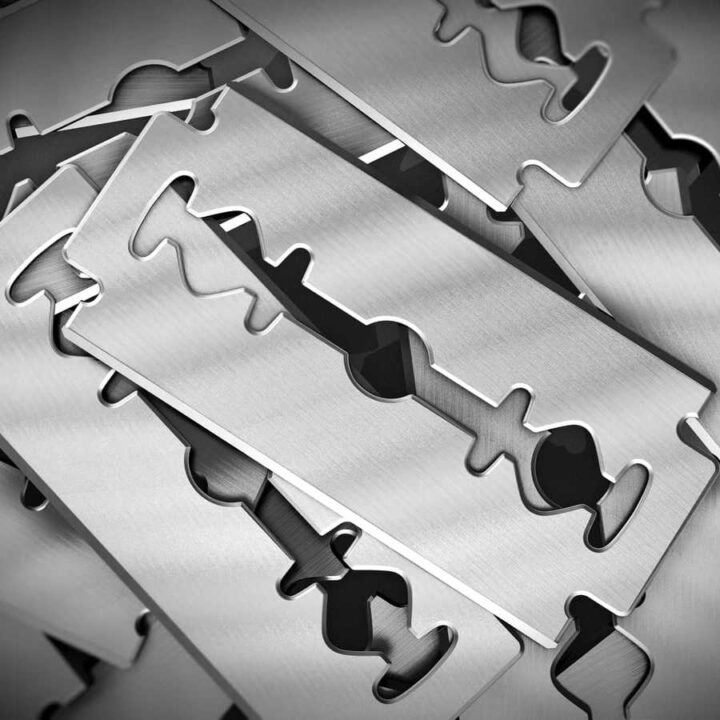
When a shave feels off, changing blades is one of the first things many shavers try. That’s understandable. Blades are easy to swap, and the change feels direct. But if the real issue is the amount of blade feel created by the razor, the result may only shift the sensation slightly without solving the underlying problem.
This is why blade testing can become frustrating. A shaver may cycle through several blades trying to correct a harsh feeling razor, when the real issue is that the razor produces more blade feel than their current technique handles well. The reverse happens too. A shaver may keep looking for a sharper blade when the actual problem is that the razor is giving too little feedback and encouraging extra work.
Razor choice shapes how the shave behaves, but technique determines how effectively you work within that design.
Practical Correction: What To Check Before You Blame The Blade
Before blaming the blade, it helps to separate cutting performance from skin sensation.
If the blade seems to feel different in another razor, the issue is probably not just sharpness. If changing your angle changes the sensation more than changing the blade does, blade feel is likely the bigger factor. If the shave feels smooth during each stroke but still leads to cleanup work, pressure creep, or irritation later, the problem may have more to do with blade feel than with the blade edge itself.
A useful question is simple: are you sensing poor cutting, or are you sensing more blade contact? Those are not the same experience, even though they are often described with the same words.
Conclusion: Sensation Is Real, But It Does Not Always Mean What You Think
Shavers are right to pay attention to what they feel. The sensation is real. The problem is that the sensation is often interpreted too quickly and too literally.
Blade feel is the sensed interaction between blade and skin. Sharpness is the cutting character of the blade edge. They influence each other, but they are not interchangeable.
Once that distinction becomes clear, better decisions follow. Blade changes become more deliberate. Razor differences make more sense. And the shave becomes easier to diagnose without chasing the wrong variable.
