
Quick Answer: Shaving technique transfers across different razors, but not as identical movements. Technique adapts to each razor’s geometry and feedback, so experienced shavers rely more on awareness than muscle memory. This makes razor changes feel disruptive at first, even though skill has increased.

Why This Feels Confusing
At some point, many experienced wet shavers run into a strange contradiction. The way shaving technique changes with different razors can feel subtle, inconsistent, and difficult to explain.
Your technique feels solid. Your results are generally good. Yet when you switch razors, even briefly, the shave does not behave the way you expect.
Technique still matters, but it no longer transfers cleanly from one razor to another. The same hand movements, angles, and habits produce different outcomes. Sometimes better. Sometimes worse. Often just different in ways that are hard to name.
That gap between expectation and result is where confusion sets in.
The Underlying Principle: Why Shaving Technique Changes With Different Razors
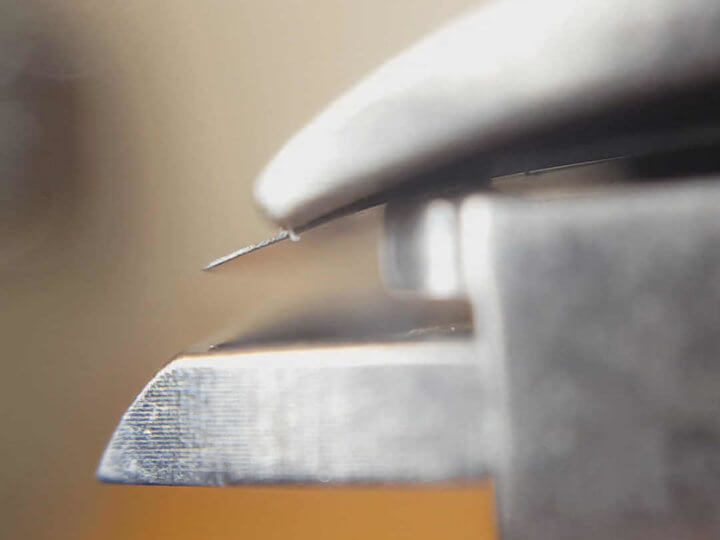
Technique does not exist independently of the tool being used. The impact of razor geometry on shaving technique shows up through feedback, tolerance, and how much variation a razor allows before feedback becomes corrective.
What most people call technique is actually a collection of learned responses to feedback. Pressure, angle, stroke length, skin tension, and timing all evolve together based on how a specific razor communicates with your hand and face.
When you use one razor consistently, your technique adapts to its geometry, balance, blade exposure, and forgiveness. Over time, shaving feedback changes with razor types, shaping habits that feel universal but are actually conditional.
Technique transfers across razors only to the extent that the feedback and tolerances are similar. This is why safety razor skills do not always transfer cleanly to straight razor technique, even when the fundamentals are well understood.
None of this reflects a flaw in skill. It reflects how physical learning works.
Why Technique Sensitivity Increases With Experience
Ironically, this issue tends to appear after you become competent. Early in wet shaving, almost everything is improving at once. As skill improves, technique sensitivity increases, and the shave begins to respond to smaller changes that once fell well within tolerance.
This is why consistency begins to feel harder to maintain as experience grows. You are no longer correcting obvious mistakes. You are operating near the edge of efficiency, where small shifts matter.
That sensitivity can feel like instability, but it is actually precision.
Common Misinterpretations
Several conclusions are often drawn from this experience. Most of them miss the point.
These are common mistakes when switching between razors, especially for shavers who expect consistency to increase indefinitely.
One is assuming the new razor is inferior. Another is believing your technique has regressed. A third is thinking that advanced shavers should be able to pick up any razor and shave identically.
None of these fully explain what’s actually happening.
Different razors reward different emphases. Some punish excess pressure more harshly. Others demand stricter angle control. Some respond best to short, deliberate strokes. Others tolerate more variation.
Expecting identical results ignores how feedback driven skills actually function.
What Actually Transfers
As experience increases, what transfers is not exact motion, but awareness.
You develop a clearer sense of when the blade is cutting efficiently versus just scraping. You recognize early signs of irritation before they accumulate. You notice changes in resistance, sound, and glide that once went unnoticed.
What does not transfer perfectly is muscle memory. Muscle memory is highly specific. It encodes not just actions, but the context in which those actions succeeded. When the context changes, the memory needs recalibration.
Experienced shavers adapt faster because they recognize this process. They allow a few shaves for the system to settle instead of forcing old habits onto a new tool.
The Tradeoff Hidden Inside Skill
There is a subtle tradeoff that comes with mastery.
As technique refines, shaves improve. At the same time, the system becomes more sensitive. Small mismatches between razor and habit become more noticeable. Consistency becomes something you manage rather than something you assume.
This is not a loss of control. It’s a shift in how control is expressed.
Instead of imposing technique onto the shave, you begin to negotiate with it.
A Better Mental Model For Razor Changes
Switching razors is not a test of whether your technique works. A more useful mental model for shaving technique is to view it as a responsive system rather than a fixed process.
The goal is not to shave the same way with every razor. The goal is to find the new equilibrium where efficiency and comfort align again.
Shavers who approach razor changes with this mindset tend to experience less frustration and more clarity. They expect adaptation. They give it space. What initially feels wrong often reveals itself as simply unfamiliar.
Closing Thought
Technique does transfer across different razors, but not as a fixed set of instructions.
It transfers as judgment, sensitivity, and restraint.
If changing razors occasionally unsettles your shave, it’s not a step backward. It’s a sign that your technique has moved beyond general rules and into fine control.
That stage may feel less predictable, but it is also where the most satisfying shaves tend to live.

Thank you for another great article. I think it’s a good explanation.