
Quick Answer
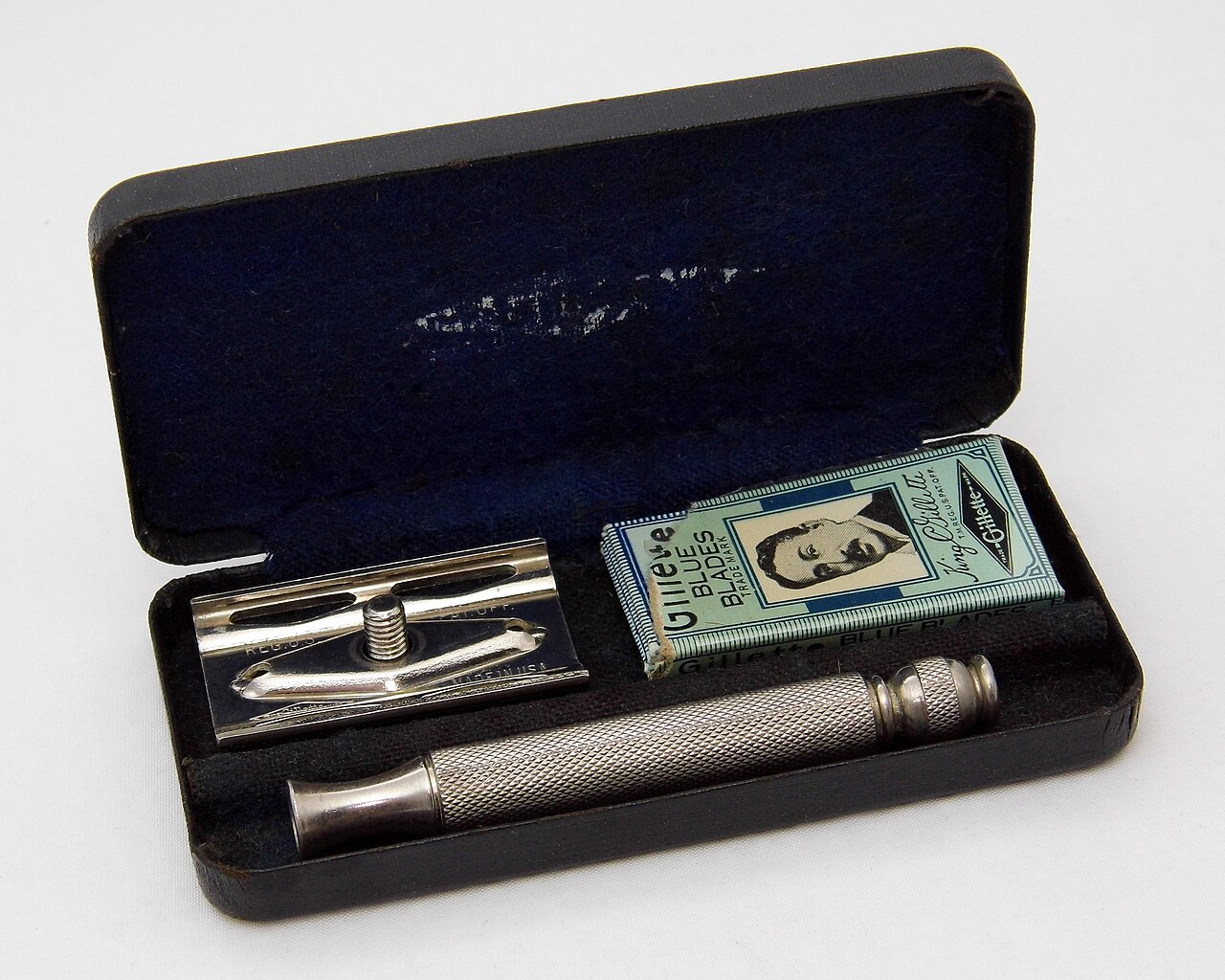
The Gillette Tech is a mild, three piece double edge safety razor introduced in the 1930s. Its neutral blade geometry and predictable feel make it one of the best razors for calibration. It reveals pressure errors, angle drift, and blade differences clearly without masking them with built in aggression. For many experienced wet shavers, it serves as a reliable performance baseline.
What Is The Gillette Tech?
Most shavers misdiagnose changes in their shave because they keep changing too many variables at once. The Gillette Tech offers predictability. That predictability makes it useful beyond beginner status.
The Tech is one of the longest running safety razor designs in shaving history. Introduced in the 1930s, it replaced earlier open comb models with a closed comb design that emphasized smoothness and accessibility. These razors can still be found, many times inexpensively, at antique/vintage shops, online auction sites like eBay, and buy/sell areas of wet shaving forums.
From a razor head geometry standpoint, the Tech uses conservative blade exposure and moderate blade gap. The curvature of the razor head’s top cap encourages a shallow shaving angle. When paired with a modern double edge blade, it delivers a mild but efficient shave.
It’s a simple three piece razor: the cap, baseplate, and handle separate completely. There is no mechanical complexity. That’s the reason the Tech still matters.
Is The Gillette Tech Mild Or Aggressive?
The Gillette Tech is generally considered mild.
But “mild” can be misunderstood.
Blade aggression is determined by geometry. Blade gap, blade exposure, cap curvature, and head design all influence how a razor feels against the skin. The Tech uses conservative measurements in all of these areas.
That results in:
- Lower blade feel
- Reduced risk of sudden irritation
- More immediate feedback when pressure increases
What it does not mean is inefficient.
A properly used Tech can produce a very close shave. It simply does not force efficiency through high blade exposure.
This distinction matters.
A razor that feels aggressive can sometimes compensate for poor technique. A mild razor cannot. It demands clean mechanics.
That is where calibration–using a stable, neutral razor as a baseline to isolate and diagnose changes in shaving performance–begins. This doesn’t mean adjusting the razor. It means standardizing your reference tool before changing anything else.
Why The Gillette Tech Works As A Calibration Razor
Calibration means establishing a stable baseline. In shaving, that baseline allows you to isolate variables instead of changing everything at once.
The Tech excels at this role for several reasons.
It Minimizes Razor Bias
Heavier or more aggressive razors often introduce strong mechanical characteristics. They can mask technique flaws or exaggerate blade sharpness.
The Tech does neither.
Its neutral balance and conservative geometry reduce built-in influence. When something changes in your shave, it’s usually you, the blade, or the lather.
That clarity matters.
It Reveals Pressure Immediately
Excess pressure often hides in heavier razors. The mass of the head compensates for angle errors.
The Tech exposes this immediately.
Apply too much pressure and irritation appears quickly. Maintain a light touch and the shave remains smooth. That immediate feedback loop makes it ideal for diagnosing creeping pressure habits.

It Clarifies Blade Differences
Some razors amplify blade sharpness. Others mute it.
The Tech sits in the middle.
Swap blades and you will feel the difference clearly. A sharper blade feels sharper. A smoother blade feels smoother. There is less mechanical distortion between blade and skin.
That makes blade testing more honest.
It Standardizes Testing
When you change razors constantly, you change geometry constantly too. That makes it harder to determine what improved or worsened your shave.
Using the Tech as a consistent reference razor removes that variable. You can test:
- New blades
- New soaps
- New technique adjustments
Without wondering whether the razor itself altered the outcome.
That is the core reason experienced shavers keep one around.
It does not have to be the Tech specifically. Any simple, neutral, mechanically consistent three piece razor can serve as a calibration tool. The Tech is simply a convenient example because it is widely available, historically consistent, and introduces minimal mechanical bias. The principle is baseline control, not brand loyalty.
Do Different Gillette Tech Versions Shave Differently?
Most Gillette Tech versions share very similar shaving geometry. Differences in production era affect weight and balance more than blade exposure.
The shaving behavior remains within the same mild range.
Pre-War Fat Handle Tech
The pre-war Fat Handle version uses a slightly heavier handle. Some users report a marginally more assertive feel, but this is typically balance related rather than geometry related.
Post War Ball End Tech

The Ball End Tech is lighter. Many examples feel slightly more neutral in hand. It is one of the most common and accessible versions on the secondary market.
British Flat Bottom Tech
The British flat bottom variant uses a slightly different baseplate design. Many experienced users describe it as slightly more efficient. But the difference is subtle and remains within the “mild” category.
Does Version Matter For Calibration?
For calibration purposes, baseline consistency matters more than era. Any standard Tech in good condition can serve as a reliable reference razor.
Choose one. Learn it well. Use it consistently.
[Image Insertion: Side By Side Photo Of Fat Handle, Ball End, And British Flat Bottom Baseplates]
Gillette Tech Vs Gillette Super Speed

The Gillette Super Speed is often mentioned alongside the Tech because both are mild vintage Gillette razors. They approach that mildness differently.
The Tech is a three piece razor with simple construction and neutral balance. The Super Speed is a one piece twist to open razor with slightly more built in mechanical character.
Comparison Overview
| Feature | Gillette Tech | Gillette Super Speed |
|---|---|---|
| Design | Three Piece | Twist-To-Open |
| Weight | Moderate | Slightly Heavier |
| Balance | Neutral | Slightly Head-Weighted |
| Blade Feel | Mild And Neutral | Mild With More Presence |
| Maintenance | Fully Disassembles | Internal Mechanism |
The Super Speed often feels slightly more assertive. This is usually due to balance and head design rather than dramatic differences in blade gap.
Which Is Better For Beginners?
Both are suitable for beginners. The Super Speed simplifies blade changes and feels slightly more substantial in the hand. The Tech, however, makes angle and pressure more transparent because there is less built in mechanical bias.
Which Is Better For Calibration?
Calibration requires a stable baseline. Fewer variables produce clearer signals.
The Tech’s three piece design removes the twist to open mechanism from the equation. Its centered balance and conservative geometry introduce minimal mechanical bias. When a shave changes, the source is easier to identify.
The Super Speed can also function as a consistent reference razor if used exclusively. However, its slightly forward weight and integrated mechanism introduce small variables that may influence perception.
This is not a question of superiority. It is a question of function.
If your goal is convenience and classic design, the Super Speed performs very well. If your goal is isolating blade, lather, or technique variables, the Tech’s simplicity offers cleaner diagnostic feedback.
[Image Insertion: Gillette Tech And Super Speed Head Comparison Top View]
Gillette Tech Vs Modern Double Edge Razors
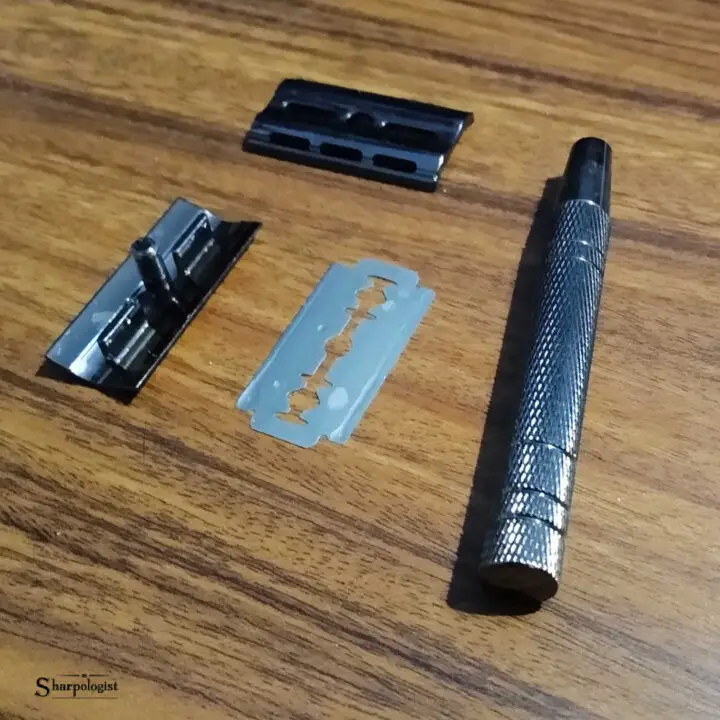
Modern double edge razors often use stainless steel or aluminum construction. Many modern stainless steel razors are heavier than vintage Tech models. Some use larger blade gaps or more pronounced blade exposure.
These differences influence shaving behavior.
Comparison Snapshot
| Feature | Gillette Tech | Modern Mild DE Razor |
|---|---|---|
| Material | Plated Brass | Stainless Steel Or Aluminum |
| Weight | Moderate | Often Heavier |
| Blade Gap Philosophy | Conservative | Wide Range Of Options |
| Feedback | Subtle | Often More Pronounced |
Why Modern Razors Can Mask Technique
Heavier razors can compensate for shallow angle errors. Larger blade gaps can increase perceived efficiency even when pressure is inconsistent.
That doesn’t make them inferior. It makes them different.
When your goal is to diagnose technique, fewer built-in variables are helpful.
When A Modern Razor Makes More Sense
Modern razors may offer:
- Higher manufacturing precision
- Different aesthetic appeal
- Greater aggression options
- Different weight preferences
If you know your technique is stable and you are chasing a specific feel, modern designs can be excellent.
But if your shaves are inconsistent, returning to a neutral baseline can clarify the problem quickly.
Who Should Use The Gillette Tech Today?
The Tech remains useful for several groups.
Beginners can benefit from its forgiving geometry because it makes angle and pressure control more visible.
Experienced shavers can benefit from using it like a neutral reference platform for evaluations like blade tests or troubleshooting irritation.
Collectors benefit from its historical significance and availability.
Common Misconceptions About The Gillette Tech
It is too mild to give a close shave.
Not true. Proper technique produces excellent results.
It is outdated compared to modern razors.
Geometry has not changed as much as marketing suggests.
It cannot handle coarse beards.
Blade choice and preparation matter more than raw aggression in many cases.
Final Verdict: The Gillette Tech As A Long Term Reference Razor
The Gillette Tech is not exciting.
It’s not adjustable. It’s not heavy stainless steel. It doesn’t feel aggressive.
That is exactly why it remains useful.
Its mild, neutral geometry removes noise from the system. It exposes pressure errors. It clarifies blade differences. It standardizes testing.
In a shaving routine filled with variables, the Tech provides stability.
For that reason, it can be more than a vintage razor. It can be a calibration tool: a stable, neutral, fixed reference point.
Frequently Asked Questions
Is The Gillette Tech Good For Beginners?
Yes. Its mild geometry makes it forgiving while still providing clear feedback.
Is The Gillette Tech Aggressive?
No. It is generally considered mild, though efficiency depends on technique and blade choice.
What Is The Difference Between The Tech And The Super Speed?
The Tech is a three piece razor with neutral balance. The Super Speed is a twist to open razor with slightly more mechanical character.
Do Different Tech Versions Shave Differently?
Most versions shave similarly. Differences are subtle and related more to balance than dramatic geometry changes.
Is A Vintage Gillette Better Than A Modern Razor?
Not necessarily. Vintage and modern designs prioritize different characteristics. The Tech excels as a neutral reference razor.

Good article. I have two Techs, a 1950’s British version with brass handle and a later 1969 one with aluminum handle. They both work extremely well but I prefer the extra weight of the brass version.
Tech’s shave well, I own (2) Ball End 56 Post-War, and Pre War Fat Handle. both shave well, and give close shave.
Was nice to meet you in Arizona, at Matt’s MeetUp.
I have a Tech, the 1930’s one, and have been using it as a stable platform to test new variables. I have 11 years of experience and also use straight razors when it is time convenient. For shaving I use either Rapira or Feather blades and get great shaves. Great article.
I have 5 techs. Two are in my rotation, a 46-50 ball end, and a 1972. My 1954 lives in my ditty kit. I use GSB’s for regular shaving. I like a tech with a Derby blade, for “sunburn” shaving. I also use a tech for when I want no chance of nick. I have a sugery scar that can be a problem.