
Quick Answer: Shaving pressure is often the hidden cause of bad shaves because it emerges as a reaction to cutting resistance rather than a conscious technique choice. When the blade does not move as easily as expected, the hand instinctively compensates with added force, increasing friction and irritation. As experience increases, pressure tends to appear through subtle overcorrection rather than obvious mistakes, which makes it harder to notice and easier to misdiagnose.
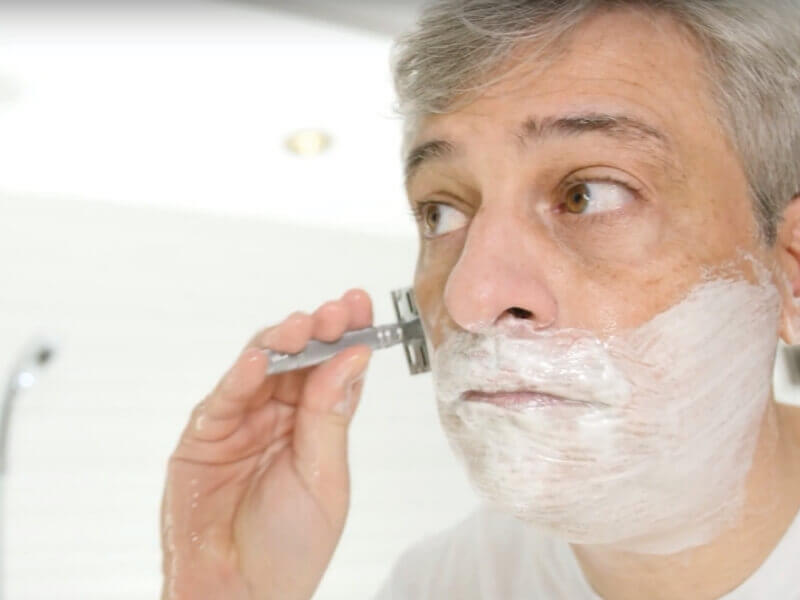
This article explains why pressure, rather than razors or blades, is the most common underlying cause of irritation and discomfort.
Why This Problem Feels So Confusing
Most shaving problems announce themselves clearly. Poor lather looks wrong. A dull blade feels wrong. A rushed pass sounds wrong. Pressure does not behave that way.
That is why pressure remains one of the most persistent problems in traditional shaving. It hides behind competence. It creeps back in quietly, not as a conscious choice, but as a response to other variables changing around it.
When pressure becomes the issue, everything else often appears normal. The routine has not changed. The razor is familiar. The shave may even feel effective in the moment. Discomfort, uneven closeness, or lingering irritation tend to appear later. That delay makes pressure easy to overlook and difficult to connect to the outcome.
For experienced shavers, this confusion is amplified by confidence. When basic technique is long internalized, it feels unlikely that something so fundamental could still be the cause. Pressure is assumed to be a solved problem, not an active variable.
The Underlying Principle Behind Shaving Pressure
Pressure in wet shaving is rarely intentional. It is not something most shavers decide to apply. Instead, it shows up as a response to resistance.
When the blade does not cut as freely as expected, the hand compensates. When the razor hesitates or feels less efficient, pressure fills the gap. This happens without conscious planning.
The key mental model is that pressure is not a setting you choose. It is a reaction to reduced cutting efficiency.
Skin does not respond to pressure as a single input. It responds to how the entire cutting system is interacting in that moment. When alignment drifts, lubrication thins, or hair resists more than expected, the system becomes less efficient. Pressure often enters quietly as the compensating force that keeps the shave moving, even though it is not addressing the underlying change.
This is why shaving pressure is such a common cause of irritation and inconsistent results. It rarely arrives alone, and it rarely announces itself.
Common Misinterpretations That Keep Pressure Hidden
Several assumptions allow pressure related shaving problems to persist unnoticed.
The first is equating confidence with control. As experience grows, strokes become faster and more fluid. That fluidity feels like refinement, but speed reduces the opportunity for subtle corrections. Small increases in force can slip in unnoticed.
The second is diagnosing the shave only after it’s finished. When irritation appears, attention usually goes to skin response, blade sharpness, or hydration. All of those matter, but they also influence resistance. When resistance increases, pressure often follows without being identified as the real change.
Finally, there is also a tendency to associate pressure only with beginner mistakes. This can create a blind spot. Pressure does not need to be heavy to cause problems. Even slight increases can raise friction enough to exceed skin tolerance, especially over multiple passes.
What Changes As Experience Increases
As shavers gain experience, the nature of problems changes. Obvious errors fade, with subtler tradeoffs taking their place.
Expectations rise: a shave that once felt excellent may now feel merely acceptable. Efficiency that was once sufficient may now feel lacking. When results fall short of expectation, the hand often responds before the brain.
At the same time, experienced shavers tend to experiment more: growth mapping evolves, pass strategies change. There is also more awareness that skin behavior shifts with age, season, or frequency. Each small change alters resistance slightly, and each alteration invites compensation.
This is why shaving pressure often reappears later rather than earlier. Experience reduces gross mistakes but increases the likelihood of fine overcorrections.
Pressure As a Signal, Not a Failure
Pressure should not be viewed as a flaw or a lapse in discipline. It is better understood as information.
Pressure usually signals that something in the shave process has changed. Blade contact may be slightly off. Stroke length may exceed what the area supports. Skin tension may be different than expected. Hair may be resisting more than usual.
Pressure is the body’s attempt to preserve a consistent outcome when conditions have changed.
The solution is not to force pressure out of the process, but to remove the need for it by restoring alignment and reducing resistance. When cutting efficiency returns, pressure fades on its own.
A Clearer Way To Think About Better Shaves

Shaving pressure remains one of the most common causes of bad shaves precisely because it hides behind familiarity. It feels like effort instead of an error.
Good shaves feel quiet. The razor moves without persuasion. When pressure disappears, it is not because a rule was remembered, but because the system is working again.
For experienced shavers, this perspective simplifies rather than complicates. When a shave begins to demand more effort than usual, the demand itself is the signal worth noticing.
Pressure isn’t the enemy. It’s the clue.
Editor’s note: This article is part of an ongoing series exploring why shaving problems occur, not just how to fix them.

Totally agree, but want to add that the older you get, at least until to your mid 30’s, the coarser and thicker your beard gets and you may require a sharper blade from your usual one so you don’t end up compensating for blades that are too dull with extra force and pressure. This article also explains why I prefer open razor shaving with a straight or barber’s razor so I have better feel and control with pressure, and it does make a difference to the shave in comparison to the feedback from the handle on a DE razor.
Another contributing factor to BAD Shave is pushing a Blade beyond good life, I don’t think about pressure much, but do a lot of skin stretching to get good shave.
Very well said, Mantic59. I truly enjoyed your last article on multiple passes that lead to irritation after the shave, and have actually experience better shaves by being more mindful not to overpass one spot during shaves. This article on shaving pressure is quite deep, and compels one to reflect on one’s skills so far as a wet shaver. I believe mindfulness during shaving could be a fundamental tool to overcoming excessive pressure based on what you have taught in this article; ie, the unnecessary need for razor pressure. Thank you once again for another unique shaving lesson.
I long ago learned which blade brands worked with my beard and how many shaves they were good for. Many will use the cheapest blades and push them far beyond their useful life, causing excessive pressure to be applied, resulting in pulling/tugging, finally nicks/cuts, and razor burn. Do proper prep, use sharp blades, and learn what your personal needs/limits are, and 99.9% of your shaving issues will disappear.
I don’t put any pressure on the razor. If your blade is sharp it will cut through the hair cleanly and efficiently. TRUST ME!