

Quick Summary: Early straight razor shaves often feel worse than expected, not because of lack of skill, but because unfamiliar feedback, changing variables, and mismatched expectations make early results misleading. This article explains the most common reasons first straight razor experiences disappoint, and why those early struggles are normal rather than signs of failure.
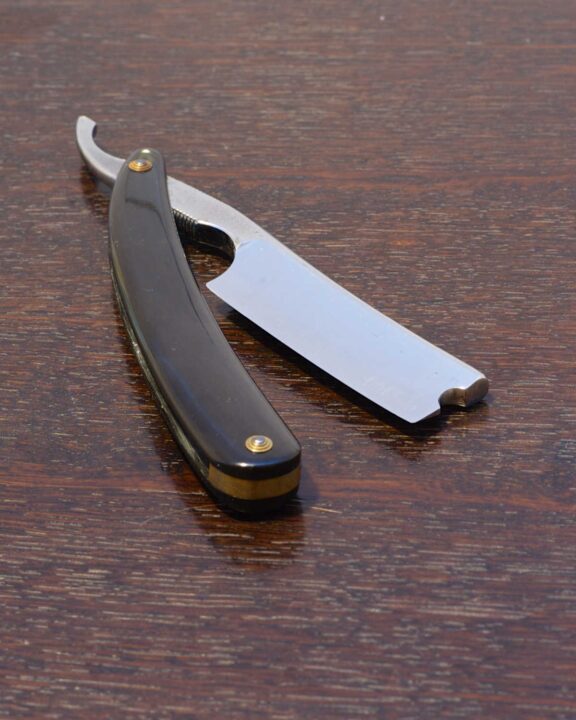
For many wet shavers, the first straight razor shave isn’t what they expect.
It’s slower, less efficient. Sometimes it’s uncomfortable without being obviously bad. Often, it is just disappointing.
That reaction is common and predictable.
Most early straight razor problems are not skill failures. They are expectation failures, caused by unfamiliar feedback and too many variables changing at once.
Understanding why things go wrong early matters more than learning what to fix first.
Who This Article Is For
This article is for wet shavers who are:
- Considering a straight razor and want a realistic picture of the learning curve
- One or two shaves in and wondering if something is wrong
- Experiencing tugging, irritation, or frustration despite careful effort
- Questioning whether straight razor shaving “is for them”
This isn’t a how-to guide, a checklist, or a troubleshooting manual. Its purpose is to explain why early straight razor shaves fail in consistent ways, even when the shaver is doing many things “right.”
A Note on Methodology
This article is based on a qualitative review of first-time straight razor experiences across multiple wet shaving communities, including forum discussions, shave clinic threads, and beginner reports. The goal is not to catalog mistakes or count outcomes, but to identify repeatable patterns that appear once enthusiasm meets reality.
What follows reflects what happens most often, not edge cases.
Why the First Shave Rarely Feels Good
Most first straight razor shaves feel rough, inefficient, or oddly unsatisfying.
This may surprise some because the straight razor carries a reputation for smoothness and closeness. The expectation is that removing safety bars and guards should immediately improve results.
What actually happens is the opposite.
The first straight razor shave overwhelms the senses. Angle, pressure, grip, skin stretching, and movement all demand attention at once. The brain is busy staying safe, not optimizing results. Shaves become cautious and fragmented.
The result is a shave that feels worse than expected, even if nothing catastrophic happens.
The first shave with a straight razor is not a performance or results test. It’s a calibration exercise.
Why the Edge Gets Blamed First
When a straight razor tugs or feels harsh, the edge is usually the first suspect.
- “It must not be shave ready.”
- “I probably ruined it stropping.”
- “I need to strop more.”
These conclusions are understandable, and sometimes justified, but often they are premature.
To a beginner, a marginal edge and poor angle feel almost identical. Stropping mistakes can degrade an edge quickly, but so can compensating for uncertainty by raising the spine or adding pressure. When multiple variables change at once, diagnosis becomes impossible.
When everything is new, edge quality becomes a scapegoat for unfamiliar feedback.
Why Angle Errors Turn Into Irritation Fast
One of the fastest ways a straight razor shave goes wrong is angle.
When the razor does not seem to cut efficiently, beginners instinctively raise the spine. The razor starts to scrape rather than slice. The shave may still remove hair, but it does so harshly.
What makes this deceptive is that irritation often appears after the shave, not during it. There may be few nicks and no obvious mistakes. The damage initially accumulates quietly.
Early straight razor irritation is usually mechanical, not aggressive. It comes from trading comfort for cutting power without realizing it.
Why Short Strokes May Feel Like Failure
Many beginners to straight razor shaving are frustrated by how little territory they can shave at a time.
They find themselves making very short strokes, needing multiple passes to clear a small area. Compared to safety razor shaves, progress feels painfully slow.
This might feel like incompetence. But short strokes are a survival strategy. They are how control is built. Control develops before efficiency. Long, confident strokes come later, once grip, angle, and spatial awareness stabilize.
The Burn Loop Caused by Touch Ups
Another predictable problem appears near the end of the shave.
The result is not close enough, so the shaver goes back over the same area. Then again. And again. Each touch up feels minor, but each one removes margin for error.
Straight razor beginners often carry over closeness standards from safety razors. But their skin has not adapted to straight razor shaving yet. Irritation appears after the shave, sometimes hours later, and the next shave starts from a worse baseline.
Early straight razor success is about stopping sooner, not shaving longer.
Handling and Geometry Matter More Than Expected

Many first shaves go well on the cheeks and then fall apart elsewhere.
Jawlines, chins, and upper lips introduce new problems: limited visibility, awkward angles, unstable grips. The razor itself may feel unwieldy or poorly balanced.
This is not a lack of courage: it’s a geometry problem.
Straight razors demand spatial awareness, and that awareness develops slowly. Confidence often outruns control, and that mismatch creates cuts or irritation that feel discouraging.
Most early straight razor failures happen where geometry, not bravery, is tested.
The Shavette Comparison Trap
Shavers with experience using Artist Club or disposable blade shavettes often expect a straight razor to feel similar.
It doesn’t.
Shavette blades are thinner, sharper, and deliver very immediate feedback. Straight razors feel different by design. When that difference is measured against a shavette benchmark, the straight razor can feel dull or underperforming.
That comparison is unfair and almost guarantees disappointment.
Different feedback does not mean inferior performance. It means a different tool entirely.
The Quiet Drop Off Point
A pattern appears repeatedly in first straight razor experiences.
The first shave is exciting.
The second shave is harder.
The third shave is where confidence often collapses.
Adrenaline fades and reality sets in. Expectations are still misaligned. This is where many people stop, not because they are incapable, but because they misinterpret predictable friction as failure.
The hardest straight razor shave is not the first one. It’s the third one.
What Early Success Actually Looks Like

Early straight razor success does not look like closeness.
It looks like:
- Less irritation than last time
- Fewer corrections
- More confidence in grip and angle
- Knowing when to stop
Comfort comes before refinement. Familiarity comes before efficiency.
Straight razor shaving does not reward ambition early. It rewards patience later.

I experimented with straight-razor shaving–just to see what it was like. Like the article pointed out, the learning curve is pretty steep; and if you don’t take the necessary care, your bathroom will quickly take on the looks of a ‘crime scene.’ Having said that, I was only ‘man enough’ to do the flat cheek areas; for my neck, I went back to my trusty array of DE razors. Also, trying to use a ‘shavette’ (see Ray’s letter above) AFTER using a regular SR, is a HUGE mistake. Due to the increased sharpness of the shavette, was nursing cuts every time it touched my face! Due to the hassle of keeping a SR honed/sharp–it’s just too much trouble–compared to a DE.
Interesting article, although I can’t really relate to it as I started with a barber’s razor (shavette) first and used that for a couple of years before trying out a straight razor. As you may expect, I found the traditional straight a lot more forgiving and my first shave was easily the best shave I’ve ever had, I realised that the advantage of the straight over a shavette is that it is sharp enough to do the job without being too sharp. I would be interested to hear from those who started with a straight and then tried using a shavette.
Guilty. I started off watching my grandfather shaving with straights before doing it myself. Used one from 13-19 before going to a “devette” for a couple of years (found a DE razor at a flea market but it was missing the bottom plate (didn’t know layout of DE razors up until then) so it was used with the blade in the top plate and held in place by screwing the handle against it). At 21 I was given a shavette for my birthday and though I could shave without any issues with my other razors the shavette cut me. Even to this day I can’t use a shavette without drawing blood.
At 81, I still shave every day with a modern double edge safety razor. I do 2 passes and get a BBS shave every time. I rarely see a speck of blood and don’t experience razor burn. Going back to the cut throat razor that men were so happy to abandon seems a bit like returning to the planetary gear transmissions in the Ford Model T!
Most straight shavers will tell you it takes about 100 shaves to have total muscle memory. The danger is getting cocky after about 20 shaves. I was guilty of that.
Great article thanks, bought some a straight razor and this should help when I try it out.
I wish shve sites would use pictures of REAL shavers. The picture with razor at neck, sure looks like 90° to me. The second one maybe 75°. I’d much rather see a not so great picture of a guy that knows what he’s doing. I shudder to think that a noobie, looks at the pictures. Then tries shaving that way.
Agreed. I will try to use better images in the future.
Agree, those pics look like a recipe for danger at those angles.