
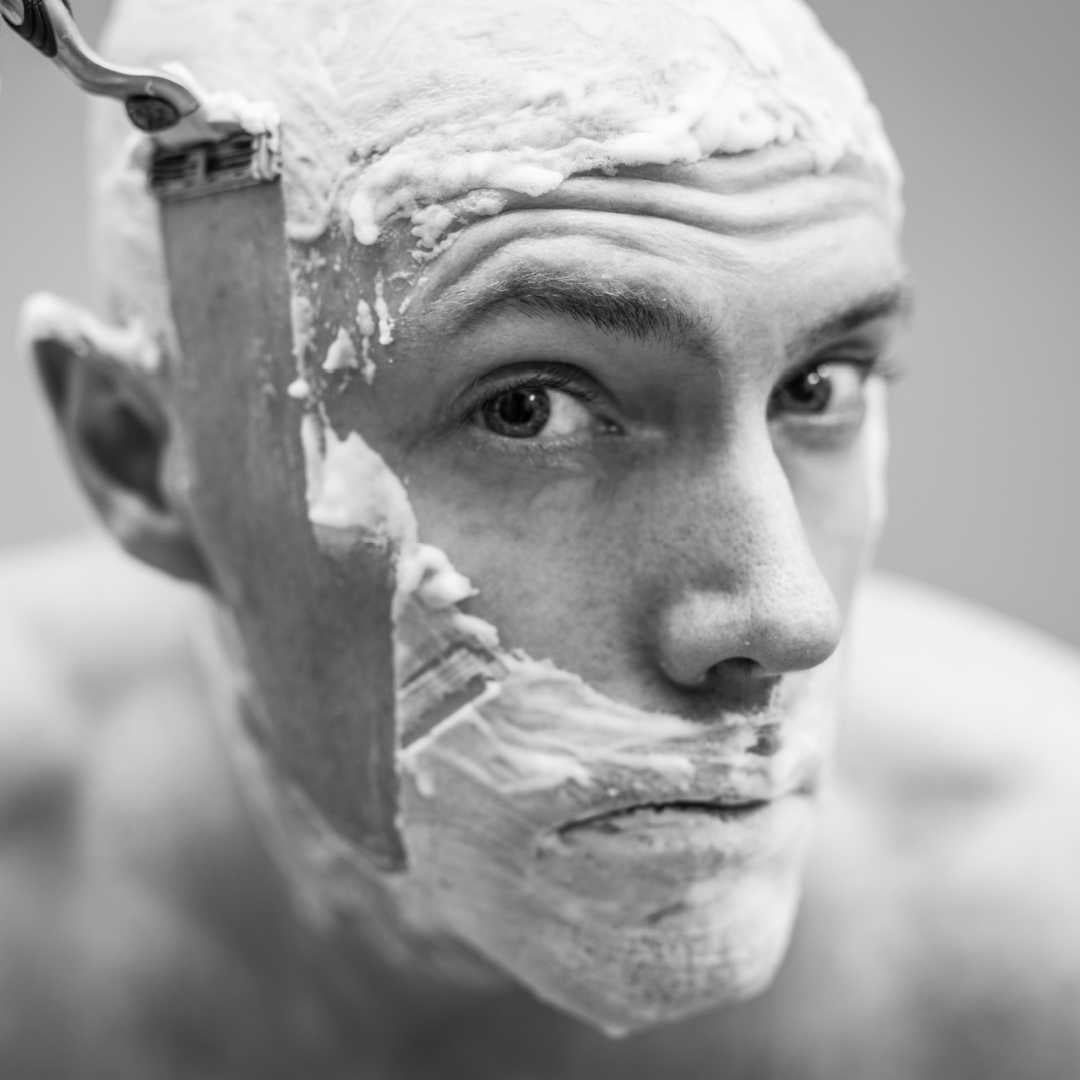
Shaving your head can feel familiar if you already know how to shave your face. The tools are similar. The lather may be the same. The basic goal is still to remove hair cleanly while leaving the skin comfortable.
But the scalp changes the shave.
A razor that works well on the face can feel harsher on the head. A technique that seems controlled along the jawline may produce irritation near the back of the head.
That does not mean the razor is wrong, the blade is bad, or the scalp is simply “too sensitive.” Head shaving changes the way pressure, angle, visibility, stroke repetition, and skin contour interact.
Quick Answer
Head shaving causes irritation differently than face shaving because the scalp changes how the razor meets the skin. The head is rounder, harder to see, and usually shaved over a larger continuous area than the face. That makes pressure, blade angle, and shaving strokes harder to control.
Head shaving often requires the shaver to work by feel, especially around the crown and back of the head. That can lead to extra pressure, missed spots, repeated cleanup strokes, and unintended shaving against the grain.
The main difference is that head shaving stacks several irritation factors at once: curved skin, reduced visibility, changing hair direction, longer shaving sessions, and more repeated blade contact.
Head Shaving Changes The Shaving Surface
The scalp is larger, rounder, and harder to monitor. The back of the head may be almost entirely dependent on feel. That changes the shaving process. The razor is no longer moving mostly across visible, familiar, smaller zones. It is moving across a larger curved area where the shaver may not know exactly what the edge is doing at every moment.
This is why head shaving can produce irritation even when the face does not: the shave itself is operating under different conditions.
Pressure Is Harder To Judge On The Scalp

Pressure is easy to underestimate during head shaving.
On the head, hand position often changes. The wrist may bend differently and the razor may move above, behind, or across the body in ways that feel awkward. When the razor crosses the crown or back of the head, you might press slightly harder just to maintain contact.
More pressure can remove lather faster, increase scraping, and make a razor feel more aggressive. This is especially true when you try to chase perfectly smooth results across areas that are hard to see.
Angle Drift Matters More On A Curved Surface
Blade angle also changes more easily on the head. On the scalp, the surface keeps curving away from the razor. The wrist, handle, and razor head must adjust more often.
More efficient razors often give less room for sloppy angle control. Mild or more forgiving razors may be easier to manage, but they can also encourage extra passes if they leave too much stubble behind. The tradeoff is not simply mild versus aggressive. It’s how well the razor matches the shaver’s ability to maintain pressure and angle on the scalp.
Head Shaving Often Involves More Repeated Strokes
Many head shavers irritate the scalp through repeated strokes.
The head is harder to inspect as the shave progresses. A missed patch near the crown or back of the head may not be obvious until the hand checks the area. The natural response is to go back over the spot.
That can become a loop: shave, feel, find roughness, shave again, feel again, clean up again.
Each individual stroke may seem harmless. But the scalp experiences the total exposure. More strokes mean more blade contact, more lather removal, more chance of pressure creeping upward, and more opportunity for the razor to cross the same skin from different directions.
This is why head shaving irritation often feels less like a single mistake and more like a delayed penalty. The shave may feel fine in the moment. The scalp may feel hot, tight, or prickly later.
Hair Growth Direction Can Be Less Obvious On The Head
The scalp can also make grain direction harder to read.
Facial hair growth can be complicated, especially on the neck. But many experienced wet shavers have already mapped their beard growth over time. Scalp hair may be less familiar in that way, especially for someone who started head shaving later. The crown often changes direction. The sides may not match the back. Hair near scars, cowlicks, or thinning areas may behave differently from nearby hair.
Head shaving benefits from slower mapping. Mapping recognizes that the scalp may not follow the same intuitive direction pattern as the face.
How To Diagnose The Source Of Head-Shaving Irritation

Head-shaving irritation becomes easier to understand when the location of the irritation is treated as a clue.
If irritation appears mostly on the crown, the likely suspects are repeated strokes, changing grain direction, and angle drift. The crown often encourages extra cleanup because hair direction changes and missed patches are easy to feel.
If irritation appears mostly on the back of the head, visibility and pressure control deserve attention first. The shaver may be pressing to maintain contact or using longer strokes than the area can tolerate.
If irritation appears near the sides or temples, the issue may involve angle changes across curved transitions. These areas can also suffer when the shaver moves too quickly from a flatter area into a curve.
If irritation appears almost everywhere, the issue is probably broader. Too many passes, too much pressure, poor lather durability, a blade that encourages tugging, or a razor that is too demanding for the current technique can all contribute.
This diagnostic approach prevents a common mistake: treating every scalp irritation problem as a product problem. Product choice matters, but it should not be the first explanation every time. Head shaving often magnifies technique variables before it reveals a true tool mismatch.
What To Change First
The first correction should usually be pressure. A lighter touch reduces risk across almost every other variable. It also helps reveal whether the razor is actually too mild, too efficient, or simply being used with more force than intended.
The second correction is stroke length. Shorter strokes make it easier to follow the curve of the scalp. They also make angle changes more deliberate. Long strokes may feel efficient, but they can hide pressure changes and angle drift.
The third correction is cleanup restraint. Many scalp shaves go wrong after the main passes are finished. The shaver keeps searching for perfectly smooth patches and keeps shaving skin that has already had enough contact. A slightly less perfect result may be much more comfortable.
The fourth correction is grain awareness. The scalp may need its own map. The crown, sides, and back may not follow the pattern the shaver expects. If one area always becomes irritated, the stroke direction in that area deserves a closer look.
Only after those variables are controlled does it make sense to focus heavily on tool changes. A different razor, blade, or head-shaving device may help. But changing tools before understanding the irritation pattern can create a cycle of buying solutions for a technique problem.
The Goal Is A Repeatable Head Shave, Not A Perfectly Close One
A perfectly smooth head shave is tempting because the result is so easy to check by touch. The hand finds every missed patch. The rough spots feel obvious. The temptation is to keep shaving until everything feels even. That’s often where the problem begins.
Head shaving rewards repeatability more than perfection. A comfortable shave that leaves one slightly less smooth area is usually better than a glass-smooth result that leaves the scalp hot, tight, or irritated for the rest of the day.
The goal is not to lower standards but to judge the shave by the right standard. A good head shave should be close enough, comfortable enough, and repeatable enough that the scalp is ready for the next shave.
Conclusion: Head Shaving Is Not Just Face Shaving Moved Upward
Head shaving causes irritation differently because it changes the mechanics of the shave. The scalp is larger, rounder, harder to see, and more likely to require shaving by feel. Those conditions make pressure, angle, grain direction, and repeated strokes harder to manage.
The solution is not always a new razor. It is often better control of the variables that the scalp makes less obvious.
Use lighter pressure. Shorten the stroke. Watch the cleanup phase. Re-map the grain. Be realistic about closeness on difficult areas. Then decide whether the razor or blade still needs to change.
Head shaving becomes easier when the shaver stops treating the scalp like a larger version of the face and starts treating it as a different shaving surface with different feedback.
