
By Sri, founder of WhollyKaw
On our bench we run four tallow-based bases on one side of the room and a fully vegan line on the other. That gives me an unusual vantage point on one of wet shaving’s most reliably heated arguments, because I have no reason to defend either camp. I formulate both, I ship both, and customers buy both. So when I tell you the tallow versus vegan debate is mostly noise, understand that I’m not selling you a side. I’m telling you where the signal actually is.
The signal is formulation. The fat source matters far less than what a maker does with it.
The chemistry nobody argues about
Strip away the tribalism and tallow and vegan soaps are doing the same job through the same reaction. Soap doesn’t lather because of “fat.” It lathers because of saponification, the reaction in which triglycerides (the fats and oils you start with) are broken down into the fatty acid salts that actually do the surfactant work. Tallow itself can’t produce lather. The fatty acids it yields after saponification can. The same is true of every plant butter and oil a vegan formulator reaches for.
So the real question was never “animal or plant.” It was always “which fatty acids, in what ratio, and cured how.” Once you frame it that way, the whole argument changes character.
A few fatty acids carry most of the performance load in a shaving lather:
- Stearic and palmitic acid are the workhorses of cushion and density. They build the thick, stable, slow-collapsing foam that lets you ride a blade over your face with a buffer underneath it. They also drive bar hardness.
- Oleic acid, along with the ricinoleic acid from castor oil, drives slickness, the slippery glide that keeps the blade tracking instead of dragging.
Tallow happens to bring a convenient package of these. By composition it runs roughly half saturated fat, a bit over 40 percent monounsaturated, and a small slice polyunsaturated, which is why generations of formulators have called its fatty acid profile close to ideal for shaving soap. It hardens a bar quickly and efficiently, which historically meant shorter cure times and fewer headaches in production. Those are real, practical advantages, and they explain why tallow became the default for traditional shaving soaps in the first place.
But “convenient default” is not the same as “chemically irreplaceable.” That distinction is the entire ballgame.
Why the vegan reputation got dragged through the mud
Here’s the part both camps tend to get wrong. The bad reputation vegan shaving soap earned was deserved, but it was earned by lazy formulas, not by plants.
For years, a lot of vegan soap leaned hard on coconut oil because coconut throws a big, fast, photogenic lather that looks great in a bowl. The problem is that a coconut-heavy bar can be cleansing to the point of feeling stripping, and the foam is often more bubbles than body. People tried those soaps, felt the tightness, and concluded “vegan soap is harsh and airy.” What they’d actually discovered was that a coconut-forward formula is a coconut-forward formula. That’s a recipe problem, not a botany problem.
When I formulate a vegan base, the job is to rebuild tallow’s fatty acid profile from a different pantry. Cocoa butter and kokum butter bring the stearic and palmitic backbone for cushion and a hard, dense lather. Shea butter adds body and a conditioned skin feel. Castor oil supplies the slickness and helps stabilize the lather so it doesn’t collapse halfway through the pass. Done deliberately, you arrive at a lather with comparable density, comparable glide, and a comparable post-shave feel, because you’ve reconstructed comparable chemistry. Different ingredients, similar fatty acid math.
That’s the honest house position I’ll stand behind: different chemistry, comparable performance once formulated correctly. The word “correctly” is doing real work in that sentence, and it’s exactly the variable the source-only debate ignores.
Give tallow its actual due
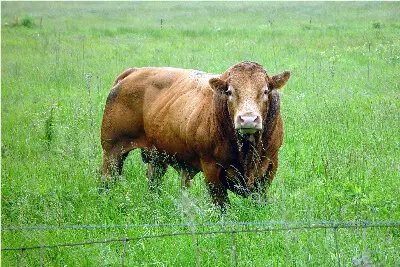
I don’t want to flatten this into “they’re identical, pick whatever.” Tallow brings a few things that are genuinely its own.
There’s heritage, and heritage isn’t nothing. Tallow is one of the most foundational materials in the entire history of soapmaking, and a lot of accumulated craft knowledge is built around its behavior. There’s also the fatty acid story: tallow’s profile is often described as skin-similar, meaning the fatty acids it’s built from resemble ones already present in human skin and sebum, which many shavers associate with a particular post-shave feel. And there’s a sustainability argument that deserves a fair hearing. Tallow is a byproduct of meat processing, historically rendered from material that would otherwise be discarded, so using it is a genuine nose-to-tail, zero-waste use of an animal that was already raised. That’s a real environmental point, not a marketing line.
The flip side is equally real. For shavers who avoid animal products on ethical grounds, none of that matters, and the livestock supply chain carries its own environmental burdens at the rendering and processing stage. Plant oils have their own footprints too. There’s no free lunch on either side of the ledger, which is part of why I find the moral grandstanding in both directions tiresome.
A note on skin feel, stated honestly
You’ll see a lot of language out there about what these soaps “do” for your skin. I’m a soapmaker, not a dermatologist, so I’ll keep this to what I can actually speak to: how a lather feels.
A well-built lather, tallow or vegan, should leave skin feeling conditioned and comfortable rather than tight or stripped. That’s a sensory outcome of the formulation, the fatty acid balance and the emollients you leave in the bar. The emollient butters in a good vegan base (shea, kokum, cocoa) are there precisely to give that cushioned, conditioned feel during and after the pass. Tallow’s skin-similar fatty acids are often associated with a rich after-feel. Both are describing the same thing in the end: how the shave feels on your face. If a soap leaves you feeling raw, that’s a formulation that’s too cleansing, regardless of where the fat came from.
I’d steer you away from anyone, on either side, promising a soap will fix a skin condition. That’s not what shaving soap is for, and it’s not a claim I’ll make about my own.
The blind-test challenge
So here’s what I’d actually ask of the dogma. Test it blind.
Get a well-reviewed tallow soap and a genuinely well-formulated vegan one (not a bargain-bin coconut bar, which proves nothing). Have someone else load the brushes and hand them to you unlabeled. Pay attention to what actually matters at the sink: How fast does it load? How dense and stable is the cushion through three passes? How slick is the glide? How does your face feel an hour later?
I’ve watched committed “tallow only” shavers fail to pick the tallow bar in a fair test more often than they’d like to admit. Not because the soaps are identical, but because once both are formulated by someone who knows what they’re doing, the gap that the internet swears is enormous turns out to be small, and frequently smaller than the difference between two tallow soaps from two different makers.
That’s the takeaway I’d leave with anyone trying to choose. Don’t buy a base ideology. Buy a well-made soap. Judge the formulation, the lather density, the slickness, the cure, the after-feel, the maker’s track record. The fat source is a single line on a long spec sheet, and it’s nowhere near the most important one.
The debate is loud. The chemistry is quiet. Listen to the chemistry.
About the author: Sri is the founder of WhollyKaw, where the bench formulates both tallow and vegan shaving soaps. Working in both formats daily, with no stake in which one a shaver prefers, is what shaped the no-axe-to-grind view above.
Sources / further reading
- “7 Common Tallow Soap Myths,” Sharpologist — https://sharpologist.com/7-common-tallow-soap-myths
- “Rethinking Sustainability in Skincare: A Comparative Analysis of Beef Tallow and Plant-Based Oils,” Journal of Dermatology & Skincare — https://www.jdermis.com/full-text/rethinking-sustainability-in-skincare-a-comparative-analysis-of-beef-tallow-and-plant-based-oils
- “Utilization and Purification of Tallow, Grease, and Lard Byproducts,” Bioresearch Scientia — https://bioresscientia.com/uploads/articles/1699539845Galley_Proof-Utilization_and_Purification_of_Tallow,_Grease,_and_Lard_Byproducts.pdf
- “Environmental Fact Sheet: Beef Tallow,” ERASM — https://www.erasm.org/wp-content/uploads/2022/07/21-ERASM-Environmental-Fact-Sheet-Beef-Tallow.pdf
- “Tallow,” Wikipedia — https://en.wikipedia.org/wiki/Tallow

The soaps I have that I will reorder. Some are tallow, vegan, one says vegerable based. And some I don’t know. If it is a good soap, I’ll buy it again. I don’t have a dog in the tallow vegan fight.
What a terrific article written with intelligence and thoughtfulness. This is one of those articles that will stand the test of time. Thank you so much for sharing your professional experience and knowledge with the rest of us.
Regarding the moral debate between the two…yes, it’s true that vegan soaps also have an environmental impact. But, most people opposed to using animal products on moral grounds make this choice because of the way animals are treated throughout the whole process. Their entire lives, from birth to death, are nothing but horrors. That’s what some people care about, and why seeking out products that don’t use animal products is important to them.
Very helpful and informative article. I really like your test to see if a shave soap is good regardless whether it is tallow or vegan. Tons of great information. I never thought about after-feel before. Very thought provoking!