

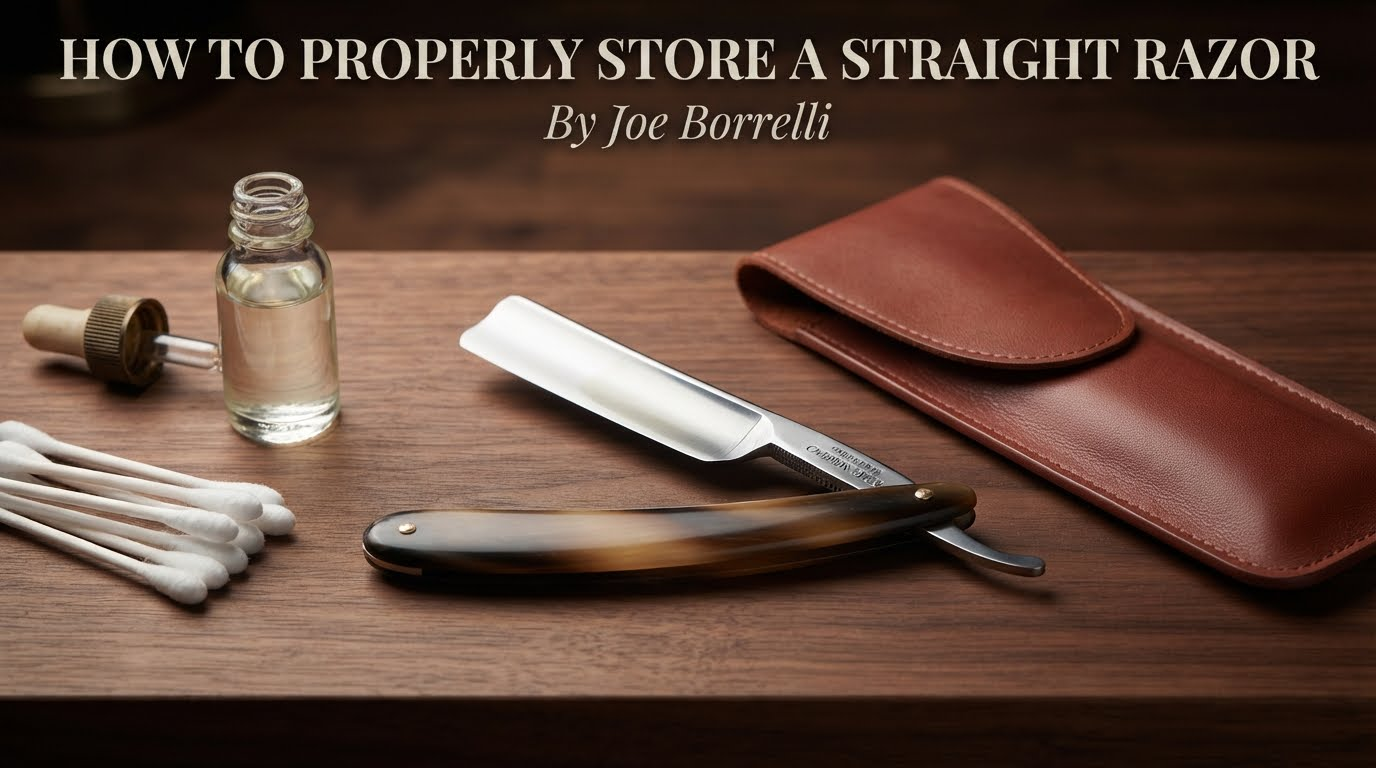
I was once told that properly storing will ultimately enhance your straight razor experience! I thought to myself, “There is no way” I mean how can storing your razor a certain way can make the entire experience better?
If you’re an experienced straight razor user, then you are nodding your head right now, and if you’re just starting your straight razor journey, then you may be shaking your head. I’m here to tell you it’s 100% true. It’s just as important as stropping/honing the blade and the best part is you can do it all by yourself.
Proper storage of your straight razor will ultimately prolong the life of the blade, keep it sharper longer and thus save you money. So now that I have your attention let’s discuss what happens if you neglect to do so.
Note: Always use a bit of caution when handling a straight razor, especially when you’re not shaving with it. The worst injury I have ever received with a straight razor, did not involve shaving, but happened when handling it. Always respect your razor and never let your guard down.
Several years ago, I wrote an article “The 5 Rules of Straight Razor Safety”. Feel free to use it as reference whenever using/handling a straight razor.
The Effects of Improper Storage:
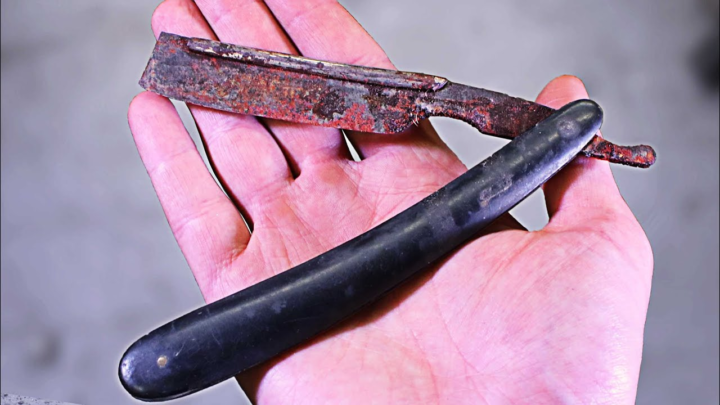
We’ve all been there. You shave, quickly put the razor away and the next time you pull it out you see those black spots on the blade that just seem to come out of nowhere. They may seem small and harmless, but those little black spots are the start of something big, rust. You may try to wipe them off with a towel and you can’t remove them. You now have a problem.
Believe it or not, water and moisture is your biggest enemy. Yes, the element that is most important for shaving your face (water) can also be the biggest culprit for ending the life of your razor. Straight razors, even those that are made of stainless steel, are bare metal blades that are greatly affected by the elements. Humidity, water and moisture must be avoided at all costs. If you live in a tropical climate (as do I) you know that storing a bare piece of metal outside will guarantee rust in less than 24 hours.
In addition to those pesky black spots, the edge of the blade can be affected, requiring it to be honed or refreshed, if not addressed quickly. The best defense against rust is prevention.
So, What Exactly Is Rust?
Rust is a chemical reaction when iron reacts with oxygen and water in a process called oxidation. This reaction causes the metal to degrade in the form of brown or black substance that can quickly cause metal to swell, crack and weaken. Factors such as water, oxygen, high temperatures and salt can quickly speed up the chemical reaction thus destroying metal quickly.
Most straight razors consist of Carbon Steel, and even though the blades are highly polished, they are still very prone to oxidation. Prevention is key to having straight razor perform its best and last for generations. Properly storing your razor after use is the key.
In the next few sections, I’ll go over the two main steps for properly storing your razor, different storage methods for both long term and short term, how to properly ship a straight razor so that oxidation does not form, how to store your razor safety if you have small children and how to remove oxidation, if it happens to you.
Step 1: Preparation:
There are two main steps when properly storing your straight razor. The first is preparation for storing, and the second is choosing the ideal storage environment.
Properly preparing your razor is key for prevention of oxidation which as mentioned prior is
- Rinse and Clean: Ensure your razor is free of any cream/hair with a thorough rinse of clean water. Don’t forget to rinse out any other areas that may have cream on them (such as in between the scales and by the pin area).
- Thoroughly Dry: This is the most important step because as previously mentioned water is a straight razor’s worst enemy. Wipe down the blade thoroughly and allow the razor to dry a few minutes with the blade open before storing. A single drop of water can cause oxidation, especially if you don’t use the razor every day, so it’s extremely important to be a little patient here.
Even if the blade is perfectly dry make sure to check the pin area as well as the inside of the handle for drops of water. These areas are often overlooked and can lead to those pesky black spots I mentioned earlier.
- Strop The Blade: (Optional): This step is something I do right before I store my razor, but some guys will agree to disagree on this step. Stropping the razor after shaving is as controversial as can be with straight razor users, as many feel stropping after a shave is unnecessary. Personally, I feel that stropping after shaving removes any excess oxidation as well as realigns the micro fins that were misaligned during the shave.
- Lightly Oil the Blade: A lot of guys (including me like to add a coat of oil on the blade, especially for long term storage) Oil prevents the formation of rust, even if you’re in a humid climate. Avoid cooking oils as these break down over time and can cause oxidation. Use a food safe mineral oil (baby oil will work too) or synthetic gun oil as these oils are non-toxic and will not break down over time.
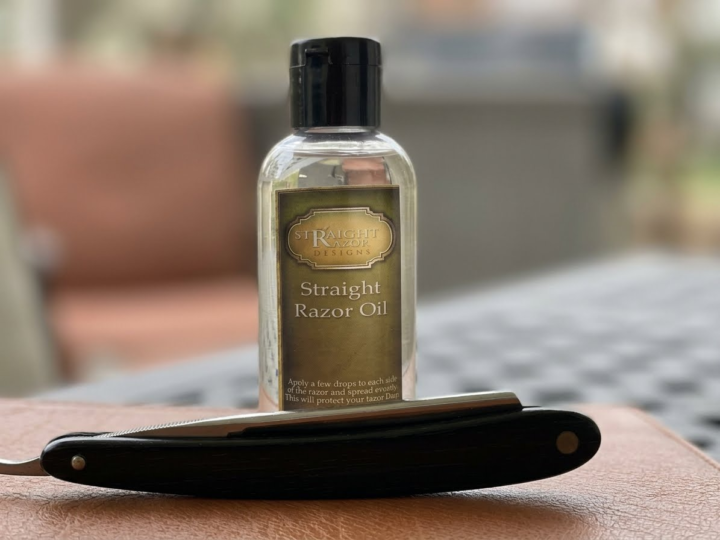
Use a tiny amount of oil when applying as a little does go a long way. I recommend taking a cotton swab, adding a few drops of oil to it, then applying with light pressure in a short circular stroke until the blade is evenly covered. Then take your cotton swab and carefully put it in between the top part of the handle just lightly lubricating the monkey tail and pin. Avoid using your finger as you can get cut.
*Note: It’s very important to note that the razor must be completely dry before applying oil as if there are any water droplets, rust can still form.
- Condition the Scales (if made of an organic material): This is extremely important especially when using vintage razors with older scales. With many straight razor scales consisting of different organic materials such as wood, horn, bone etc. it’s important to understand that with time these materials become more fragile and can break easily if not cared for.
Personally, I find that there are two products that are versatile enough to protect the entire spectrum of organic scale materials: Basic Mineral Oil and Renaissance Wax. The wax effectively seals out all moisture and is perfect for long term use, while the oil conditions/hydrates the material preventing it from drying out. I mostly use oil when storing long term for bone and horn as it keeps the material supple and flexible, and wax when storing wood as it keeps the wood dry and rigid.
*Note: If your scales are made of plastic, you can skip this step.
Step 2: Storage Environment:
Next is choosing the right storage environment. You’ll want to choose this area carefully as regardless of the preparation you completed in step one, storing it in the wrong place can still cause damage.
- Do not store in the bathroom: Shower steam consists of moisture and increases the overall humidity which as previously mentioned can wreak havoc on a blade.
- Store in a dry place: The best advice I’ve received was storing my razor in my closet. It’s dry and the humidity is much lower giving you a much better environment than the bathroom.
- Use a Box/Case/Sleeve: There are many options when choosing a box for storage. There are many items available for sale from straight razor retailers or you can make your own box.
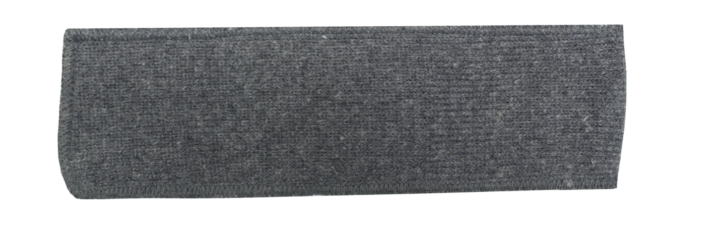
- Silicone Infused Cotton Sleeves: Silicone sleeves are a great way to store your razor, especially long term. These pre-charged (oiled) sleeves prevent rust and corrasion. They are affordable and readily available and do not require any additional oiling if the razor is put in the sleeve dry.
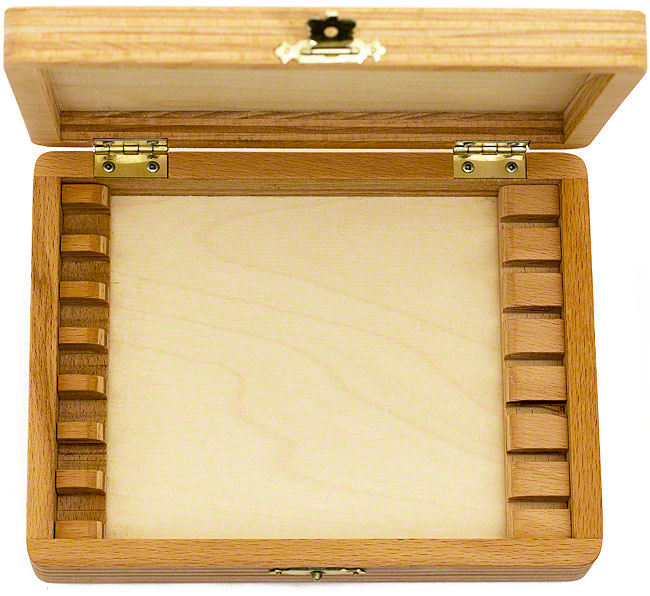
- Dedicated Straight Razor Box: Many companies such as Dovo and Thiers Issard make dedicated boxes for straight razor storage. These are a great way to store your razors, but most are expensive.
- Make Your Own Box: The most cost-effective way to make your own. Personally, I use a plastic pencil box with a few silica packs in it. I would use caution when using humidors, or cigar boxes as the Spanish cedar (the wood used in cigar boxes and humidors) have resins and oils that might affect the scales and blades over time. These boxes are also designed to retain moisture so not the best environment for straight razors.
- Long Term Storage: You may have a large collection or decide you may want to keep some of your razors boxed up for a long time. If you decide to do this a good practice is taking your oiled razor and storing them in a Ziplock bag with a silica packet. This will ensure no moisture can get in and the silica packet will get whatever is in there out.
I like to use plastic cigar bags (that hold a single cigar) as these tend to take up the right amount of space. These are available from most cigar shops and online retailers.
Storage Near Children:
This is something that is very seldom discussed but if you have young children or grandchildren around you won’t want to miss this part.
As a father myself, one of my biggest fears is having my young son injure himself handling one of my straight razors. Because of this I take extra pre-cautions when storing my razors.
- Store the Razor in an area where kids cannot access. This could be a drawer in a dresser higher up or a high shelf. I keep my razors on the top shelf of my closet which is out of reach of my little one.
- Wrap a rubber band around the blade. Believe it or not this really works! It prevents the blade from being opened if a child happens to pick it up. I take a large rubber band and wrap it around a few times to ensure the razor is tightly closed and cannot open accidently. Although older kids can figure out how to unwrap the rubber band, it’s a full proof solution for younger kids.
- Store in a lockable case: As mentioned I use a plastic pencil box to store my razors. I also keep them in a lockable safe that has a key. This ensures my razors are out of reach of children and can survive a natural disaster if one happens to occur.
What To Do If “Spots” Appear:
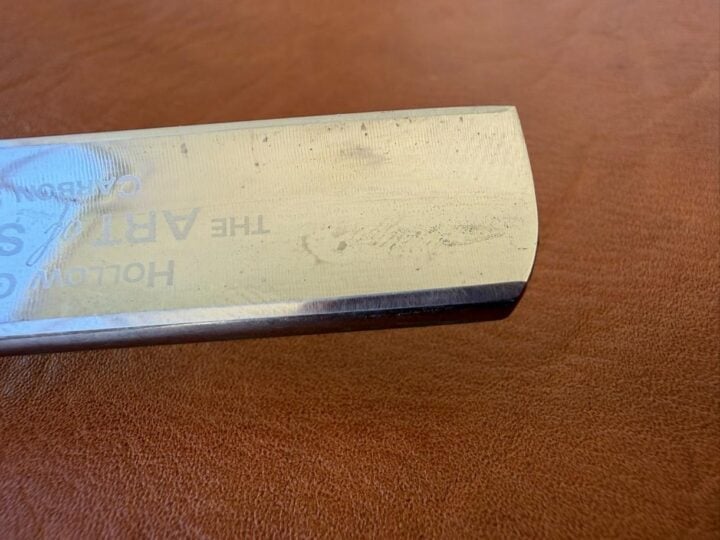
As previously mentioned, if you do happen to have the feared black spots form on your blade, or a little rust, there is a way to fix it. You’ll need the following items:
-Microfiber cloth
-Metal polish (Such as Maas or Fitz)
-Cotton Swab
- Remove Any Oil or Wax: If you did oil your blade but some moisture broke through its important to remove all the oil before polishing. You can use a microfiber cloth or paper towel. Use caution as you do not want to accidentally cut yourself or hit the cutting edge of the blade as this could affect its sharpness.
- Polish: Apply a small dab of metal polish on the blade with the cotton swab, and gently polish the spot until you start to see it disappear. Let the polish set and dry for a couple of minutes, then buff away with the microfiber cloth. Repeat as necessary.
If you find the damage is more than surface deep, you may need to go to more drastic measures. This would require wet sanding progressively with higher grits (ex: 500 grit, 1000 grit, 2000 grit, etc.) in order remove the rust, then polishing with compounds and polishes until the blade is like new again. This is a very timely process and may require the razor to be professionally repaired if you do not feel comfortable doing so yourself.
Shipping A Straight Razor:
With most straight razor purchases online today, chances are you will need to ship a razor at some point in time. Whether it be sending it out for service or sold to another user, it’s important to ship the razor properly to ensure it gets to its destination safely and in good condition.
Properly shipping a razor requires a little extra care. First, make sure the blade is completely dry. Apply a coat of mineral oil just like I mentioned with long-term storage then wrap the razor up in a piece of construction paper. Tape it up so it can’t slip out. Wrap the razor in bubble wrap and you’re all set. This will ensure no moisture will affect the blade and will prevent damage when shipping.
Conclusion:
Properly storing your razor will not only prolong the life of your blade, but will enhance the overall experience, keeping it sharper longer, which will save time and costs in terms of maintenance.
It’s important to always keep “Safety First” whenever handling a straight razor and understand your limits. If you do not feel comfortable doing something, consult a professional!
