


You’re listening to Wet Shaving Talk powered by Sharpologist.com where we’re dedicated to preserving the art and skill of classic shaving. I’m your host Joe Borrelli and today is July 14th, 2026.
____________________________________________________________________________
Today On The Show:
Straight Razor Month
Types of Straight Razors
The Prep: How to Prep for a Straight Razor Shave
Starting A Wet Shaving Blog, Youtube Channel or Podcast? Here is what you need to know
Straight Razor Month: Picking a Quality Vintage Straight Razor
___________________________________________________________________________
Types of Straight Razors
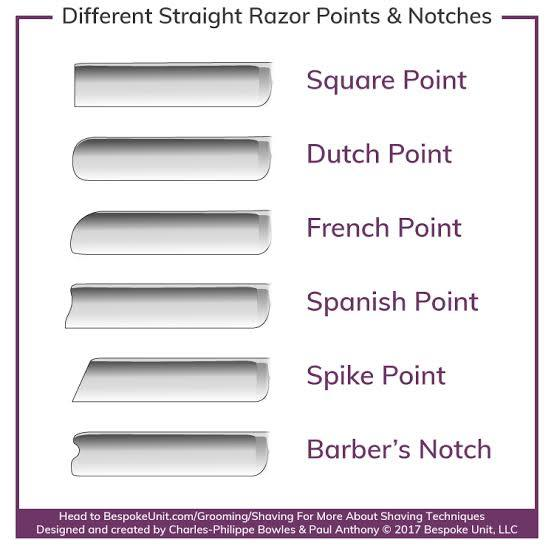
Straight razors are primarily categorized by their blade widths, grind types, and point styles.
1. Blade Width
Measured in eighths of an inch, the width affects how the razor maneuvers and holds lather.
- 5/8″ and 6/8″: The standard sizes. They offer excellent balance and are ideal for beginners.
- 4/8″ and Smaller: Narrow blades. Perfect for precision work, tight spots under the nose, and clean edging.
- 7/8″ to 9/8″: Wide, heavy blades. They slice through coarse hair effortlessly and hold a large amount of lather.
2. Blade Grinds
The grind is the cross-sectional shape of the blade, determining its flex, weight, and sharpness.
- Full Hollow: The thinnest, most common grind. The blade flexes slightly, providing high feedback and a very sharp edge.
- Half/Quarter Hollow: A middle-ground option. It provides a stiffer feel than a full hollow but retains a keen edge.
- Wedge: Thick, heavy, and completely stiff. It does not flex, making it excellent for mowing down thick stubble quietly.
3. Point (Tip) Styles
The shape of the nose changes both the safety profile and the precision of the shave.
- Round Point: A curved tip with no sharp corners. Highly recommended for beginners to prevent accidental nicks.
- Square/Spike Point: A sharp, 90-degree corner. Offers surgical precision for lining up sideburns and beards, but bites easily.
- French Point: A rounded slope that ends in a subtle point. Combines a safer profile with good precision.
- Spanish Point: A concave curve with a distinct upper notch. Great for navigating facial contours and detail work.
4. Traditional vs. Shavettes
- Traditional Straight Razor: A single piece of forged steel that requires a leather strop to align the edge and a whetstone to sharpen.
- Shavette (Disposable Blade Razor): Looks like a straight razor but uses replaceable half-double edge or single edge blades. It requires zero maintenance
___________________________________________________________________________
The Prep: How to Prep a Straight Razor Shave

How to prep for a straight Razor Shave? I’ll tell you.
- Heat:
- A hot shower for at least 5-10 minutes or wrapping your face with a hot towel for 5-10 minutes will do the trick. You need to really soften the beard in order to make the whiskers “stand up” so they’re easier to cut.
- Lather Lather and More Lather:
- All wet shavers know the importance of a good lather. Although there are times you can “skimp” on your lather with safety razor shaving (not recommended) you cannot get away with it in straight razor shaving. Because there is no guard on the blade, it’s extremely important to make sure you have as much lubrication as possible.
- A good note when lathering, once you think you’re lathered up, lather for an additional 30 seconds. This ensures you have lubricated the whiskers enough to shave.
- A “Shave Ready”Blade:
- A “shave ready” blade is the most important part of the straight razor experience. Make sure your blade is sharp enough to shave or all the other prep will not matter. We will get more into shave ready blades on a future episode.
___________________________________________________________________________
Starting a Wet Shaving Blog, Youtube Channel or Podcast? Here is what you need to know.

Recently, I was asked by a listener how to start a blog. Here is what I told him:
- Know your Stuff!
- Practice makes perfect
- Don’t be sensitive
- Listen to feedback
- Don’t Do it for a million bucks!
____________________________________________________________________________
Straight Razor Month Is Coming! How to Choose a Vintage Razor
Follow these simple steps:
- Check the Maker: Is it a well known brand? Is it made in a country that is known for making good razors? (France, Germany, England, Spain, USA)
- Check the spine & Blade Wear: Is the spine shiny? Is the bevel on the blade shiny? Are their chips in the blade? Is there rust?
- Is it being sold by a reputable dealer? Is it honed?
These are all things you need to consider when purchasing a straight razor. I’ll go into more detail. Trust me I learned the hard way
__________________________________________________________________________
Our show is powered by Sharpologist.com, “What Your Father Didn’t Teach You about Shaving”
Special Thanks to:
Mark aka Mantic 59
Most of All……….YOU!!!!
Don’t forget to check out my blog site www.shavestraightandsafe.com for the tips and interesting wet shaving stories!
Please feel free to contact me at joe.wetshavingnews@gmail.com
Subscribe to my You Tube Chanel for videos regarding some interesting wet shaving content.
Don’t forget to check out my book “The Modern Guide to Straight Razor Shaving” available on Amazon, Barnes and Noble and at Pasteur’s Pharmacy in NYC.
If you’re a vendor and would like to be featured on the show please contact me!!
Transcript (Generated using Transcript LOL)
3, 2, 1… You’re listening to Wet Shaving Talk, powered by Sharpologist.com, where we’re dedicated to preserving the art and skill of classic shaving. I’m your host, Joe Brelli, and today is July 14th, 2026. Hey guys, welcome back to the podcast and I hope you all had a great 4th of July celebration.
Happy 250 USA. I know there was a lot of great fireworks shows out there a lot of great events going on probably pretty much in I would say in just about every single town in the United States had something going on. So I hope you were able to enjoy it get some time to relax with the family have a good barbecue and see some really cool fireworks shows. Saw a bunch all over the country on TV and stuff I saw one locally here in my hometown and I think everybody really did a lot of extra little I guess a little touches and little detail just to make sure that this You know, this 250th anniversary was
something special. So, hope you guys got to enjoy that. And for those of you out there who are soccer fans, it’s been one crazy whirlwind of, I guess you could say, World Cup. A lot of teams going in and out.
And, you know, looking at the United States actually going pretty far into it. Was a little disappointed in the last game. But, hey, congratulations to that team. They did a very, very good job getting there.
A lot going on here. A lot of good and you know what it does. I got to say one thing about sports because I am a very big sports fan. I do watch a lot of sports.
I really enjoy just about everything. I really like American football. I like you know, basketball, I do watch baseball. I actually go to a lot of, with my family, my wife and my son, we go to a lot of college baseball games at my old college, Florida Atlantic University.
So if you’re in Florida, or if you’re in the Palm Beach County area, and you’re looking for a good night out for $10 a ticket, and then you go there and they have, you know, good food and stuff for a game, you could sit really wherever you want. There’s no assigned seats, you can bring lawn chairs. It’s a good night out for 10 bucks a person like that and $5 for the kids. I go there, probably went to about five or six games this year, but I do enjoy baseball.
But usually this time of the year in the summertime, it’s really you have professional baseball and that’s about it. So the World Cup really brought a lot of entertaining sports that we usually don’t get, especially it being done in this part of the world, you know, in North America. It’s a lot of fun and brings it home. And it’s been something that I’ve been watching and I’ve never really watched before, as I’m sure a lot of people are saying themselves too.
So, great start of July here, having a good month and enjoying ourselves with a lot of entertaining. Great 250 celebration. So, the celebration will go on for the rest of the year. I was thinking about doing a special show on American products over the years and what’s still around.
So, I’m still working with that. But I wanted to do some more with some straight razors, hence why we’re still in straight razor month. Today on the show, we’re going to talk about straight razors. And, you know, we kind of started last month a little bit with talking about picking a quality vintage straight razor.
And this month, I want to talk about types of straight razors, which I put more in the show notes. I’m going to really not read off the show notes there for you guys. I’m going to really talk about it and tell you what I like and what I do. And this is really for the new straight razor user.
If you’ve been using straight razors for years, You are probably going to get a little bored with this episode, but you’ll listen to it, hopefully, and think, you know, you can see some stuff and maybe add something to it or see, yep, you know what, or maybe I even forgot about something. You know, a couple things is with straight razor shaving and with safety razor shaving, right? It requires more skill than the average shave, than the average person would use in that context, right?
When people wake up, they grab an electric razor, or they grab like a cartridge razor, and they don’t really put too much thought into it. And it’s not really a skillful thing, it’s more of a just a task that you do in the morning because you have to. And even though in this day and age, a lot of people don’t even have to anymore. I can tell you right now, it is acceptable to have a five o’clock shadow on a Monday morning and a lot of businesses, just like, you know, most businesses, most people don’t wear.
And I said this conversation yesterday. They don’t wear a shirt and tie to work anymore, right? They don’t wear a suit anymore. They don’t wear dress pants.
A lot of people wear jeans and sneakers, or they just wear a polo shirt and khakis. I work in a retailer that still requires us to wear dress pants and a dress shirt, but we actually stopped wearing a tie a couple years ago. So, you know, that added touch of your morning, as you can see, we’re getting more to convenience and to ease and comfort than we are with skill and look, right? Because if you think about it, your old routine, if you look at a routine from 100 years ago in the 1920s, you know, a gentleman back then had to get up, right?
Now at that time, we did have safety razors, but a lot of people still use straight razors, but still had to use a lot with their shave. So they spent time, they had to shave, they had to get up, a lot of them had to get their clothes ready. For example, you have to iron your shirt and be ready to go and get everything done, set, and you have to plan your commute because at that time, you really didn’t have a car that you can just drive around. And she more like I had to look at the, you know, the train schedule, the bus schedule, whatever it was, right subway schedule, if you’re up north, and looking at that and plan your day accordingly, instead of just getting up rolling out of bed, taking a shower, possibly
even going to work, right? A lot of people not even, I can tell you now a lot of people don’t even iron their shirts or do anything like that anymore. you know, it takes a lot of added detail for your, I guess, for your perception, right for work at the time. And now we don’t really do that in many fields.
And at least in my field, it’s a little different. I know there’s a lot of people out there that still do. But even with the online work, and when you’re you’re talking about, you know, working from home, you really don’t need to prep up that ready. Even if you’re working from home, you really don’t even have to do anything, right?
You don’t have to get ready, you don’t even have to comb your hair, you just got to get up and go. So, times have changed, but you know, with straight razor shaving, safety razor shaving, it has not because you still have to have that level of detail and that prep and all of that work for it to be successful. Otherwise, one, you’re going to get cut or hurt yourself or two, you’re going to have a bad experience. It’s not going to look good, right?
So, that’s why we are here and why you’re listening to this podcast is because you know, how you find interest in that, right? So, talking about the prep of straight razor. So, after we talk about types of straight razors, what are the best, how to prepare your face for the straight razor shave for you new guys out there. I really went through my old writings and said I wanted to make it as easy as possible for you guys to understand, to look at it, to see it, and to say, hey, this is something I can do, an easy step.
So, we’re going to go over that in a very easy, Very easy to understand a very simple easy way to understand the process without being so technical or anything like that so you guys can just jump in and get a straight razor and then of course a Couple of things with the prep is comes with you know Picking that quality razor, so I left that in from the last show I left that I’m not gonna go over it But I did leave the notes in there so you guys can understand if you’re looking to still buy a quality razor straight razor, right vintage, what to look for when buying it. So I left that in the show notes just for you guys for reference.
And you can review that if you’re still looking to buy one. Another thing I want to talk to is I had a listener contact me recently about starting a wet shaving blog, YouTube channel podcast, and what to need to know and what they wanted to do, because they really wanted to get out there, right? They wanted to start something, because they said, Hey, wet shaving is has done so well for me. And it’s done so much for my life.
And it’s made me so happy that I really want to share it with everybody, right? And as a wet shaver, a lot of us at home will say, yeah, we do this in silence, right? A lot of us do this. I wouldn’t say I’m sorry, not silence, but we do it alone, right?
You shave alone, you look online alone. You know, it’s not something that many of us can say we can talk to our significant other about, right? Or our children, you know, we kind of found this hobby on our own, and we’re doing it. And it’s kind of a, you know, it’s a sport you can do by yourself, if you think about it, right?
You don’t need to play, you know, you don’t need another person to catch the ball or anything, straight razor shaving, or I guess wet shaving in general, it’s a one person sport, right? You do it yourself, you do it for your own satisfaction, and you immediately see results that make you happy. And you can see how that really can drive you to succeed, right? It’s for you, right?
It’s 100% for you. It’s something you can do for yourself in the morning, every single day, a hobby you can do every day, and it’s for you. And a lot of people see a lot of joy with it. But with that joy comes, you know, hey, I want to do a blog or a podcast, comes with a few steps on what to do, what I’ve learned over the years, and how I can help you guys, I guess, start your own blog, or decide if you want
to or do not want to, or you’re not ready for it, I can help you in that matter. So I did receive an email, and instead I responded to the email with a few steps that I want to share with all of you guys, the listeners. Without further ado, let’s get on with the show. So I did put a very detailed list of types of straight razors that are out there that a lot of people can use when they are straight raising.
So what do you like? How many types of straight razors there are? and what to look for when you purchase one. Now, last week we talked about what to look for with a vintage straight razor, right?
We didn’t get too much into types. We didn’t go into detail. We just went into what to look for, and really, to look for a quality piece that’s not a piece of junk, basically, right? That’s not gonna, you’re gonna get it, you’re gonna put time and money into it, and it’s not gonna work.
My goal with that is to make sure that you guys as straight razor users are get shaving faster and happier, right? So you guys stick with it. Again, it’s fun. I’ve told you guys my experience with straight razor shaving.
I’ve been using it for on and off for basically, I’d say now we’re at 15 years, right? I’ve been using one for 15 years. I use one at least two to three times a week, sometimes less, because I do like safety razors as well. But as for cartridge razors, I use cartridge razors I could say zero times a year.
I don’t use them at all. So, I can tell you that there are different types of razors and what to look for and what are the best ways to start off. So, first off, if you look on the show notes, the first picture is different straight razor points and notches that it says here. I found a really good picture online.
that was able to share, which is allowed to be shared. And it shows you the points. So my favorite is the one I start off with is you’ve got the Dutch point, which says here, or the rounded point. That’s what we’d call it.
And the rounded point is, I think, the safest. It’s my favorite to this day. And really, it’s a little rounded edge instead of having like a squared off point, if you notice like that, which is basically a square. or Spanish point, which has a little bit of a, where the blade comes a little bit past the spine and the word, you know, the, or barber’s notch where, where the barber’s notch has that little groove to where the barber used to grab it with his hand and
pull it open, right? So I like the Dutch point or the round point because it’s a little easier to maneuver on your face. You don’t have that spike at the end. So you don’t really risk yourself of cutting yourself because that little spike or that square point at the end, right?
That really, really sharp little, um, 90 degree angle can do some damage on newbies. So I always go with, for a brand new person, a rounded point, right? A rounded point razor, I think that’s the best way to start. Then there are a lot of people talk about blade width.
So blade width is, it’s measured in quarters of an inch and basically in increments of an inch. So you would have, you know, one inch being really the biggest one you can get. That’s like a massive blade. And then you would go by percentages of that.
So, you know, fractions of that with five eights out of five eights being the number one size with probably if you look at straight razors right now, I’d say 80 to 90% of straight razors are 5.8 in size. With the other, I would say, if it’s saying 80, it would be 15%, it would be 6.8, and then anything else would be like 1 5th of what, 5%, sorry, 5% of what you’re looking at, right? The standard sizes are, you know, 5.8 is good, you got a good amount of blade, it’s very easy to maneuver, especially around underneath your nose and around other areas, your chin. and it’s recommended as the safest one.
6-8s being popular amongst, I guess you could say, experienced straight razor users, and if you’re looking at thicker grinds, I would definitely go with a 6-8. It’s a little bit of a difference, it’s a little bit bigger, it’s a cooler looking blade, it’s got more heft to it, which everybody likes, but it is a little difficult. It does take some practice around the smaller areas of your face, like underneath your nose, which is right in the mustache area, which I believe is the hardest place to shave. And usually you can really tell if your razor is not ready to, or not shave ready.
It’s not going to be sharp enough. That’s where you’re going to notice it when it starts making you tear up and it starts a drag. And then you have 4-8ths, which is a smaller blade, not very modern, not many. I think only one or two producers make a 4-8ths.
It’s really for, I’d say, for shaving under those areas where it’s hard to, smaller areas. A lot of people use them for touch-up only. I’d say like touching up sideburns for a barber or going underneath the nose again or in the nose actually. Some people use a straight razor in their nose, which power to you on that.
I’ve never done that and I don’t plan on it. And I think that would be more of the area, more for that. It’s really for edging, cleaning up. You don’t really use it to shave your whole face.
It doesn’t really do much. And then we’re talking the big razors like the 7-8’s and 9-8’s which are, 9-8’s is actually bigger than an inch. and they are big chopper razors, right? The Wade and Butcher chopper for barber’s use only.
Those razors are a lot of fun to own, they’re a lot of fun to use, and they take a lot of care. And usually they’re wedge-bleeds, so they’re usually really hard to hone, and they’re fun to collect. But, in my opinion, I’m not really big on it, so I always use the first size 5.8 or 6.8. That’s my favorite.
The majority of my razors I own are that. And the one that I use primarily, the ones I do use are 5.8 and 6.8. So, that’s my favorite size. I recommend that for any beginner.
Next we talk about blade grind. So a full hollow, it goes from the hollowing of the blade and if you look at a picture it will say like concave, meaning a wedge would be the blade is not hollow at all, it’s just straight up thick metal. A half quarter would mean the top of it will be a little bit thicker metal, then when you get to the closer to the bottom again it kind of hollows out a little bit and full hollow. It is a very thin blade, very common with razors right now, made in the last 100 years or so, probably about, I’d say, 80 years or so, maybe since the 1940s, 50s.
They’ve all been pretty much full hollow, if not. I even know a couple of guys using extra hollow where they’re really thin and they just, they’re called singing razors because they sing when they are stropped and they shave. They get really sharp. With the full hollow blade, it gives you a lot of feedback when shaving because it does like flex a little bit and can you really get sharp and stay sharp, right?
You can get sharper faster, meaning you can hone them quickly. You can strop them with a pasted strop. They’ll last for a long time, right, if you do that. I’ve had some full hollow blades that have lasted me well over a year and over 300 shaves before I had to re-hone them.
I had one razor I think I used for years where I just touched it up with a pasted strop and I just recently honed it after using it for a long time and it’s still just like a touch up on the blade, it works great. So that’s why I really love the hollow blades. Half hollow, quarter hollow, a lot of, again, experienced straight razor users like using this because it has a stiff feel. and it keeps the edge a little bit longer than you would with a full hollow because of the thicker steel, and it gives you a little bit more of a quieter shave.
When you shave with a half hollow, it’s just like you hear the scraping, but you don’t hear the ting. You don’t hear that sword sound. You ever heard of a movie when somebody pulls a sword out of a sheath or something like that? It goes, shing.
That’s what you would hear with a full hollow. You don’t really hear that with a half hollow as much. A lot of people like using it because it does hold an edge longer, takes a little bit longer to get a shave ready, and it does work very well. It’s a very nice, real solid feel on your face.
Companies like Hartsteel, they still do a half hollow. A couple other companies do it as well. I believe Dovo makes one. Thiers Assard actually makes one as well too.
And then we’re going to talk about full wedges. A full wedge, most of these are over 100 years old, if not 150 years old. Most companies do not make a full wedge anymore, mainly because there’s really no reason to do it. It’s a vintage thing.
There are some custom straight razors that are out there, that makers that do make these full wedges, but it’s not common. Less than probably 1% of the straight razors out there. These are thick, very heavy blades. They are very strong and they, when honed, they last the longest, right?
You can, but it does take very hard, they’re very hard to get honed up right, to get them sharp. But when they do, they can last for a very long time because It is a, it’s a lot of metal that stays sharp and they plow through whiskers like no tomorrow, right? You don’t hear any sound. It feels like you’re literally scraping your face with an ax and it’s fun.
They’re great when they’re sharp and they’re shave ready. They are some of the best blades you’ll ever touch. There are a lot of great things about them. Problem is, there are not many of them out there.
Most of them are vintage. Most of them will have problems when you get them and will need some work. So I do recommend, if you’re looking for a full wedge, you’re going to look at something pre-1900s. And you’re going to also look at probably something that’s going to need some restoration, some work to it.
But if you do get your hands on it, they’re a lot of fun and they are a lot to… Once you start, you kind of want to get into more. I have a couple of wedges. I have two that are really sharp, that really shave well.
One of them is from the 1700s. It’s my EVAT razor. I’ve written about it. I’ve talked about it before.
It’s a 1790s, confirmed 1790s because the maker was out of business by 1800, so 1805. So he stopped making razors by then. and it’s an older design of his and that is a full wedge and I got that sharp after probably messing with it and honing it for well over I’d say a month of really working on and it shaves beautifully holds that edge really nicely and it’s something it’s definitely an experience so I do recommend trying a wedge at least once or twice in your straight razor endeavors.
And then, again, we talked about the points, you know, we spoke about the points. I’d stay with the rounded point. And, you know, that makes it the safest. But when you get more experience, the French, the square, spikes, whatever, they start looking really cool.
So, you know, again, you can get into that as well. And then finally, there’s different types of straight razors out there. You have the traditional straight razor, as we spoke about, and then you have the Chevette, which uses a disposable blade. A lot of them use what we use as feather, personal blades, those artist club blades, right, the larger disposable ones.
And or they’ll use half of a double-edged razor blade split in half. I am not a fan of chevettes, guys. I don’t use them. I’ve had on one.
I’ve used them before. I’ve cut myself with one almost quite a few times. So, I’ve never used… I’ve used a couple of really good ones before, which I do recommend like a Feather Artist Club.
That’s a really good one or high-end chevette. But the lower-end ones I’ve used, I just… I’m not a fan. It’s not good for me.
I’ve cut myself my chin and stuff. It’s just, there’s not enough, it’s not very forgiving. There’s too, there’s no flex in it, right? There are too much flex, whatever.
And even though they’re really sharp, you have nothing to worry about with maintenance, which is the plus. They are very unforgiving. So I am not a trivet fan, hence why I don’t really speak of them too much and why I don’t recommend using one, especially for the beginner. So moving along, how to prep that straight razor shave.
Again, guys, this is going to be something where I think it takes some time to learn how to prep and how to really take your time with it. But I’ll tell you some easy steps, right, on how to do this. Three steps, very simple. One, heat.
I’ll keep it short to make it really understanding, so you guys can understand it easier. A hot shower or hot towels, five to 10 minutes, you’re good to go, right? You want to make sure your face is hot and you want to make sure your face is clean. And really to do that, it makes the whiskers stand up and makes them sit at attention, loosens it up, your skin up a little bit, gets that dead skin out to make it a lot easier to shave.
and will make it easier to cut lower onto the whiskers when you’re using your blade. Remember, you’re using a blade without a guard, you need a little bit more control, and the best way to do it is making sure your whiskers, your beard, is standing at attention at as straight and as clean as possible. Number two, lather, lather, and more lather. When you think you’ve lathered enough, lather some more.
Wet shavers know the importance of good lather, right? Although there’s times you can skimp out on it and not use as much lather as you did with a safety razor or possibly with a cartridge razor. Yes, guys, I know you cold water shavers out there. Yep.
You guys can do it. Can’t really get away with it with a straight razor. I’ve done cold water shaves with safety razors, had good results. I’ve never had a good result with a straight razor, and that’s why.
So making sure that you use a good lather, you need to have as much lubrication as possible on your face without using oil. Do not use shave oil off the bat. Shave oil for experienced people, but shave oil slips on your hands. You could slip when trying to skin stretch your skin and you can cause an accident.
So just be careful. Remember, no oil, but plenty of lube when it comes to with lather. So a good note with lathering is, once you think you lathered up, do it for an additional 30 seconds. Once you think you’re 100% done, go back in your shave bowl or off your soap buck and do it again because I’ve noticed when you really have a good lather, good prep, the straight razor shave is so much better.
And finally, a shave ready blade. Guys, again, I’m going to say this with everything. If the blade isn’t good and sharp and it’s not honed properly, nothing you do is going to make the shave better, right? So just making sure that those three steps you have are done.
Make sure that you have heat, your face is prepped well with heat, hot water, hot towels, whatever you got to do. Hot shower usually is the best. Lather, lather, lather. Once you think you’ve lathered enough, lather again, just making sure you do it.
And then again, make sure your blade is sharp. And you will have a great straight razor shave, especially if you’ve already experienced, you have good experience with lathering yourself and making sure that you’ve, you know, you’ve mastered that first. Again, a lot of guys out there start off with straight razor shavers, safety razor shavers before going to straight razors. Great, perfect.
You already know how to lather your face. You’ve already got, you’re ahead of the game. So guys, I apologize, I’m going a little bit longer than I usually do, but this is an important thing I wanted to talk about and I think it will do everybody a good benefit to understand what we’re talking about here. When you said, hey, I want to create my own shaving blog.
So I recently had somebody come to me and they said, hey Joe, I wanted to kind of do what you’re doing, right? I want to start a blog, I want to start a podcast, I want to do more because I really love wet shaving and I just want to let the world know. Great, I’m so happy that you told me that and I have a very five-step system that I think will make it a very good experience for you and will help you out. I didn’t put too much description in the show notes because I wanted to talk more about it.
So without further ado, let’s get on with it. Let me tell you exactly what we’re doing here. So one, when you’re starting a blog, shaving, whatever, know your stuff. The worst thing to do is start a YouTube video and not know how to shave.
and not have enough experience. So a lot of people will start wet shaving and they’ll see the videos, they’ve watched a lot of them, and they’ll start doing videos right away. I recommend at least six months to one year of knowing how to shave before you start doing any videos or any blogging or anything like that. Give yourself six months of practice.
And I say this with a grain of salt. Could be longer, could be less, but I would say that after six months, after 150 shaves with a straight razor, you’ll know a little bit more about your face. I’ve shaved my face many times with razors and I still learn stuff. Every year I learn how to do something different.
So just be open to learning as well, but know your stuff inside and out. Whatever the content is that you’re going to bring on your blog, video, podcast, just make sure you know what you’re talking about, right? You know, one thing is, you know, understanding, I get I get knocked a lot on this is a print, you know, pronunciation of things, I don’t pronounce it correctly, I can read very well, but I can’t pronounce things at times, I get a lot of knock, I get a lot of flack for that from from listeners and stuff, I’ll get some emails saying, Hey, Joe, you don’t even take the time to learn.
Well, you’re right. You know, that’s good feedback. So, you know, thank you. I’ll definitely work on that.
But you know, knowing your stuff is very important. Practice makes perfect. I can tell you right now, practice, practice, practice. Whenever I do a podcast, this is usually the third or fourth attempt of me doing it, right?
I go through one and I can tell you guys right now, the intro, I usually do the intro minimum five times before I find something that I have that I want to keep. I go through a lot and I cancel the whole thing sometimes. Sometimes I stop and I edit it, but most of the time I practice it, I read my notes, I do one session prior to doing it on camera, not camera, on radio, on recording, and I see how it works. I take a notepad, I write down what I want to talk about, and then I also practice it.
And then I go through about three or four intros because sometimes it doesn’t sound right. You know, sometimes I’m starting off with something that’s a little boring or I don’t feel it’s good or it didn’t sound good. And then just listen to yourself and watch yourself and just make sure that you’re doing it right. Just so practice makes perfect, continue to involve and continue to try and also just keep practicing with your videos and with your content.
The most important one that guys, number three, do not be sensitive. I’m going to tell you right now that, and I know, you know, I can tell you that guys like Mantic, guys like Ken Surfs, all these guys out there, Douglas Smyth, all these guys that are out there that have videos, that do stuff for the community, that have businesses with wet shaving, or not, or just are out there. They do not get all the love and hugs and kisses every single day, right?
One thing about being online and one thing about doing anything where you’re in front of an audience, you will have critics. Every one of us do. I could tell you that not all the comments you get online, all the emails you get are positive. Some people just don’t say nice things because they can’t.
And two, some people don’t, Genuinely, they’re not happy with their own lives or whatever. And keyboard warriors are something that’s real, right? You can, it’s very easy to tell somebody you don’t like them or you don’t feel that they’re very good, you know, whatever they’re doing is right by never meeting them in person. If you see somebody face to face, you may not get that, right?
So, don’t be sensitive. Do not get upset if somebody bashes you or sells you, you know, gives you some negative feedback, right? Be open to it. Listen to it.
Understand it. And you know what? Let it go, right? If you make a mistake, it’s okay.
We all do. We’ve all made mistakes that have followed us for a little while. And you know what? It’s okay to do it.
It’s okay to make a mistake. It’s okay to not be perfect. And it’s okay for somebody not to like your work. Because remember, if somebody is taking that amount of time to say something negative, that means that it affected them to the point where You know, I tell this in my work all the time, being a retail manager, when you get a negative comment online from, you know, we
get comments and surveys, that means that person really had that much of an experience that they didn’t want, they had to say something because they felt it was really bad. The people that have a good experience, most of them don’t say a word, right? If you get 50 surveys out of 5,000 transactions a month, right? That means that 50 people felt it was enough to say something about it.
The rest of them are happy, right? They’re good. That person that gives you that negative comment, that person that gives you something that would upset you, hey, that might actually help you in the long run. Try to accept it.
And you know what? Respond back. Say, you know what? You’re right.
Maybe you are right. And if they’re just blatantly wrong, hey, that happens too, right? Some people are just mean just to be mean. But just listen to it.
And remember, don’t be sensitive. Don’t take it personal. But just take it with a grain of salt and say, hey, what causes comment, what causes, what can I do better? And then work on it.
That’s it. That brings us to our next one, when I just kind of mentioned it a little bit. Listen to feedback. People will tell you feedback on comments, right?
I go online, I search stuff on the podcast here and there. I’ve gotten some good feedback on forums and stuff where people will say, oh, Joe’s this and Joe’s that, Joe said this, or I agree with him on that, or hey, he just repeats himself, whatever. But a lot of people will say, and I’ll listen to it, I’ll say, you know what, maybe he was right there, maybe on that last show I messed up on that, I shouldn’t have done that. So listening to the feedback’s important, taking it with a grain of salt, again, like we just mentioned, and just don’t be sensitive about it.
Again, this is all coincides together, probably could have been one step, but I wanted to kind of break it down just to make it easier to understand. One thing I do with feedback is I have my notebook and I write down all the stuff that I did wrong or I could have done better. Really, on almost everything that I do at work, at home, you know, in conversations that I have in this podcast, and when I write something, when I read something, you know, what I could have done better. Hey, what needs to be fixed?
And I just, you know, take it. And I said, you know, next time I’m going to not lead with this, I’m going to lead with this. And finally, don’t do it for a million bucks, guys. I’m telling you out there right now.
A lot of wet shavers out there are looking at it as their claim to fame. I applaud anybody who has done that for fame and have made a million dollars out of this industry, because you are a very successful wet shaver. You’re going to do this for the love of it, right? Do it because you want to do it.
If you think that you’re going to do it and you’re going to get millions of views, I think you can eventually, right? But it takes years. It takes that audience. It’s going to take a lot of time.
It is a full-time job to get a lot of use, right? There’s only a handful of wet shavers out there that have made it to that point, right? To where they’ve started, you know, where they can quit their day job for it. And I’m not saying you can’t.
I didn’t just because I don’t think I’m, I don’t think I have a lot to learn still, right? I’m not, I’m not there. But a lot of guys out there, for example, you know, Razor Emporium, you know, Matt Pisarczyk turned into a career and now he’s got his own business. Douglas Smythe started off as a YouTuber making a little soap here and there.
He’s turned into a business. You know, Sharpologist was started off with Mark doing videos and now he, you know, that’s a really, you know, that’s something to where how many of us have learned from Mark and how many people have learned from how to shave from his videos? thousands of people, right? Maybe even a million.
But don’t do it for the million bucks. Do it because you love it. And then hopefully the million bucks follow you. So when I say a million bucks, I mean, don’t do it for the fame.
Don’t do it because you think you’re going to be famous. Do it because you like it. And do it because it’s something you want to do. And whenever you do well in anything that you enjoy, you usually are successful at it, right?
Because you really put that extra effort into it. So don’t do it for the money. Do it for the fun. Do it for the glory, I guess, right?
And do it to make, you know, to make other people happy. And I think you’ll do very well. All right, guys, so that does conclude the podcast for this week. I did leave a couple things in show notes.
Again, you can read on how to purchase a vintage razor. I left that in there just for you, just for some reference. And I hope you guys have a really good journey with your straight razor if you decide to use one. Again, I’m always available via email.
If you’d like to discuss anything about straight razors or razors or wet shaming in general, if I can be of any assistance, always give me a holler. And I’ll get to you as soon as I can. Sometimes I’m a little bit later on checking my email, but when I do, I’ll make sure I do a nice thorough response for you and help you in any way that I can. All right, so longer show this week.
So, for you guys that are commuting for a long way, I hope you enjoy this show. 35 minutes, which is probably the longest I’ve done in a long time. So, happy to bring it to you. Really enjoyed doing this one.
Had a lot of fun talking about straight razors and stuff. So, as always, I do love talking about them. Again, special thanks to MarkMantic59 for everything that he does in the wet shaving community, and most of all, you guys, the listeners. And remember, our show is powered by Sharpologist.com, what your father didn’t teach you about shaving.
Don’t forget to check out my blog, ShaveStraightAndSafe.com, for some really cool stories and stuff that I’ve done in the past. We’ll be upgrading that soon, working on a couple things right now. Feel free to email me at joe.wetshavingnews at gmail.com. And also don’t forget to check out my book, The Modern Guide to Straight Razor Shaving, available on Amazon, Barnes & Noble, and at Pasteur’s Pharmacy in New York City.
Alright guys, until next time, shave straight and shave safe. Bye bye now.
