

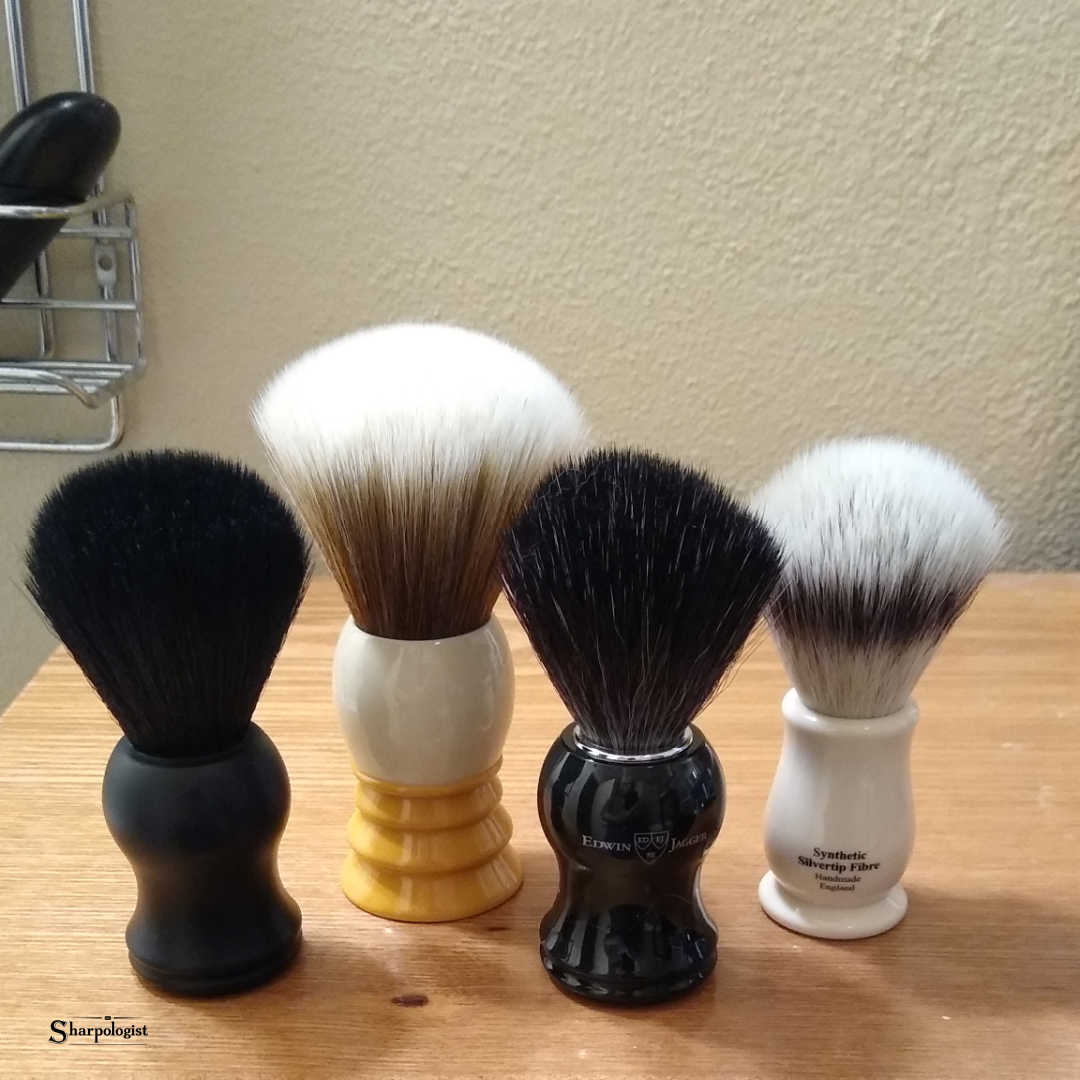
Most wet shavers learn early that a shaving brush needs to be “broken in,” especially boar brushes. What they are rarely told is what that actually means.
Some expect a dramatic transformation after a fixed number of uses. Others believe special rituals are required. When the brush does not change in the way they imagined, frustration follows.
The reality is quieter, slower, and far more mechanical.
Quick Answer: Does a shaving brush really need to be broken in?
Only boar brushes undergo meaningful physical change during break in, as their fiber tips can split with repeated wetting and drying. Badger and synthetic brushes do not split; any improvement over time with those brushes comes mainly from user adaptation, not changes to the fibers themselves.
What Shavers Mean When They Say “Break In”
In forum language, break in usually means one or more of the following:
- the brush feels softer
- it splays more easily
- it loads soap more predictably
- it stops behaving “weirdly”
None of those describe a single process. They describe several small changes happening at different speeds, depending on the brush.
The Anatomy That Matters
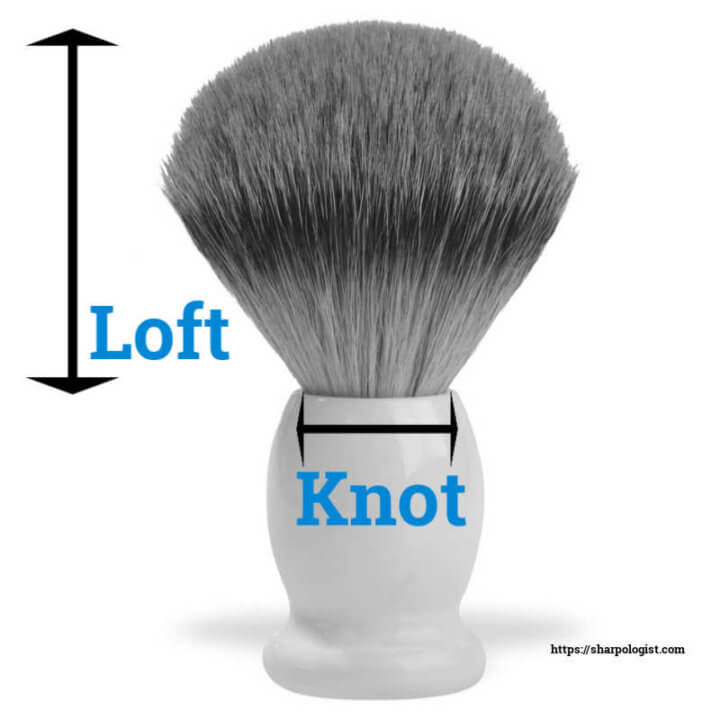
A shaving brush is not a single object. It’s a combination of:
- individual fibers
- fiber tips
- fiber shafts
- knot density
- loft and glue plug
Only one part of this system meaningfully changes with use, and only for certain brush types.
What Actually Changes During Break In
When shavers talk about a brush “breaking in,” they often assume something fundamental is happening to the brush itself. In reality, what changes depends almost entirely on the type of fiber involved. Boar, badger, and synthetic brushes behave very differently over time, and only one of them undergoes any meaningful physical change. Understanding those differences helps separate real material behavior from changes that only feel like break in.
Shaving brush break in refers to small physical changes in boar fiber tips combined with the user learning how the brush behaves.
Boar Brushes
Boar hair is a natural fiber with a solid shaft. With repeated wetting and drying cycles, the very tips of those fibers can split into multiple fine ends.
This does three things:
- reduces perceived scratchiness
- increases surface area
- improves water and lather distribution
This is the most tangible and measurable change in brush break in.
As tips split and fibers settle, the brush begins to retain and release water more evenly. Early on, boar brushes often feel either too dry or suddenly flooded.
Over time, that behavior stabilizes.
Backbone does not meaningfully decrease. What changes is how pressure is distributed across the tips.
Split tips flex sooner, so the brush feels more compliant even though the shaft stiffness remains the same.
How to Tell When a Boar Brush Is “Broken In”
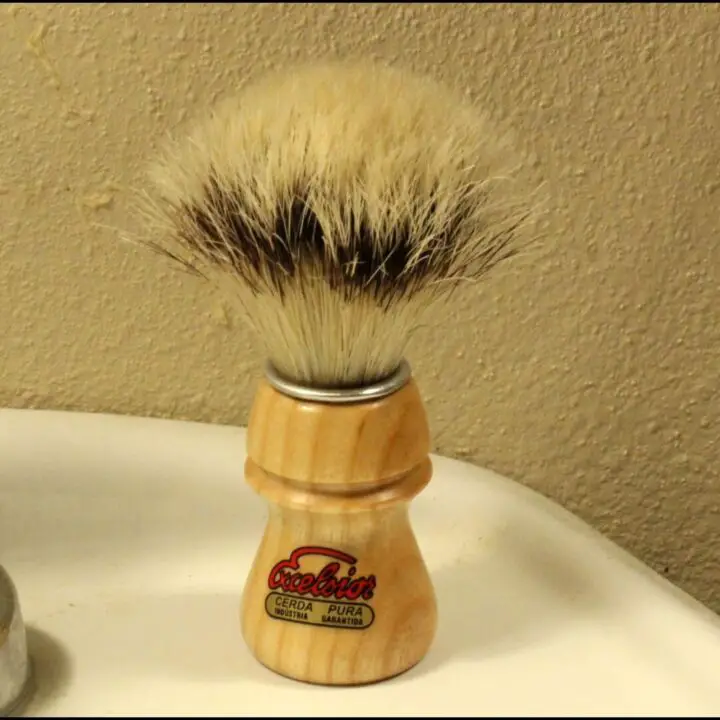
A boar brush is effectively broken in when:
- tips feel soft without collapsing
- water retention feels predictable
- lather builds without sudden flooding
- face feel is consistent from shave to shave
These changes occur gradually and unevenly, not all at once. There is no universal shave count. There is only behavior stabilization.
Why Badger and Synthetic Brushes Feel Different
Badger and synthetic brush fibers behave differently at a structural level, and most of the perceived change over time comes from the user, not the brush.
Badger hair is naturally tapered and already soft at the tips. Any “break in” is minimal and mostly perceptual. If badger hairs actually split or fray, that is typically a sign of damage, not normal use.
What most users experience is technique adaptation, not fiber change.
Synthetic fibers do not split. Ever.
They are effectively fully broken in from the first shave. If a synthetic brush feels different after a month, it is almost always the user adjusting loading, pressure, or hydration.
What Does Not Change (And Never Will)
This is where expectations often go wrong. Break in does not change:
- knot density
- loft height
- glue plug depth
- inherent backbone
- fiber diameter
These characteristics are set by design and manufacturing, not use. A stiff brush will not become floppy. A dense knot will not become airy.
If someone dislikes the brush’s basic geometry, no amount of break in will fix that.
The Break In Myth: Where Confusion Comes From

Three things happen at the same time with a new brush:
- small physical changes in boar tips
- stabilization of water handling
- rapid user adaptation
Badger hair is naturally tapered to a very fine point. It is not cut blunt at the tip in quality brushes. Because the tip is already tapered, there is no internal stress point that would cause controlled splitting the way boar does.
When experienced users say a badger brush has “split” or “bloomed,” they are usually observing one or more of the following:
- Removal of natural oils from processing and shipping
- Fibers relaxing into their natural curvature after repeated wetting
- Knot bloom increasing surface area and perceived softness
- User pressure decreasing as technique improves
All of these change how the tips feel, not the physical structure of the fiber tips themselves.
Under magnification, a healthy badger tip remains intact and tapered even after years of use.
Because they overlap, shavers often credit the brush with changes that are actually their hands learning the tool.
This is why break in feels mysterious or inconsistent across users.
Are Break In Shortcuts Necessary Or Helpful?
Soak and dry cycles, palm lathering, and regular use all accelerate tip splitting safely. What does not help:
- aggressive mechanical abrasion
- chemicals
- attempts to force split tips
These increase the risk of broken fibers and shortened brush life without improving results.
Conclusion: Break In Is Real, But It Is Not Magic
Shaving brush break in is not a ritual.
It is not a milestone.
It is not a transformation.
It is a small, physical change combined with a much larger learning curve.
Once that is understood, frustration disappears and brush choice becomes far more intentional.

Several things I’ve found, I now say wish I had bookmarked that! Last fall I saw an article that said it was the “rest” period that broke in a boar brush. For Christmas I got a Omega 10098, it beame my Monday brush, only once a week. In 3-4 months I had lots of splits! The past Omega 1005 years ago, I tried vigorous towel brushing, soak overnight. I kinda gave up on it. So, it became my Friday brush. In short order I had a nice split tips brush!