
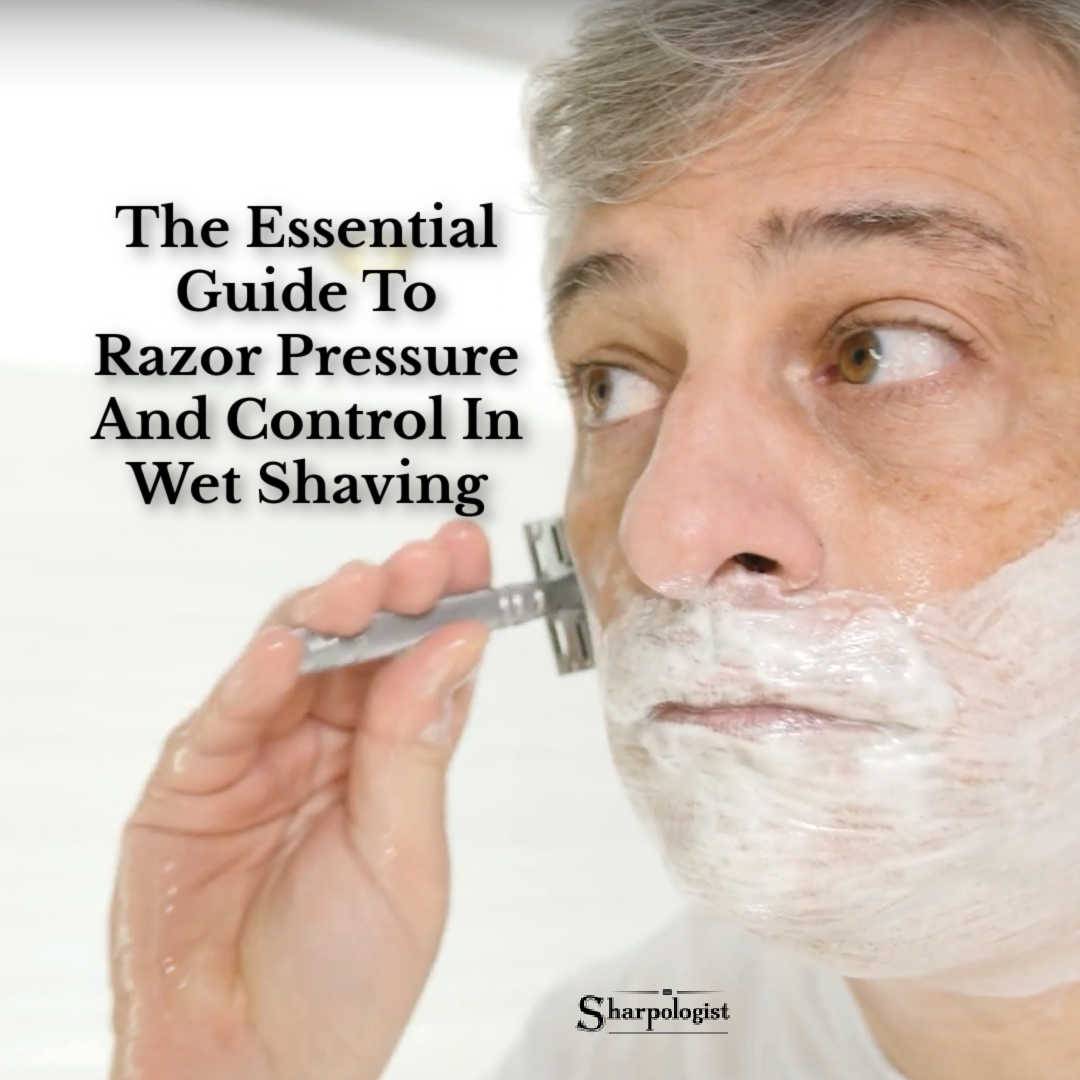
Wet shaving effectively involves mastering the balance of razor pressure and control to achieve a smooth, irritation-free experience. In this post I’ll show you how the right technique can improve your shaving routine, ensuring the best results while minimizing the risk of nicks and cuts.
Step-by-Step Guide to Maintaining Proper Razor Pressure
| Step | Description |
| 1. Assess Your Tools | Check your razor for sharpness and clean blades to ensure effective shaving. |
| 3. Find Your Grip | Hold the razor firmly but lightly, wrist locked, allowing for flexibility in movement. |
| 4. Monitor Your Pressure | Apply minimal pressure, letting the razor’s weight do most of the work. |
| 5. Adjust as Needed | Pay attention to feedback from your skin and adjust pressure if irritation occurs. |
Technique Adjustments
Making the necessary adjustments to your shaving technique should be based on your experience and feedback from your skin. If you notice irritation or missed spots you need to assess how much pressure you apply and modify your grip accordingly.
You might find that different areas of your face require varying levels of pressure; for instance, sensitive areas like the neck may need a lighter touch, while denser areas like the cheeks could handle slightly more. Refining your technique will help find the balance that produces the closest and most comfortable shave.
Fine-tuning your shaving technique involves consistent practice and attentiveness to your comfort. For example, if your skin feels sore after a shave, reduce pressure and incorporate shorter strokes with less force. Conversely, if you’re not achieving a close shave, experimenting with a slight increase in pressure in certain areas may yield better results.
Adjusting the angle of the blade can also enhance the effectiveness while maintaining a comfortable experience. Every face is unique, so personalizing your approach can lead to the ideal balance of pressure for your specific shaving routine.
Tips for Optimal Razor Control
Achieving solid razor control is essential for a smooth and irritation-free shave. Pay attention to the following tips to your technique:
- Maintain a steady hand.
- Utilize short, deliberate strokes.
- Stay relaxed to prevent tension–but lock the wrist.
- Practice with different razors to find your comfort zone.
- Focus on one area at a time for greater precision.
Hand Positioning
Position your hand firmly yet comfortably on the razor handle. The grip should involve your fingers wrapped securely around the handle while your thumb stabilizes the tool. This balance allows for effortless control. Experiment with your grip to find the level of pressure that feels right, ensuring you can manage the razor’s angle and movement with confidence.
Angle of the Blade
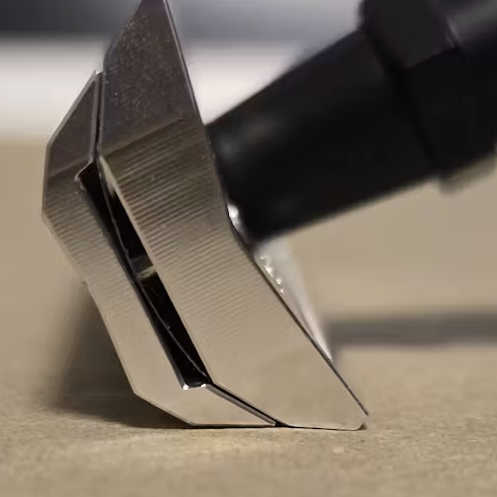
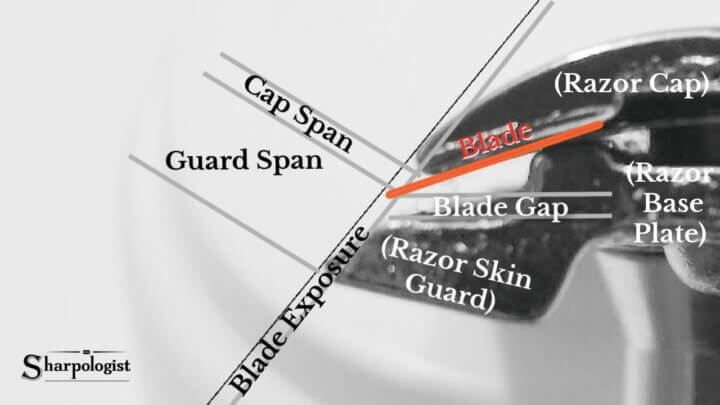
The angle of the blade is vital for both performance and skin protection. Ideally, a 30-degree angle between the blade and your skin provides optimal cutting efficacy while minimizing the risk of nicks and irritations. This angle cuts hair efficiently while gliding over the skin surface. Adjusting this angle slightly during your stroke can help navigate the contours of your face, particularly around the jawline and chin, where the hair growth direction can vary. A controlled angle minimizes drag and maintains a fluid motion, enhancing your overall shaving result.
Pros and Cons of Various Razor Pressures
| Pros | Cons |
| Smoother shave with less irritation | May require more passes |
| Better skin protection | Can lead to missed spots |
| Suitable for sensitive skin | Time-consuming for coarse hair |
| Promotes proper technique | May feel less aggressive |
| Allows for better blade longevity | Less effective on tough hair |
| Encourages mindful shaving | Can lead to frustration |
| Reduces risk of cuts | May require adjustments |
| Improves overall grooming experience | Potential for uneven results |
| Supports a healthier skin barrier | Technique may need practice |
| Increased comfort | Can delay finishing time |
Light Pressure Benefits
Using light pressure while shaving minimizes the risk of irritation and cuts, allowing for a more comfortable experience. This technique also enhances blade longevity since you’re not forcing the edge through your hair aggressively. As a result, you can expect fewer ingrown hairs and a smoother, cleaner shave overall. For individuals with sensitive skin or those prone to razor burn, light pressure becomes particularly advantageous.
Heavy Pressure Risks
Applying too much pressure can cause significant problems, including nicks, cuts, and increased irritation. Many experience razor burn and ingrown hairs when using heavy pressure, as the blade may pull hair instead of cutting it cleanly. This not only impacts comfort but can lead to longer-lasting skin issues if not managed properly.
Heavy pressure often creates an aggressive interaction between the blade and your skin, increasing the likelihood of serious discomfort. For instance, those with coarse hair may believe that pressing harder offers a faster shave; however, this often backfires, leading to a rushed experience filled with irritation. Studies have shown that the majority of shaving-related injuries stem from heavy pressure use, emphasizing the need for balanced control during each stroke. Recognizing and adjusting this pressure can vastly improve your shaving outcomes and overall skin health.
Common Mistakes in Razor Pressure Control
Control of razor pressure is pivotal in achieving a smooth shave, yet several common mistakes can hinder your results. Incorrect pressure can lead to nicks, irritation, or an ineffective shave. By understanding these pitfalls, you can refine your technique and enjoy a more satisfying wet shaving experience.
Over-Exertion
Applying excessive pressure is a frequent error that can lead to razor burn and discomfort. Instead of forcing the razor against your skin, focus on a light touch. Quality blades are engineered to work effectively with minimal pressure, which helps to glide smoothly across the skin, reducing the likelihood of irritation.
Inconsistent Application
Uneven pressure during strokes often results in missed spots or an uneven shave. You might instinctively apply more pressure in certain areas without realizing it. This inconsistency not only affects the overall appearance of your shave but can also create irritation or cuts. To mitigate this, concentrate on maintaining an even, controlled pressure throughout each pass. Observing your technique in the mirror can aid in recognizing and correcting these variations.
Understanding Razor Pressure
Razor pressure refers to the amount of force applied when shaving. An optimal pressure allows for a close, comfortable shave while minimizing irritation and cuts. Understanding how to regulate this pressure is crucial for achieving your desired results without damaging the skin.
Types of Razor Pressure
There are generally three types of razor pressure: light, moderate, and heavy. Light pressure involves barely touching the skin, often ideal for sensitive areas or when using a straight razor. Moderate pressure provides a balance of closeness and comfort, commonly used with safety razors. Heavy pressure can result in aggressive shaving, often leading to nicks and irritation.
| Type of Razor Pressure | Characteristics |
| Light Pressure | Delicate touch, suitable for sensitive skin. |
| Moderate Pressure | Balanced force for a close shave. |
| Heavy Pressure | Aggressive shave, potential for irritation. |
| Variable Pressure | Adapts to different areas and hair types. |
| Consistent Pressure | Maintains uniformity for an even shave. |
Mastering the types of razor pressure can significantly improve your shaving experience. Light pressure enables your razor to glide effortlessly over your skin, while moderate pressure achieves optimal hair removal. A heavy hand can lead to injuries, making it crucial to gauge your technique based on the razor type and your skin sensitivity.
- Assess your technique regularly for improvement.
- Practice varying pressure based on facial contours.
- Adopt a gentle approach to prevent irritation.
- Experiment with different razors to find your ideal pressure.
- Thou shall maintain control throughout the process.
| Aspect | Recommendation |
| Razor Type | Choose one that suits your skin type. |
| Shaving Angle | Maintain a 30-degree angle for effectiveness. |
| Shave Frequency | Find a routine that works for your hair growth. |
| Skin Preparation | Properly hydrate skin to enhance comfort. |
| Post-Shave Care | Use soothing products to maintain skin health. |
Factors Affecting Razor Pressure
Pressure applied during shaving is influenced by various factors that directly affect the quality of your shave. Understanding these elements can help you achieve a smoother and more comfortable experience. Consider the following:
- Skin type
- Hair texture
- Shaving technique
- Razor type
- Shaving products used
Perceiving these factors will enable you to adjust your technique for optimal results.
Skin Type
Your skin type plays a crucial role in determining how much pressure you should apply while shaving. Sensitive skin may require a lighter touch to avoid irritation, while oilier skin can withstand slightly more pressure without discomfort.
Hair Texture
Hair texture significantly affects the necessary pressure during a shave. Coarse, thick hair often necessitates more pressure to cut effectively, while fine or thin hair may only require a light touch. Adjustments to your shaving angle and pressure can prevent tugging and ensure a closer shave.
For instance, if your hair grows in unpredictable directions or has a wiry texture, you may find yourself using different angles and pressures in various areas. Coarse hair can resist the blade, leading to discomfort if too much pressure is applied, while fine hair may require delicate handling to avoid irritation. Tailoring your pressure based on the specifics of hair texture can enhance your shaving technique significantly.
Wrapping Up
Pay attention to the angle and pressure applied to your razor to ensure optimal results. By practicing proper control, you will minimize irritation and achieve a closer shave. Incorporating these principles into your grooming routine will undoubtedly elevate your shaving experience and lead to healthier skin over time.

I find the razor’s weight is a factor. For me, I find I need to use less pressure with heavier razors.
Everyone says light pressure, light presure, light pressure. I think for me, it still said pressure. One shaving youtuber said, “just touching.” Well, the bell in my head went ding, ding, ding! We have a winner! Then I sprained my wrist, shaved with brace on. That was another WOW moment. It was had to get my fingers to grip though.
These two moments were my, “That’s the way you do it!”